
Electrolysis for men in Laval
The hair the laser cannot see, and the area it cannot cross. One hair at a time, with a probe. The only method recognised as permanent.
TYPE OF CARE
Esthetician's treatment. No medical procedure.
What is electrolysis
An extremely fine probe goes down the follicle's own opening, alongside the hair, and places a measured amount of energy there, enough to damage the cells that make the hair grow back. One hair at a time.
The difference from laser fits in one phrase: it looks at nothing. The laser works optically, it needs the hair's melanin to reach it, so it needs the hair to have a colour. Electrolysis works by electrical energy, inside the follicle: what matters is arriving in the right place, not seeing the target.
Which gives it three exclusive territories. White, grey or very fair hair, invisible to a laser. The tattooed area, where ink absorbs laser energy unpredictably and where a laser will never pass. And the stray hair, which it would be absurd to treat with a device built to cover surfaces.
No other technique earns the word "permanent". Laser durably reduces regrowth; electrolysis treats the follicle definitively, one at a time. That is also why it is sold by time rather than by area.
The hair removal page sets electrolysis beside laser and wax, if the choice is still open.
What concerns a man of thirty-five in particular: white hair arrives earlier than people think, often in the beard and on the chest, and it arrives at precisely the moment a laser series has cleared everything else. The laser leaves behind exactly what it could not see.
The key facts
price
- $30 for 15 minutes
- $45 for 30 minutes
- $55 for 45 minutes
- $65 for one hour
- Electrolysis consultation: $25
length
- From 15 minutes to one hour, depending on what you book
- A 45-minute consultation beforehand
- No downtime to plan for
area
- Beard and neck, white hair included
- Brow edges, between the brows
- Tattooed areas, anywhere
- Stray hairs, anywhere on the body
- Around the nipples
how it feels
- A pinpoint sensation, hair by hair
- Different from laser rather than stronger
after the session
- Small redness or slight swelling around the treated follicles
- Often gone quickly, sometimes longer depending on the area and your skin
- Skip shaving the area for the rest of the day
- Sun protection recommended over the following days
what it addresses
- White, grey or very fair hair
- Hair inside a tattooed area
- Stray hairs on the chin, neck or around the nipples
- Hair that has gone too pale after a laser series

Is electrolysis right for you?
The treatment handles follicles one at a time, without looking at the hair's colour.
It is for you if:
Your white hairs are starting to show
In the beard, on the chest, on the neck. No number of laser sessions will change that, now or ever.
Your laser left survivors
This is the most common case. The series did its job on the dark hair and a scattering of pale ones remains, which the device never saw.
The area is tattooed
A laser will never pass over ink, and that rule does not soften with time. Electrolysis works there without difficulty.
It is only a handful of hairs
Three on the chin, a dozen around a nipple. Booking a laser session for that makes no sense; electrolysis is paid for by the minute.
Do you have a whole back to treat and dark hair?
Laser hair removal is built for surfaces. Electrolysis is built for what it leaves.
Contraindications
A PACEMAKER OR AN ELECTRONIC IMPLANT
The treatment applies a current. Declare any pacemaker, defibrillator or electrical implant before even the consultation. We then decide, based on the device and on our own unit, between ruling the treatment out and asking you for a medical opinion.
ISOTRETINOIN (ACCUTANE) TREATMENT
Skin becomes thin and heals badly. Your physician sets the delay.
BROKEN SKIN ON THE AREA
A wound, a rash, sunburn: we wait until it has recovered.
A TATTOO UNDER SIX WEEKS OLD
A healed tattoo poses no problem at all, unlike with laser. A fresh one does.
POORLY CONTROLLED DIABETES
Healing is slower and infection risk higher. Name it at the consultation.
WHAT THE CONSULTATION CHECKS
Your conditions, your medication, your implants and anything that can change how you heal or which current we use. Many situations are handled with an adjustment or a medical opinion rather than a refusal.
A treatment adjusted to your hair
Two men do not get the same session, and three things explain why.
- HOW DENSE THE AREA IS
- That decides how much time to book, and the treatment is sold by time. A few stray hairs fit into fifteen minutes; a whole chin needs a great deal more. Those hours are not done in one block, they spread over several appointments and several growth cycles.
- HOW DEEP THE FOLLICLE SITS
- A beard hair is anchored deeper than a cheek hair. The probe and the setting on the Apilus unit follow, and that is what the consultation is there to assess.
- THE HAIR CYCLE
- Only a follicle in its active phase can be treated for good, and the hairs in an area are neither all visible nor all at the same stage at the same time. That is what explains repeat sessions, rather than any lack of effectiveness.
The session step by step
We want to do everything we can to bring you toward the best version of yourself. That is why every session follows the same steps.
1
The consultation
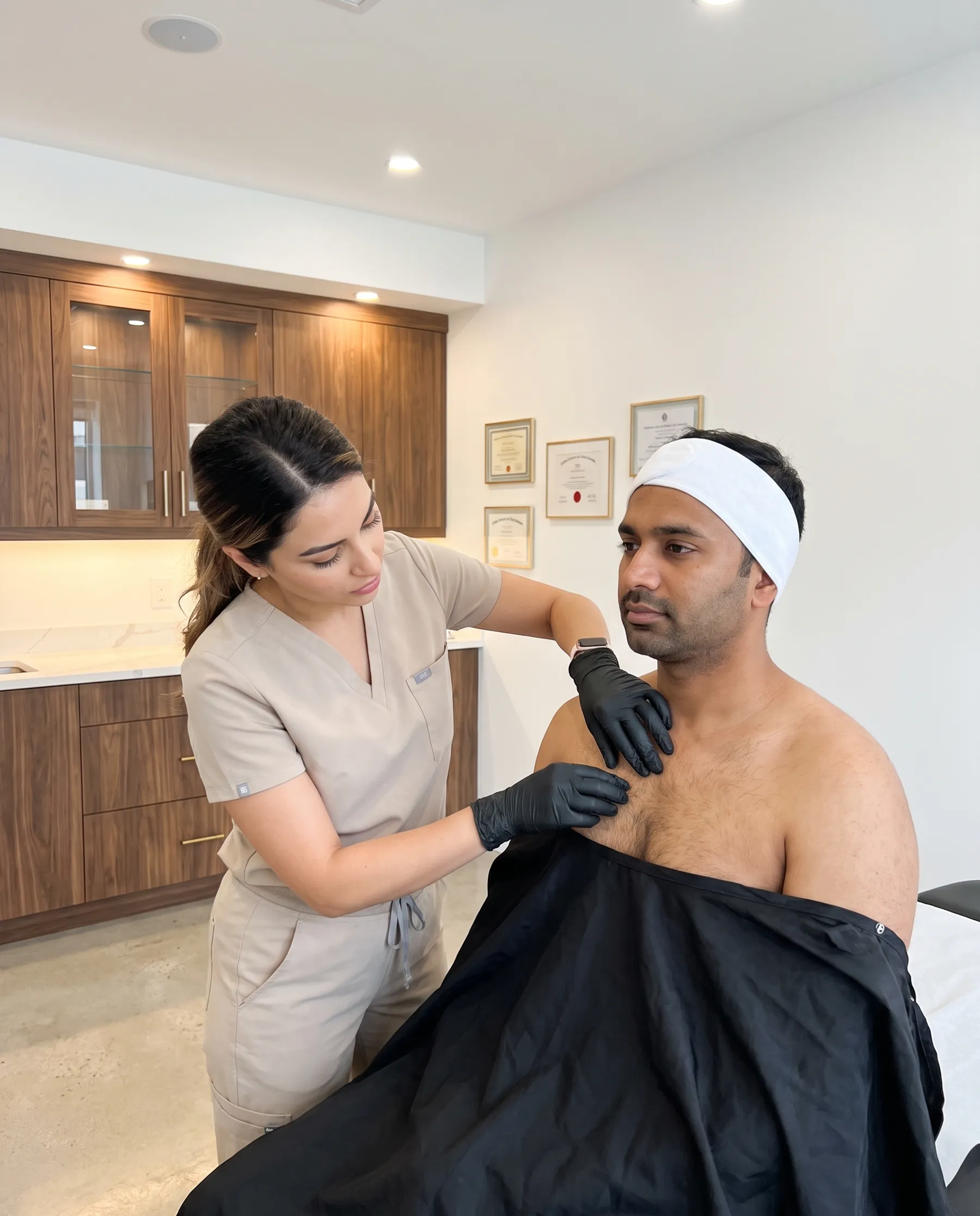
Forty-five minutes, $25, required before the first session. The area, the density, the depth, the contraindications, and a trial on a few hairs.
2
Preparing the area
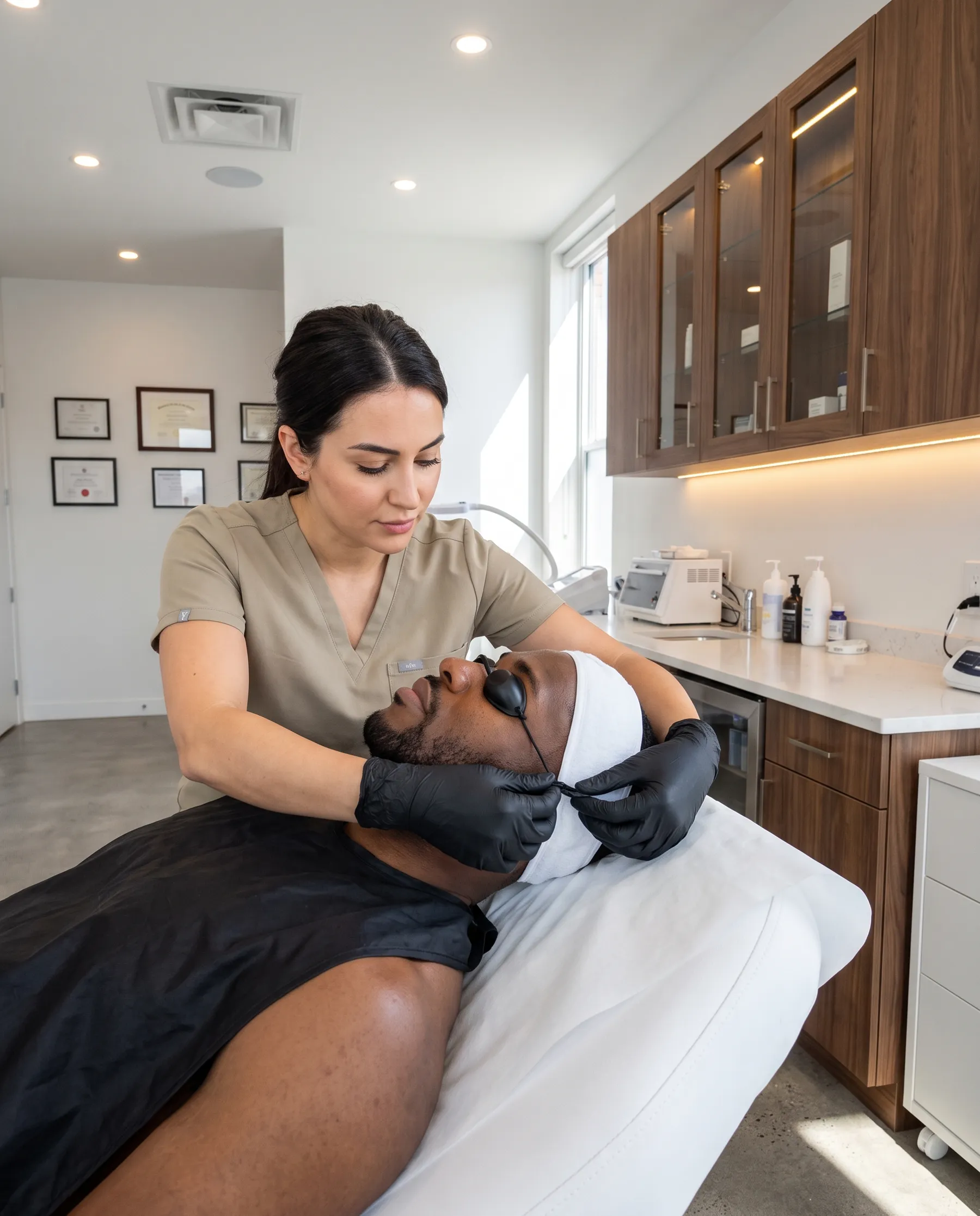
Cleansing and disinfection. The illuminated magnifier is set in place.
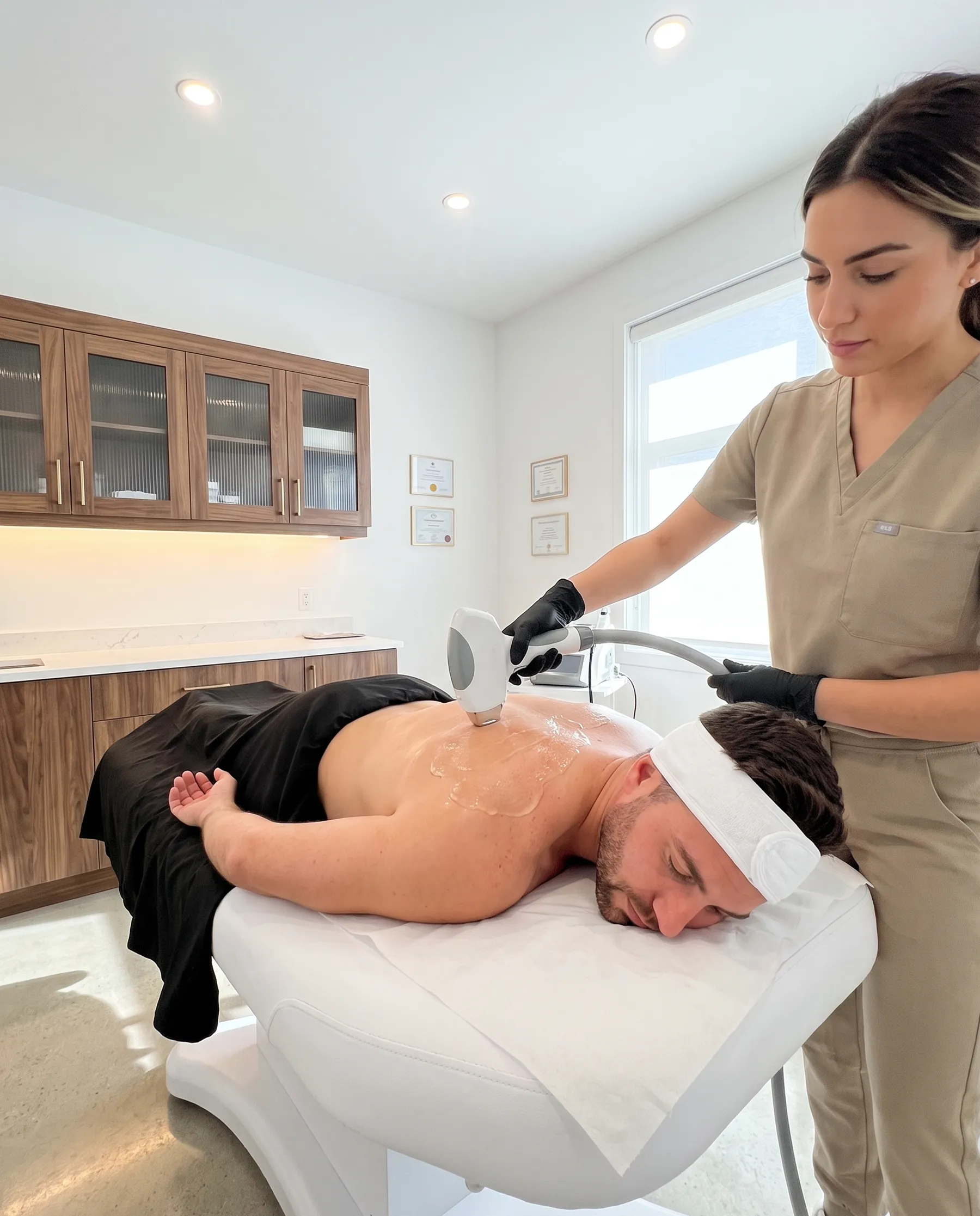
3
Treating, hair by hair
The probe goes down alongside the hair, the current is applied, the hair lifts out without resistance. Then the next one.
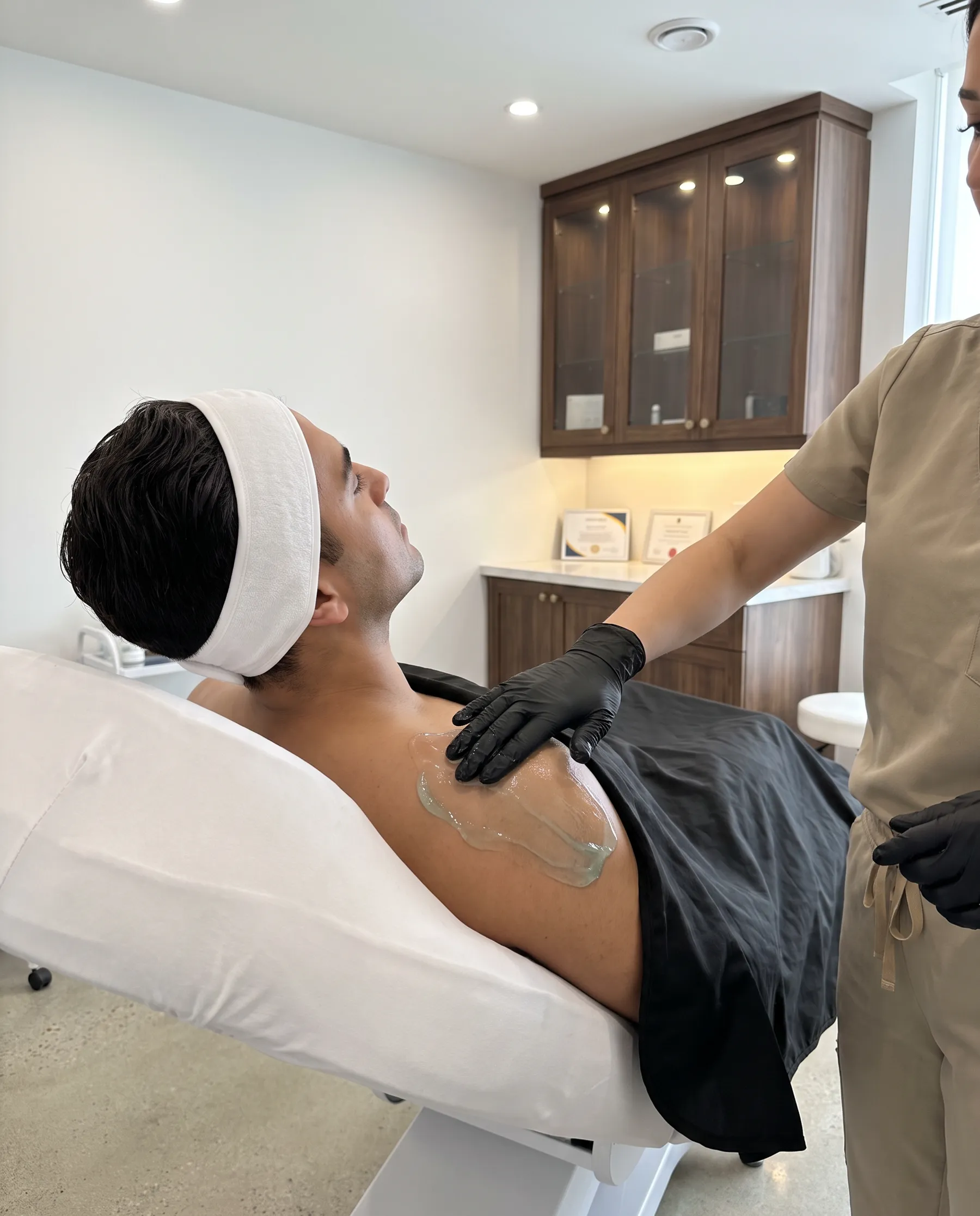
4
Soothing
A calming product on the area. The small patches of redness around the follicles start to settle.
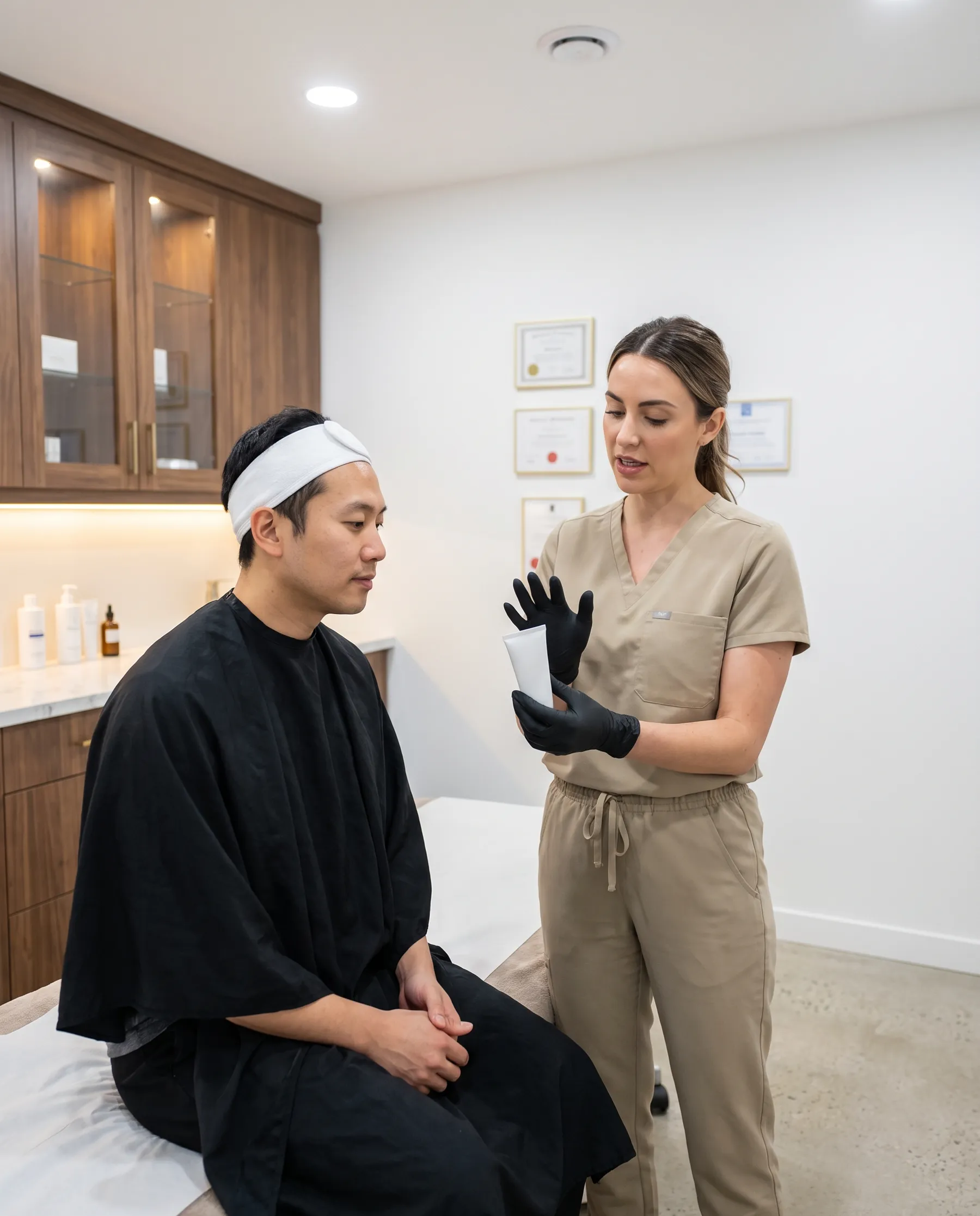
5
Aftercare and what comes next
What to avoid today, and how much time to book next time.
Why choose L'Institut Béa
THE ONLY PERMANENT METHOD
Laser reduces durably, electrolysis treats the follicle for good. Those are not the same promise.
BOTH DEVICES UNDER ONE ROOF
The laser for surfaces, electrolysis for what it leaves. You do not have to pick your institute by the colour of your hair.
A CONSULTATION BEFORE STARTING
Forty-five minutes to assess the area and run a trial. It is what stops you booking an hour for nothing.

Their experienceat Béa
I started my electrolysis journey with Taïsha on May 1st, 2026. Due to my darker skin complexion, my facial hair cause me to have dark spots all over my chin, jaw and neck. As of June 18th, 2026, my facial hair is growing slower, less thick, and some hairs even seem to have stopped growing completely. I would definitely recommend Taïsha, she's experience, kind and provide an excellent service.
Junie L.
Fresha review
Common questions
Everything people ask us before a first session, answered plainly.
Why does the laser not work on my white hair?
Because a laser is not looking for the hair, it is looking for its pigment. The beam is set to a wavelength melanin absorbs strongly, and that absorption is what turns light into heat down at the follicle. A white or grey hair has no melanin left at all: the beam passes straight through and does nothing. It is not a question of power and no setting can compensate, which is why electrolysis remains the only option. It reaches the follicle with a probe, without needing to see it.
How long does it take in total?
Impossible to say honestly without seeing the area, which is exactly why the consultation exists. What is certain is that the treatment is sold by time, and the time depends on the number of hairs: a few stray hairs on the chin are handled in one or two fifteen-minute sessions, while a dense area needs repeat appointments over several months. The repetition is not a shortfall in effectiveness, it is the hair cycle, since only a follicle in its active phase can be treated for good.
Is it more painful than laser?
Different rather than stronger. A laser sends a brief, hot pulse covering several hairs at once, like an elastic band snapped against the skin. Electrolysis produces a more pinpoint, more localised sensation, but it repeats at every follicle, which makes the length of the session matter more than the intensity. On a handful of hairs it is nothing. On a dense area, book short sessions rather than enduring an hour straight.
Can you treat inside my tattoo?
Yes, and it is one of the few places where the answer is better than with laser. A laser will never pass over ink: the pigment absorbs the energy unpredictably, which risks a burn and would damage the artwork, and that exclusion is permanent. Electrolysis depends on no pigment, so it works normally on a tattooed area once the tattoo has fully healed. Allow six weeks after the tattoo session.
Is it genuinely permanent?
Yes, and it is the only method that can be described that way. A correctly and sufficiently treated follicle produces no more hair. Two nuances matter. "Treated" means "reached in its active phase": a follicle dormant on the day of your session will start up again, and it will need its own turn. And some follicles need more than one pass before their ability to grow a hair is fully destroyed. That is why an area needs several appointments before it is truly finished, and also why nobody can announce a number of sessions in advance. A hair that shows up years later does not come from a new follicle: a man stops making those at birth. It comes from a follicle that was already there and has started producing a thicker hair, usually with age or hormones.
Why is the consultation paid?
Because forty-five minutes are used for something other than selling you anything. The esthetician assesses the density of the area, the depth of the follicles, checks contraindications, and above all runs a trial on a few hairs so you know how it feels before booking an hour. Twenty-five dollars to avoid paying sixty-five for a session that did not suit you is a reasonable trade, and it is also what allows us to tell you, where relevant, that laser would serve you better.
Can I shave between sessions?
Yes, and it is the right answer: shaving does not touch the follicle, so it does not interfere with the treatment. What you must avoid entirely is tweezing and waxing, which pull the hair out with its bulb and deprive the esthetician of the very thing she came to treat. Just let the area grow a little in the days before the appointment, so there is something to work with.
Ready to meet the best version of yourself?
Send us your questions and we will guide you toward the treatments that suit you best.