- Concern
- Facial hair
- Protocol
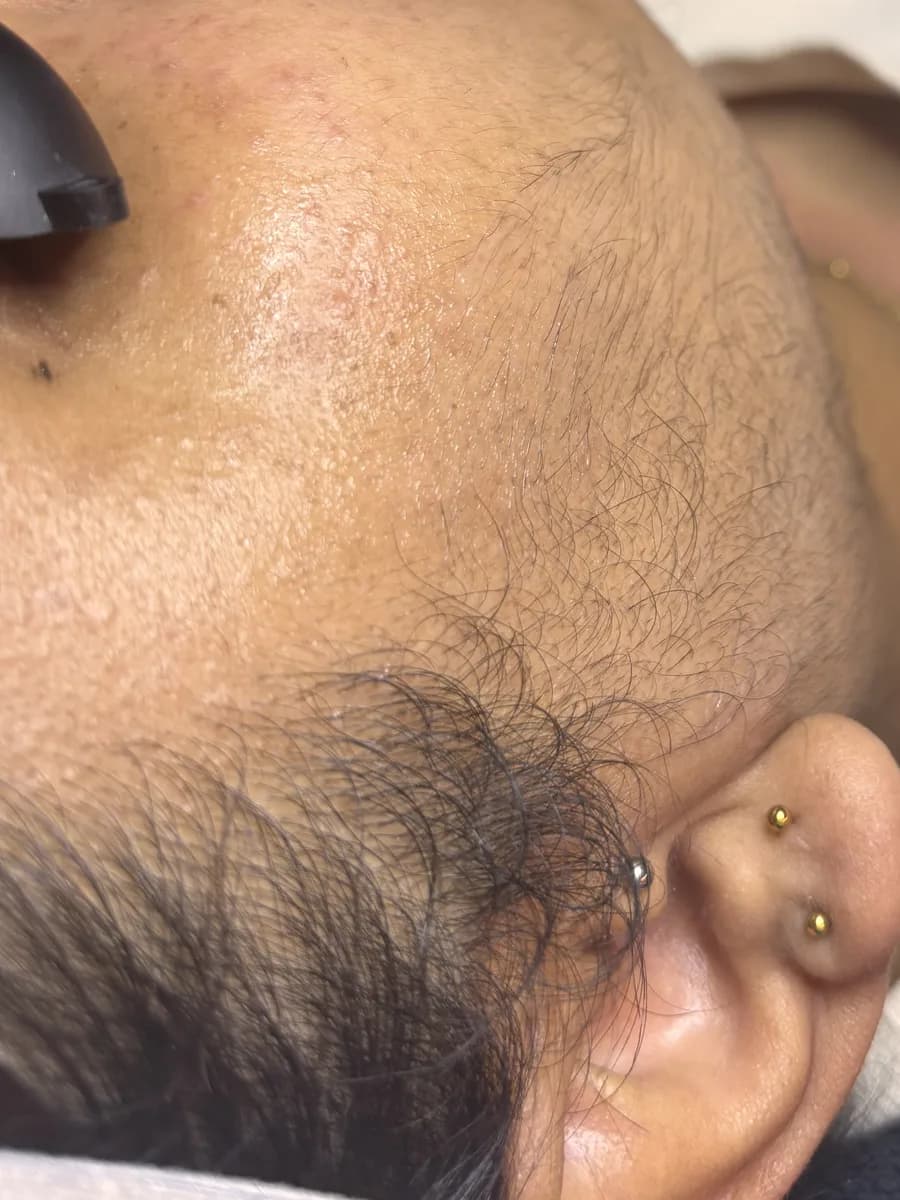
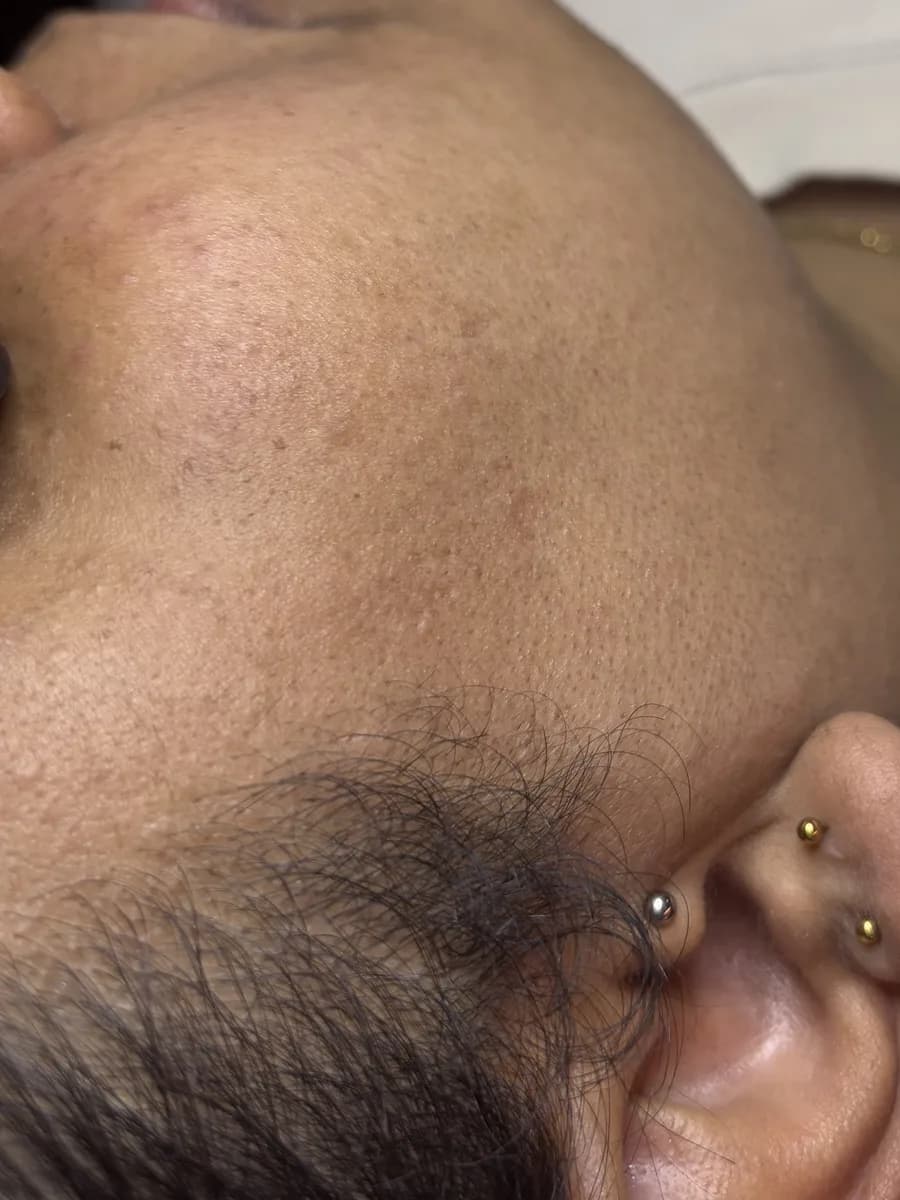
- Laser hair removal, cheek and temple
- What the photos show
- The dark down on the cheek and jaw is no longer visible in the second photo. The hairline itself was not treated.

The back you cannot reach yourself. Shoulders that come back three weeks later, and a chest you have been trimming for fifteen years without ever really liking the result.
TYPE OF CARE
Esthetician's treatment. No medical procedure.
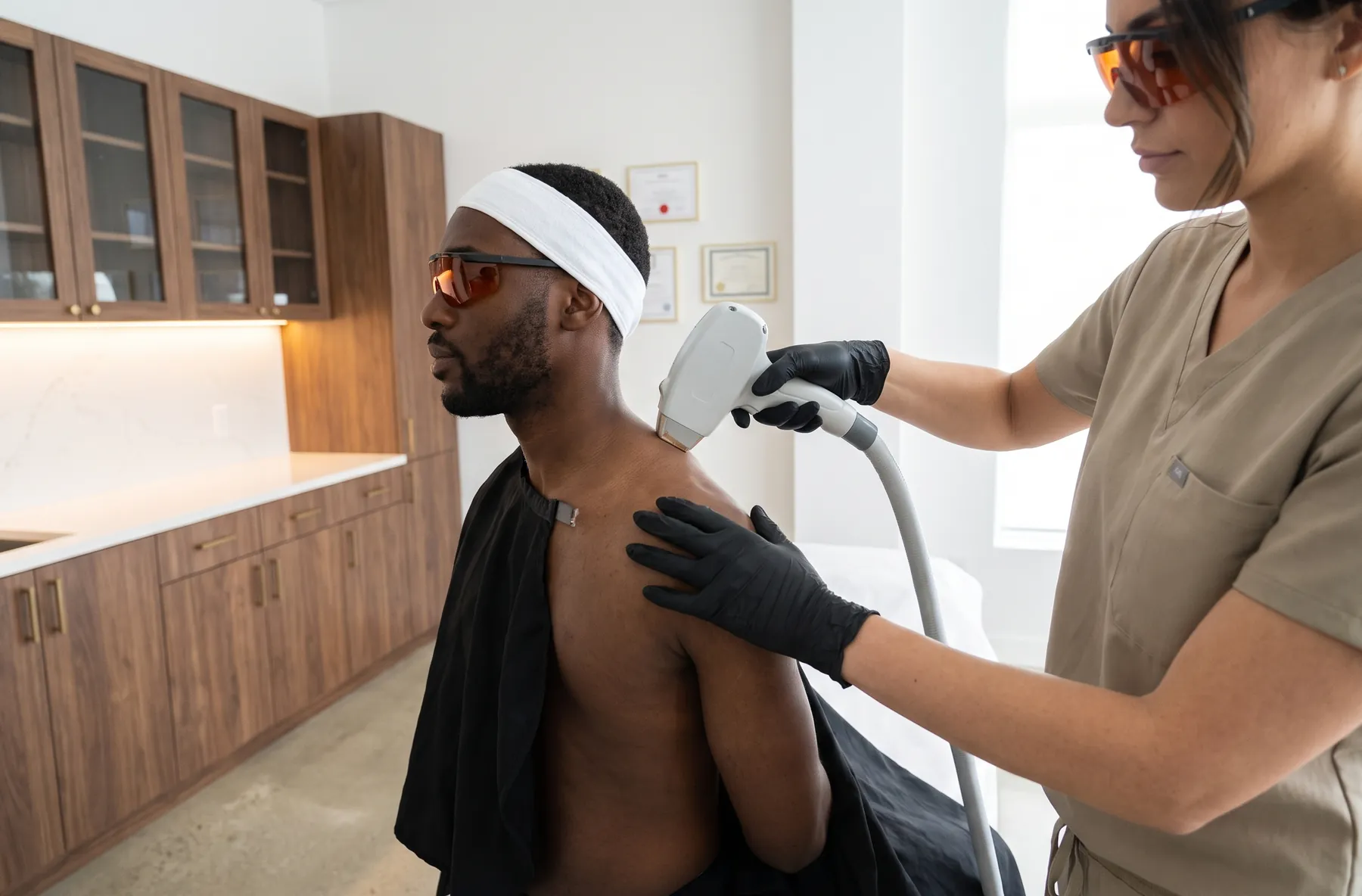
Laser hair removal is an esthetician's treatment aimed at the follicle, where the hair is made, rather than at the hair you can see.
The whole thing hangs on one word: melanin, whatever gives your hair its colour. The device sends out a light melanin drinks up. Down at the follicle that light becomes heat, and a follicle that has been heated rebuilds badly, slowly, or not at all.
On a man's body hair, that works in your favour. Back and chest hair is thicker, darker and denser than elsewhere, so it holds more melanin, and the laser finds its target more easily.
The trade-off is depth. A follicle anchored deeper needs sustained energy, and a surface like a full back means many passes one after another. That is what makes the session long, not what makes it expensive.
The machine at work here is an Elite iQ by Cynosure. It carries two wavelengths, the Alexandrite at 755 nm and the Nd:YAG at 1064 nm, and that second string to its bow is what opens up skin types 1 through 6: no complexion is turned away at the door.

This treatment works on pigmented hair, and on nothing else.
It is for you if:
All three ways of taking hair off sit together on the men's hair removal page, with what each one asks of you in time and in sessions.
You cannot look after your own back
This is the first request by far. The back and upper shoulders are the only areas of the body you can neither shave nor keep an eye on alone.
Trimming leaves you with bumps
On the chest and nape, running a trimmer over the same skin keeps ingrown hairs and redness going. Removing the hair at the source removes the cause.
You want less density, not bare skin
That is a fair goal, and the laser allows it. We come back to it in the next section.
Your hair is dark
Nothing else weighs as heavily. Hair that stands out clearly against the skin around it is a target the device picks out without hesitating.
Is your hair white, blond or red, or is the area tattooed?
The beam will pass it by, and you will hear that from us before your card comes out. Electrolysis is made for that.
Recently exposed skin holds more melanin at the surface, which reduces the contrast with the hair and raises the risk of a reaction. The same goes for self-tanner. We reschedule.
Ink absorbs the laser's energy unpredictably. We do not treat over a tattoo, and the area stays excluded even years later. The skin around it can still be treated.
A wound, sunburn, a flare of eczema or a skin infection postpones the session, without ruling out the other areas.
Some very ordinary medications turn skin into a sponge for light. Say what you are taking when you book rather than once you are on the table: often it only means shifting the date by a few days.
They pull the root out, and the laser needs the root in place to reach it. A session done after waxing achieves nothing.
Two men do not get the same settings, and four things explain why.
Male hair is thicker and denser, and a back is not set up the way a nape is. So every session opens with a check, then runs through the same order.
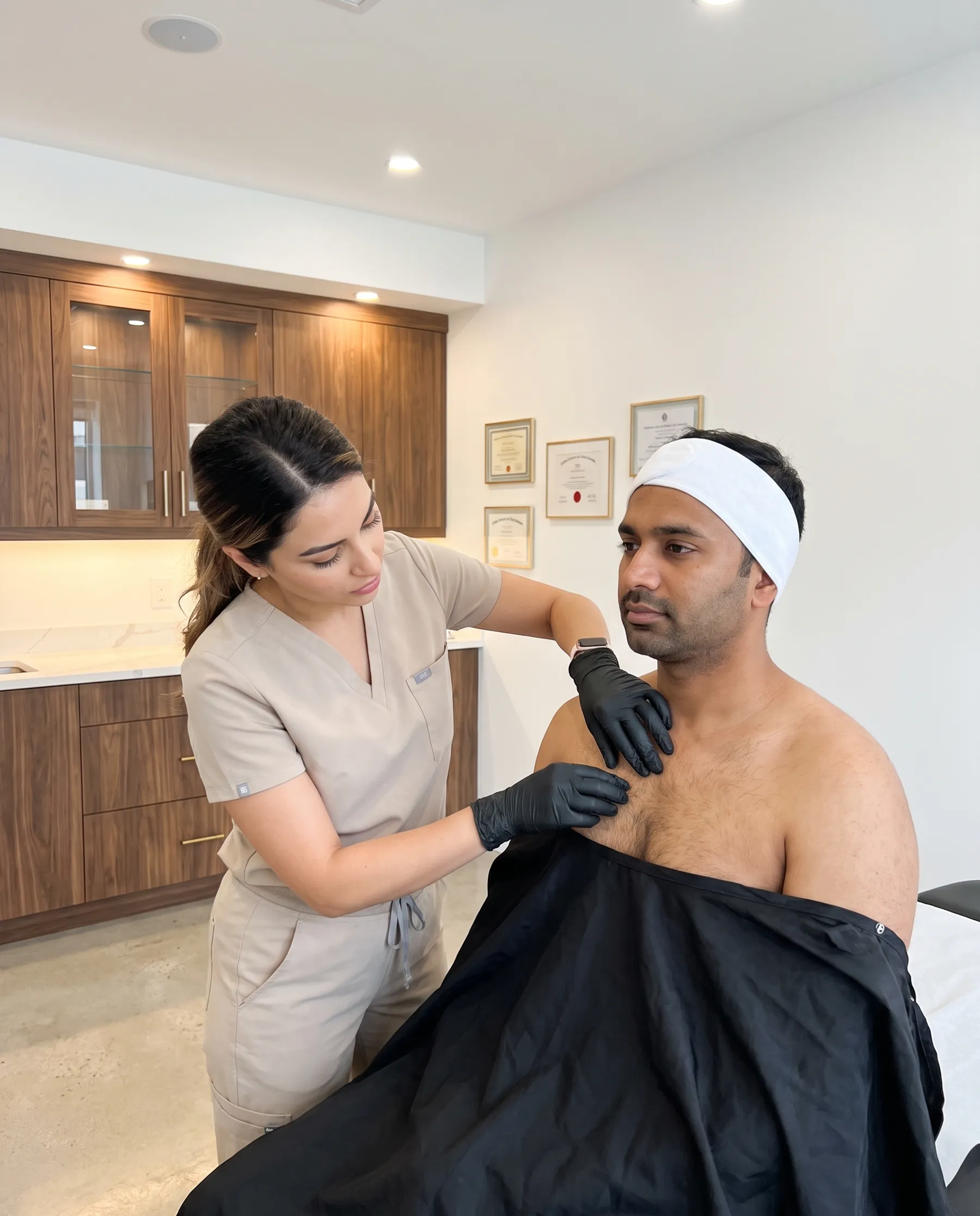
1
Assessing the skin and the hair
Your skin type, the colour and density of your hair, recent sun exposure, your medications and any tattoos on the area.
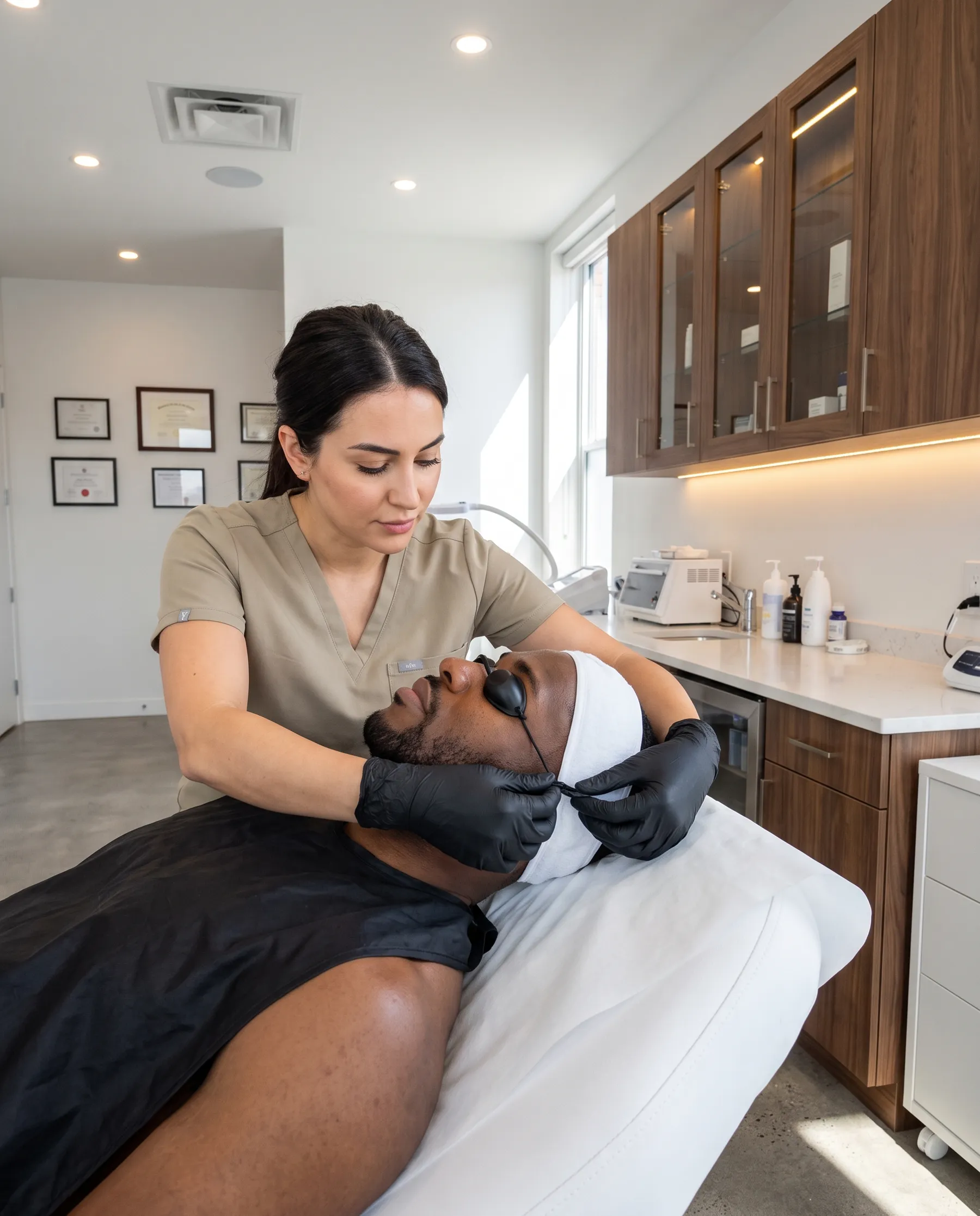
2
Protection
Goggles go on before the first pulse and come off after the last, for you as much as for the esthetician.
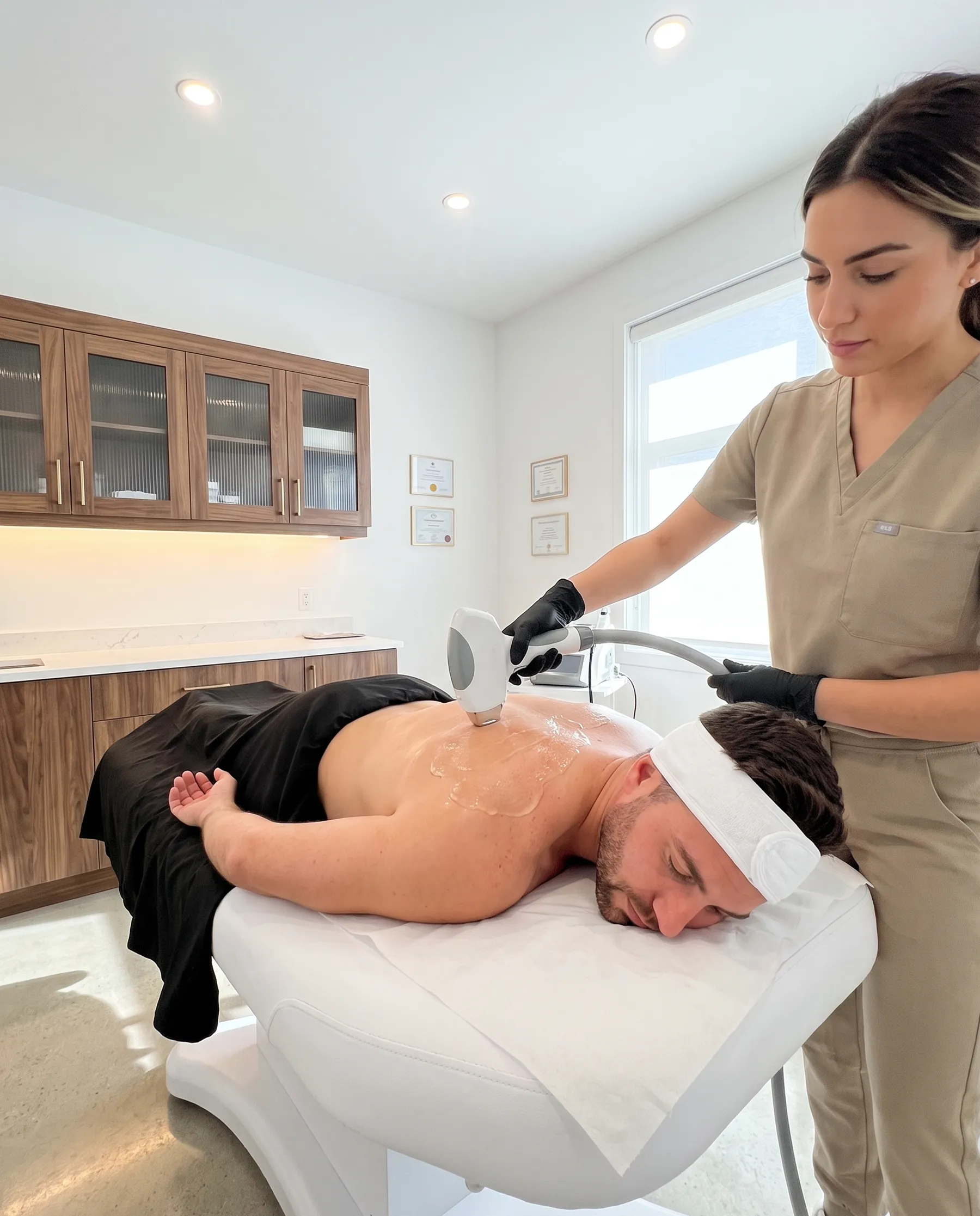
3
The laser pass
The handpiece covers the area section by section, at the settings chosen for your skin type and for the density of your hair. On a full back, count on about 45 minutes.
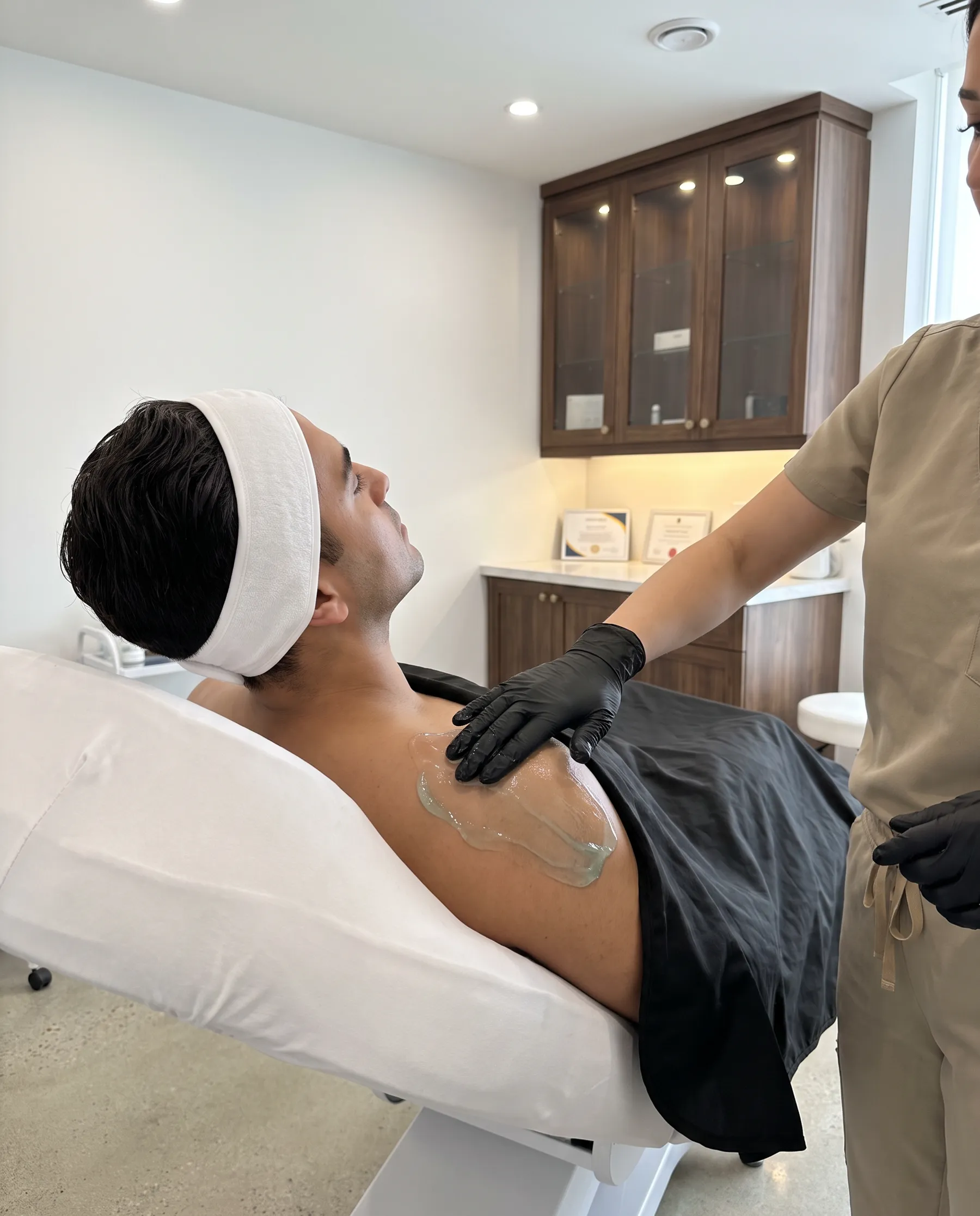
4
Soothing
A soothing treatment is applied to the area at the end, and the redness starts to settle.
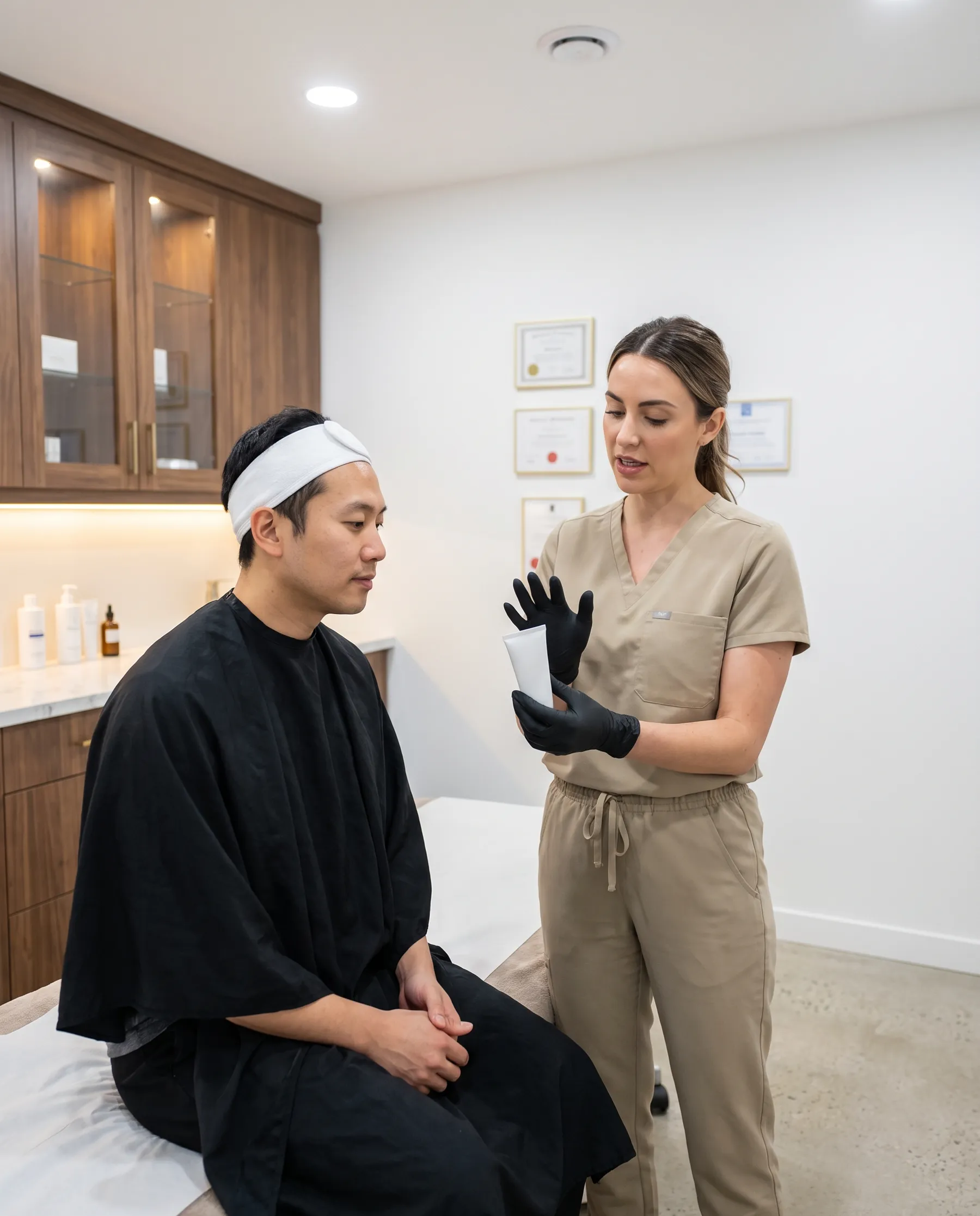
5
Aftercare and what comes next
The two days to watch, and the return date that matches the area you had done.
EVERY COMPLEXION
From skin type 1 to 6, the Elite iQ keeps up. Plenty of previous-generation machines stop well short of deep skin.
WHITE HAIR TOO
The Apilus takes over where the laser sees nothing, one hair at a time.
A TREATMENT BUILT FOR YOU
Every setting is decided in front of your skin and your hair, never off a standard sheet.

Their experienceat Béa
100% recommend, Laser quality is on point! Great service!!
Chloé L.
Google review
These photos are published for information only and are in no way a guarantee of results. Every skin responds differently. Published with the written consent of the clients.
Everything people ask us before a first session, answered plainly.
Yes, and this is the case where the difference shows most, because the starting point is dramatic. High density is no technical problem: it simply makes the session longer and may need more passes, which shows up in how long the appointment takes rather than in the result. What actually counts is not how much hair there is but the contrast between its colour and your skin, since the laser targets the melanin in the hair. Dark hair on fair skin is the most favourable case, but the Elite iQ treats every skin type with adapted settings, so no combination is ruled out in advance, subject to the assessment at the start of the session. What can be a problem is white or very blond hairs mixed in with the rest: the laser does not see them, and electrolysis handles those afterward.
Yes, and it is what many men choose, especially on the chest where bare skin is not always the goal. The mechanism allows it naturally: each session reduces part of the hair, so stopping the series before the end leaves lower density rather than nothing, with regrowth that is finer too. Say it at the first appointment rather than halfway through: it changes what you need to plan for, so your budget, and above all it stops you going further than you meant to, which cannot be undone over a long series. We can also treat differently by area, thinning the chest while clearing the shoulders and upper back completely. That is a conversation to have before the first session.
Yes, and it is a common request worth planning. The order matters and it is not negotiable: laser comes before the tattoo, never after. Once the ink is in place the area can no longer be treated, because the pigment absorbs the laser's energy unpredictably, which risks a burn and would damage the artwork. The area stays excluded for good, even years later. If you already know where you want to be tattooed, plan the laser several months ahead: a series needs sessions spaced weeks apart, and the skin also needs to settle before it is tattooed. Mention a tattoo plan at the first appointment, even if it is not decided yet.
No, and this is one of the most stubborn myths in the field. It comes from shaving, not from the laser. A shaved hair grows back with a blunt cut end rather than a fine taper, which makes it look thicker and feel rougher without its diameter having actually changed. The laser does the opposite: it weakens the follicle, so hair that returns after partial treatment is usually finer, lighter and more spread out than before. Stopping partway leaves you with less hair than you started with, never more. The one thing to know is that a series cut short gives a less lasting result: the remaining hair can regain ground over the years, particularly with hormonal changes.
Yes, and it is the combination men book most, far ahead of any other. Count on about an hour and fifteen for both, against 45 minutes each taken separately: the gap comes from setting up, preparing the skin and adjusting the device only once. So it also costs less than two separate appointments, and saves you a trip. Most people add the shoulders and nape to that combination, since the transition between areas is smoother when everything is treated at once rather than months apart. Shave the areas the day before rather than that morning, and stay out of the sun in the days before, on the back as anywhere else.
Shave, and this is the opposite of what waxing asks. The laser needs the root in place under the skin, but nothing showing at the surface: a long hair burns on contact with the energy before it reaches the follicle, which hurts for nothing. The day before or that morning works, with a trimmer at the shortest setting or a razor, whichever you prefer. What you must not do is wax or tweeze in the weeks beforehand, because the root would come away with the hair and the session would find nothing left to treat.
We recommend a minimum of 10 sessions for a full series. A single area on its own takes fewer: 6 to 8 on the back and arms, 6 to 10 on the bikini area. Appointments sit 4 to 6 weeks apart at the start, then 6 to 8 weeks apart towards the end of the series. Hair grows in cycles, and the laser only acts on the follicles that are active at the moment of the pass. That is why the series is spread out: the follicles still dormant need time to restart. The interval is not the same everywhere on the body, it is shorter on the face and neck than on the back and chest, where the cycle runs longer. Your esthetician gives you yours at the end of the first session, once she has seen your hair. Coming back too early does not save time, it sends the laser over follicles that are not there.
Send us your questions and we will guide you toward the treatments that suit you best.