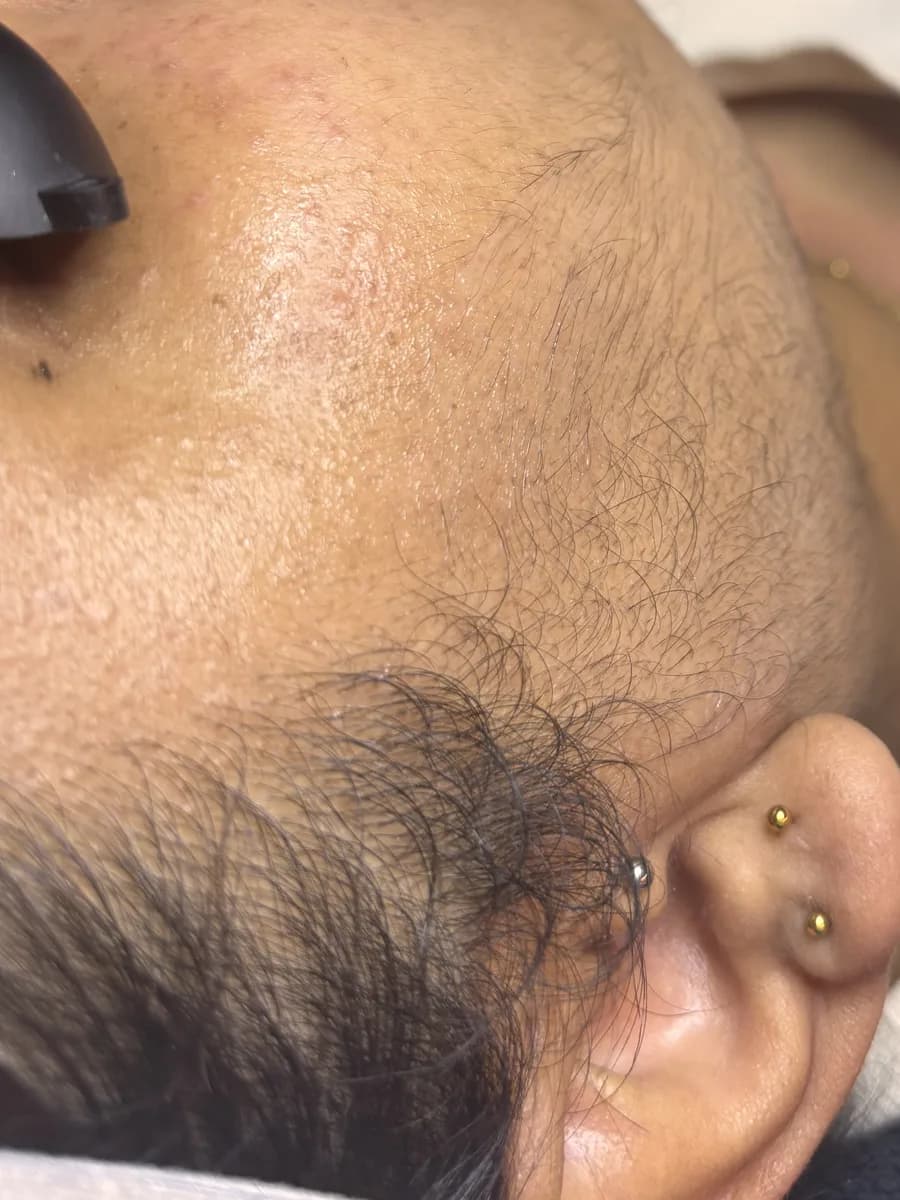
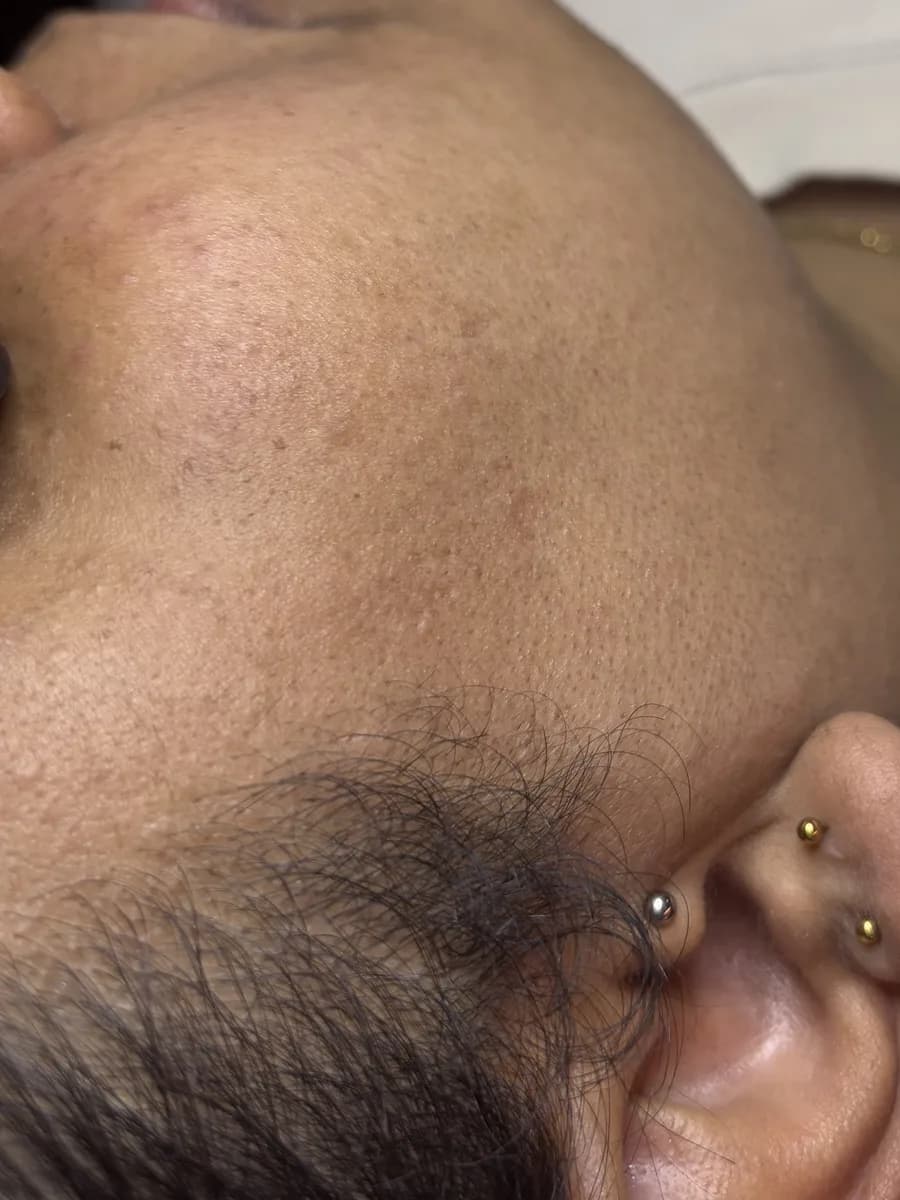
- Concern
- Facial hair
- Protocol
- Laser hair removal, cheek and temple
- What the photos show
- The dark down on the cheek and jaw is no longer visible in the second photo. The hairline itself was not treated.

Off your mind, for good. Laser hair removal helps reduce regrowth, razor irritation, ingrown hairs, and the every-other-day routine.
TYPE OF CARE
Esthetician's treatment. No medical procedure.
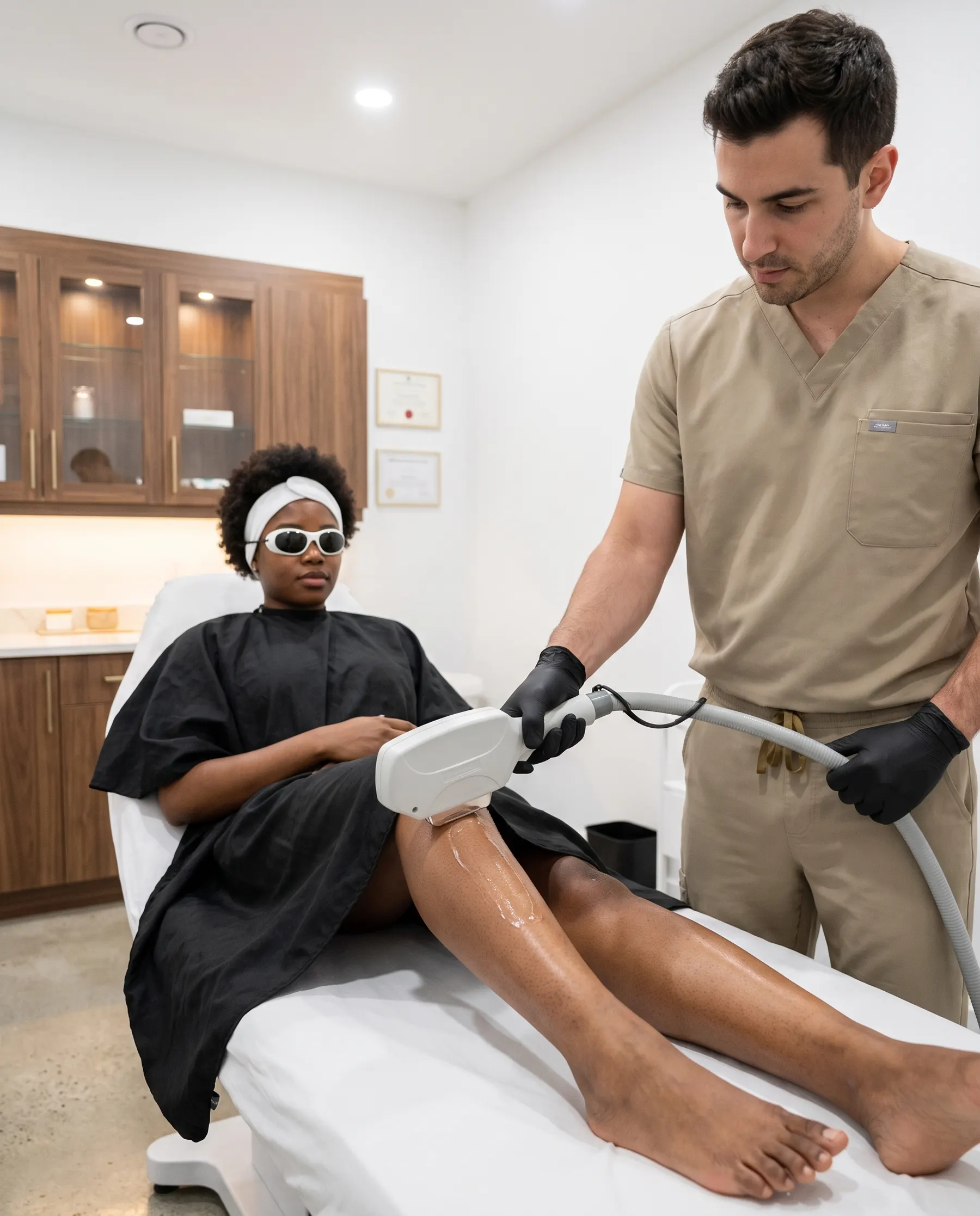
Laser hair removal is an esthetician's treatment that targets the follicle, where the hair is made, rather than the hair you can see.
It all rests on melanin, the pigment that gives hair its colour. The laser emits a wavelength melanin absorbs strongly, that energy turns to heat at the follicle, and the heat damages it enough to slow regrowth.
That is also where its limit sits: white or grey hair holds almost no melanin, and very blonde or red hair holds too little for the laser to find it easily. In that case we point you to electrolysis, which works hair by hair and does not depend on colour at all. Laser, wax and electrolysis sit side by side on one page if you are weighing the three.
The device is the Elite iQ by Cynosure, with two wavelengths, Alexandrite at 755 nm and Nd:YAG at 1064 nm. That is what lets it treat skin types 1 through 6, from very fair to very deep.
Everything people ask us before a first session, answered plainly.
The laser works mainly on hair that holds enough pigment. White or grey hair generally does not respond, and very blonde or red hair is far harder to treat. We will tell you before charging you for a session, and electrolysis exists for exactly that.
A tattooed area is not treated directly with the laser: the tattoo pigments absorb the energy too. Electrolysis works around the problem. > 📷 PHOTO, section 4 · Legs or an underarm at rest, natural skin, visible texture. > Avoid: digitally smoothed skin, a model, an advertising pose.
Recently exposed skin holds more melanin at the surface, which cuts the contrast with the hair and raises the risk of a reaction. The same goes for self-tanner. We reschedule.
A wound, sunburn, a flare of eczema or a skin infection postpones that area, without ruling out the others.
Several common treatments make skin reactive to light. Name what you take when you book, not when you arrive: some only mean waiting a while.
Both pull the root out, and the laser needs it in place to reach it. A session done after waxing does nothing at all.
Nothing shows a risk, but the practice is to wait, and the hormonal shifts of that period make the result unpredictable anyway.
No two people get the same settings, and four things explain why.
Before every session we check your skin, your hair and the things that set the parameters. That is why every session follows the same steps.

1
Assessing skin and hair
Your skin type, your hair colour, any recent sun, and your medications. This is where we tell you whether the laser suits you.
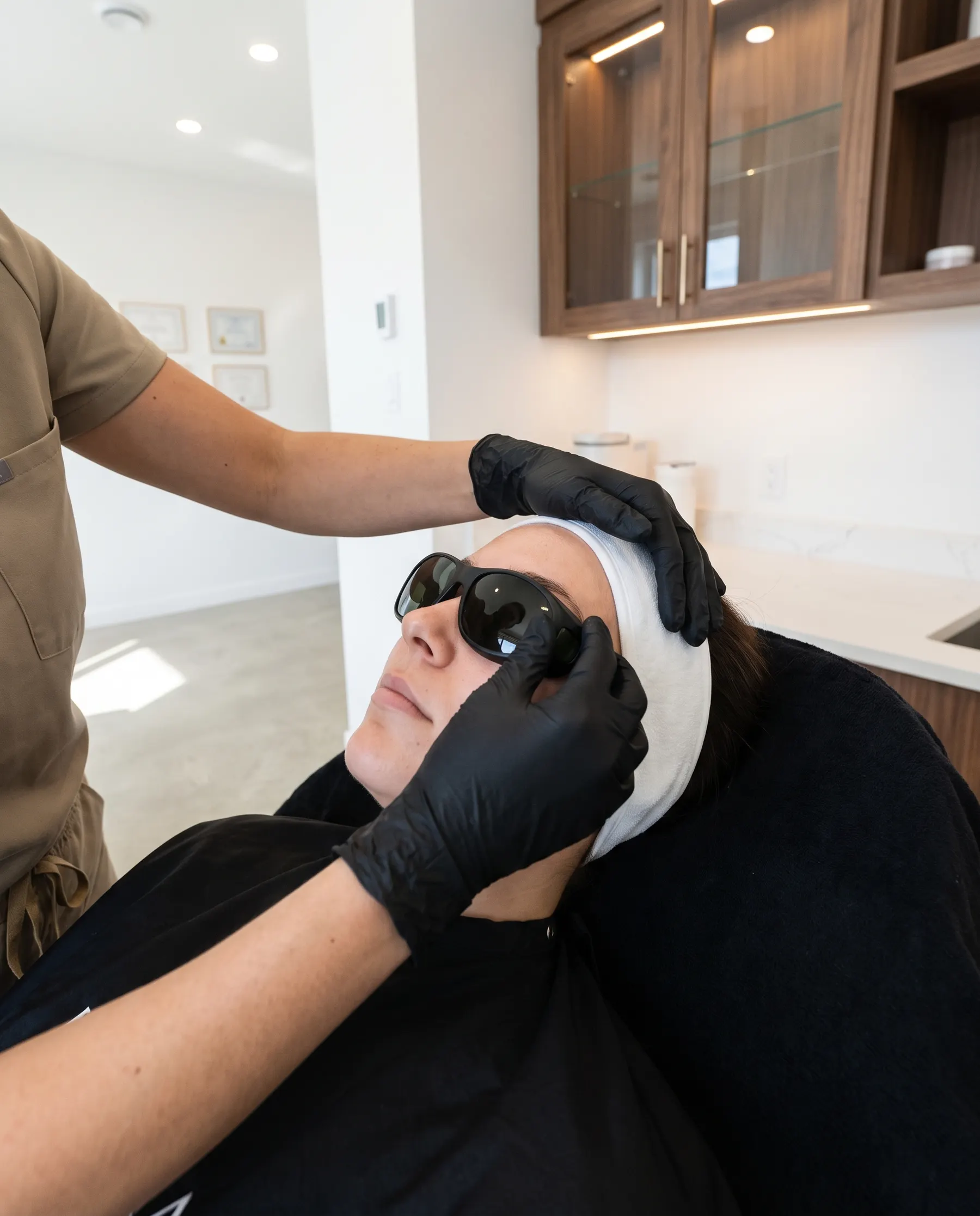
2
Protection
You and the esthetician both wear goggles for the whole treatment.

3
The laser pass
The handpiece works methodically across the whole area, following the settings established for your skin and your hair. Cooling accompanies every pulse.
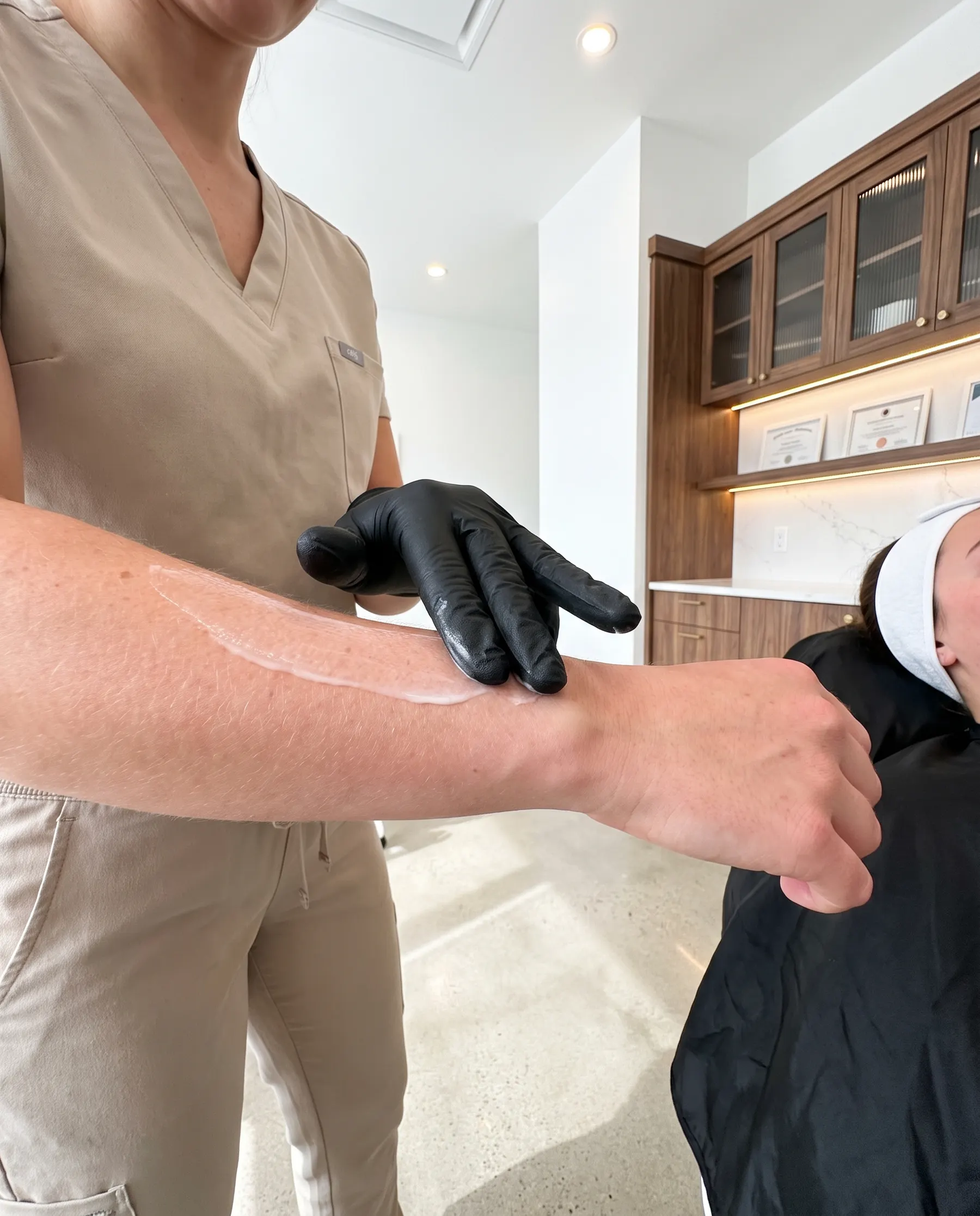
4
Calming the area
A soothing product goes on at the end, and the redness starts to settle.
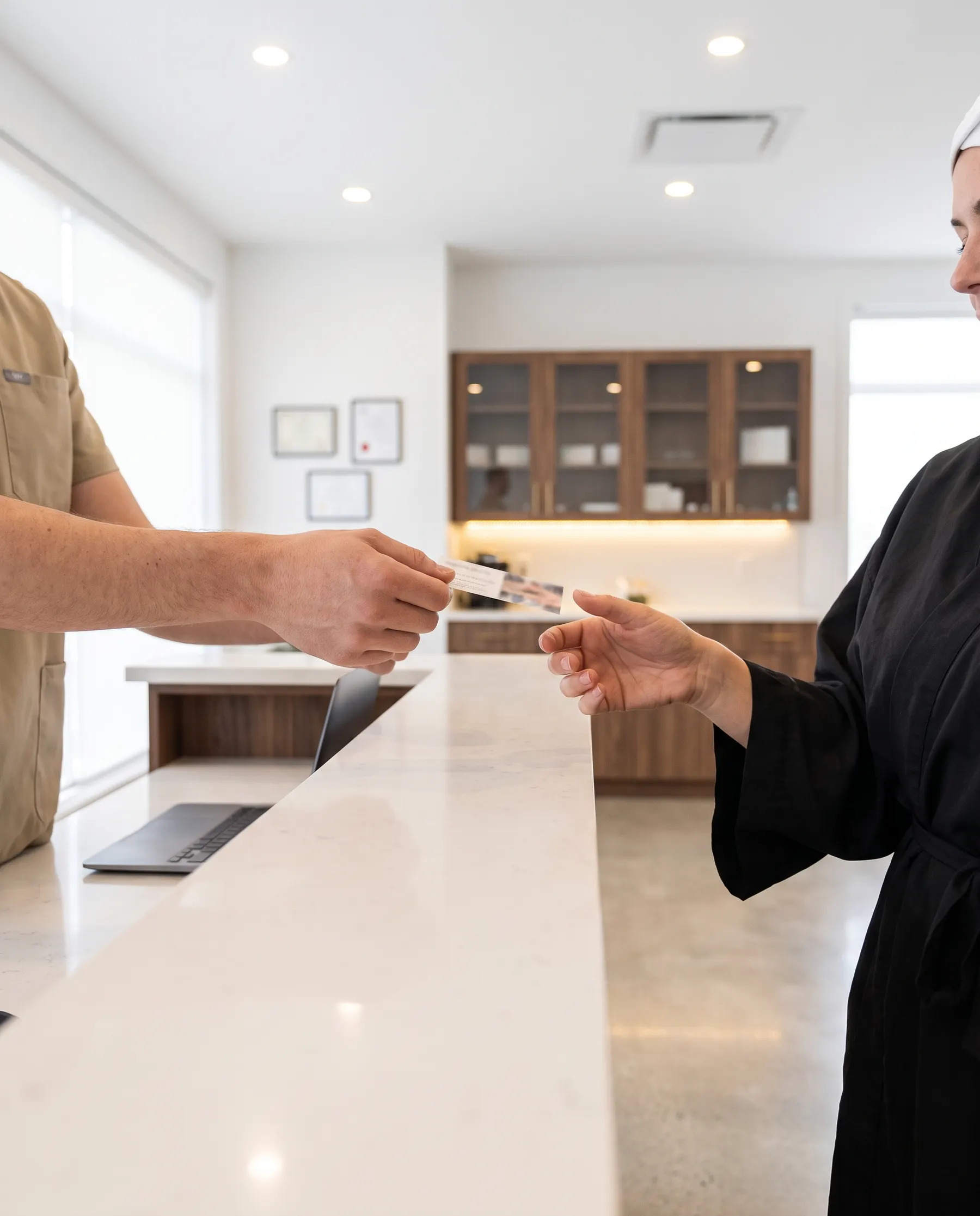
5
Aftercare and what comes next
What to avoid in the days that follow, the sun protection for the weeks after, and when to come back for your area.
EVERY SKIN TONE
The Elite iQ treats skin types 1 through 6. Several older devices cannot treat deeper skin without risk.
A TEAM THAT CARES
The institute brings together professionals from different trades, with one aim: the best version of you.
A TREATMENT BUILT FOR YOU
We adjust the settings to your skin, your hair and how they respond to the first sessions.

Their experienceat Béa
100% recommend, Laser quality is on point! Great service!!
Chloé L.
Google review
These photos are published for information only and are in no way a guarantee of results. Every skin responds differently. Published with the written consent of the clients.
Everything people ask us before a first session, answered plainly.
It all comes down to melanin, the pigment that colours hair and skin alike. The laser emits a precise wavelength, absorbed far more strongly by the melanin concentrated in the hair shaft than by the more diffuse melanin in the surrounding skin. The absorbed energy becomes heat at the follicle, where the hair is made, and damages it enough to slow or stop regrowth. The energy therefore concentrates in the hair's pigment, which limits how much the surrounding skin heats. Temporary redness or sensitivity can still happen, and more rarely pigment changes, blisters or other skin reactions: that is why the settings are matched to your skin. That is also why contrast matters: the darker your hair against your skin, the more easily the laser finds its target. A built-in cooling system protects the surface during every pulse, which is where the cold sensation alongside the pinch comes from.
This is the most important question on the page, and the honest answer is not the one most advertising gives. The correct word is reduction, not removal, and the distinction is recognised right across the field. The laser destroys some follicles with each pass, but the hairs in an area are not all at the same stage of growth at the same time, and some follicles that were dormant wake up later, particularly with hormonal change such as pregnancy or menopause. Later regrowth does not therefore mean the treatment failed, and maintenance sessions stay useful. Most people reach a point where regrowth is so fine and so slow that it stops bothering them, with the occasional maintenance session. That is the realistic result, and it is already a great deal.
Several sessions are needed, because your hairs are not all in the same phase of growth at the same time: the laser only acts on the ones in active growth, and the rest are resting, therefore invisible to the device. That is why sessions are spaced several weeks apart and repeated rather than settled all at once, and why booking them close together would not give a better result. The number varies with the area, the hair and how it responds, and the rhythm differs too: the face grows back faster than legs. We recommend a minimum of 10 sessions for a full series, and a single area on its own takes fewer: 6 to 10 for underarms, legs and bikini, 8 to 10 for the face, 6 to 8 for arms and back. Appointments sit 4 to 6 weeks apart at the start, then 6 to 8 weeks apart towards the end of the series, and one maintenance session a year is enough afterwards. We give you a closer estimate once we have assessed your skin and your hair.
Yes. The Elite iQ treats skin types 1 through 6, meaning the whole range, from very fair skin that burns without ever tanning to very deep skin. This is a real difference between devices, and a question worth asking before you book: several older lasers cannot treat deeper tones without risk of a burn or a mark, and that is a limit of the device, not of your skin. What changes with your skin type is the settings used, which of the two wavelengths is chosen between the Alexandrite and the Nd:YAG, and the pulse duration, not whether you can be treated. Hair colour stays decisive for how well it works: white, blonde or red hair does not hold enough melanin, whatever your skin. Whether you can be treated also depends on recent tanning, the state of your skin, your medications and the area.
The question is not the season, it is the tan, and that distinction changes everything about planning. Recently exposed skin holds more melanin at the surface, which cuts the contrast with the hair, forces the intensity down, and raises the risk of a reaction or a mark. If you are back from a holiday, if you spend your weekends outdoors, or if you have used self-tanner, we reschedule: that is not excess caution, it is the condition for a session that is both effective and safe. If you protect yourself and your skin is at its usual colour, summer is no obstacle in itself. The same rule applies afterward: strict sun protection on treated areas for several weeks.
Yes, and it matters for two reasons. The area needs a close shave, ideally the day before or that morning, so the laser's energy travels down to the follicle rather than scattering in the visible part of the hair, which would waste the pulse and could feel like a surface burn. Shaving the day before, rather than just before, also keeps you from arriving with freshly irritated skin. What you must not do is wax, tweeze or use an epilator in the weeks beforehand: those methods take the root out, and the root is precisely what the laser needs in place to reach. Forgetting this costs you the whole session.
All three live here and they do not address the same hair. Laser goes after dark hair, the kind that holds melanin, and works over a series spaced several weeks apart because it only reaches hairs in active growth. Electrolysis treats white, blonde, red or tattooed-area hair, one hair at a time, and it is the only method recognised as permanent. Waxing takes every hair without distinction, but the effect is temporary and repeats every few weeks. Before an event, waxing is done the day before, while laser asks you to shave the day before and stay out of the sun afterward. And above all, waxing never belongs between two laser sessions: it removes the root the laser needs to reach.

Send us your questions and we will guide you toward the treatments that suit you best.