
Neuromodulators in Laval
A rested face that keeps its expressions. Neuromodulators soften expression lines: the frown line, forehead lines and the creases at the corners of the eyes.
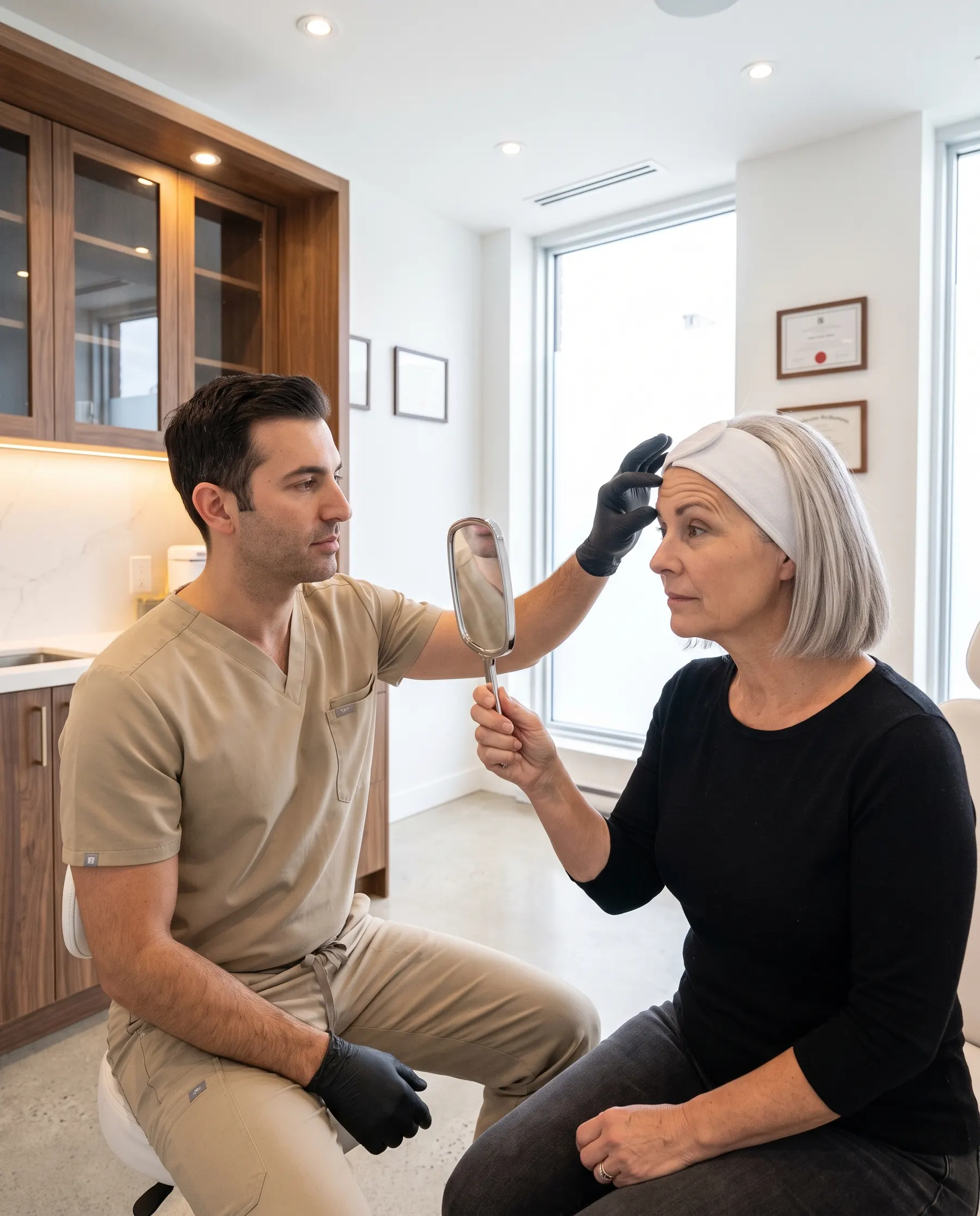
MEDICAL PROCEDURE
Performed by a physician. Medical consultation required.
What is a neuromodulator
In esthetic medicine, neuromodulators are medications based on botulinum toxin type A. Injected by a physician, they temporarily reduce the nerve signal reaching certain facial muscles.
A muscle contracts because a nerve tells it to, and that message crosses the gap between the two. The product interrupts that crossing: the muscle works less hard, and the crease it was making softens.
This procedure addresses the frown line, forehead lines and crow's feet.
Two things follow. The effect is temporary: over time the transmission between nerve and muscle gradually returns and so does the movement. And the procedure works mainly on lines created by movement. When a line is already visible at rest it can soften too, but it is often less completely corrected and may call for another approach alongside.
price
- Set by the physician, who bills his own fees
- The product is dosed in units, not per session
- The consultation fee is given to you before booking
- After the assessment, the doctor confirms the number of units and the total cost before any injection
- A medical consultation beforehand, which is paid, is required
length
- About a 30-minute appointment
- The procedure itself takes a few minutes
- A follow-up appointment about two weeks later
- The effect takes a few days to appear
areas treated
- The forehead
- Between the brows, the frown line
- The eye area
- Other areas exist and are discussed in consultation
how it feels
- A brief sting at each injection point
- The needle used is very fine
- A passing red dot at each point
- A temporary headache can occur in some people
after the session
- The doctor gives you his own instructions
- Avoid exercise, saunas and heat for the rest of the day
- Do not rub or massage the areas treated
- They take precedence over general advice found online
what it addresses
- Frown line, between the brows
- Horizontal forehead lines
- Crow's feet at the corners of the eyes
- Expression lines of the upper face

Is this procedure right for you?
This procedure mainly addresses lines created by movement. Here is how to place yourself.
If the mark is there even when your face is still, this is not necessarily the only step to plan. The wrinkles and sagging page explains what separates movement, skin, volume and slackening, and why they so often overlap. If you are not sure yet, the institute's esthetic consultation is free and will point you the right way.
The mark only appears in motion
When you frown, when you smile, when you raise your brows. At rest, it disappears.
Your face at rest gives you a look that is not you
A stern or tired look that is not you. It is a common and legitimate reason to come in.
You want to try without committing
The effect fades on its own, unlike hyaluronic acid, which lasts longer.
You want to keep your mobility
Tell the physician in plain words. It is information that changes the plan, not an awkward demand.
Contraindications
The complete list is established by the physician in consultation, from your history and your medication. What is written here does not replace it.
PREGNANCY AND BREASTFEEDING
At L'Institut Béa, the treatment is postponed during pregnancy and during breastfeeding.
CERTAIN NEUROMUSCULAR CONDITIONS AND CERTAIN MEDICATIONS
They change how the product acts. It is one of the reasons the medical consultation is required, and not a formality.
AN INFECTION OR A LESION IN THE AREA
The procedure is not performed through infected or broken skin.
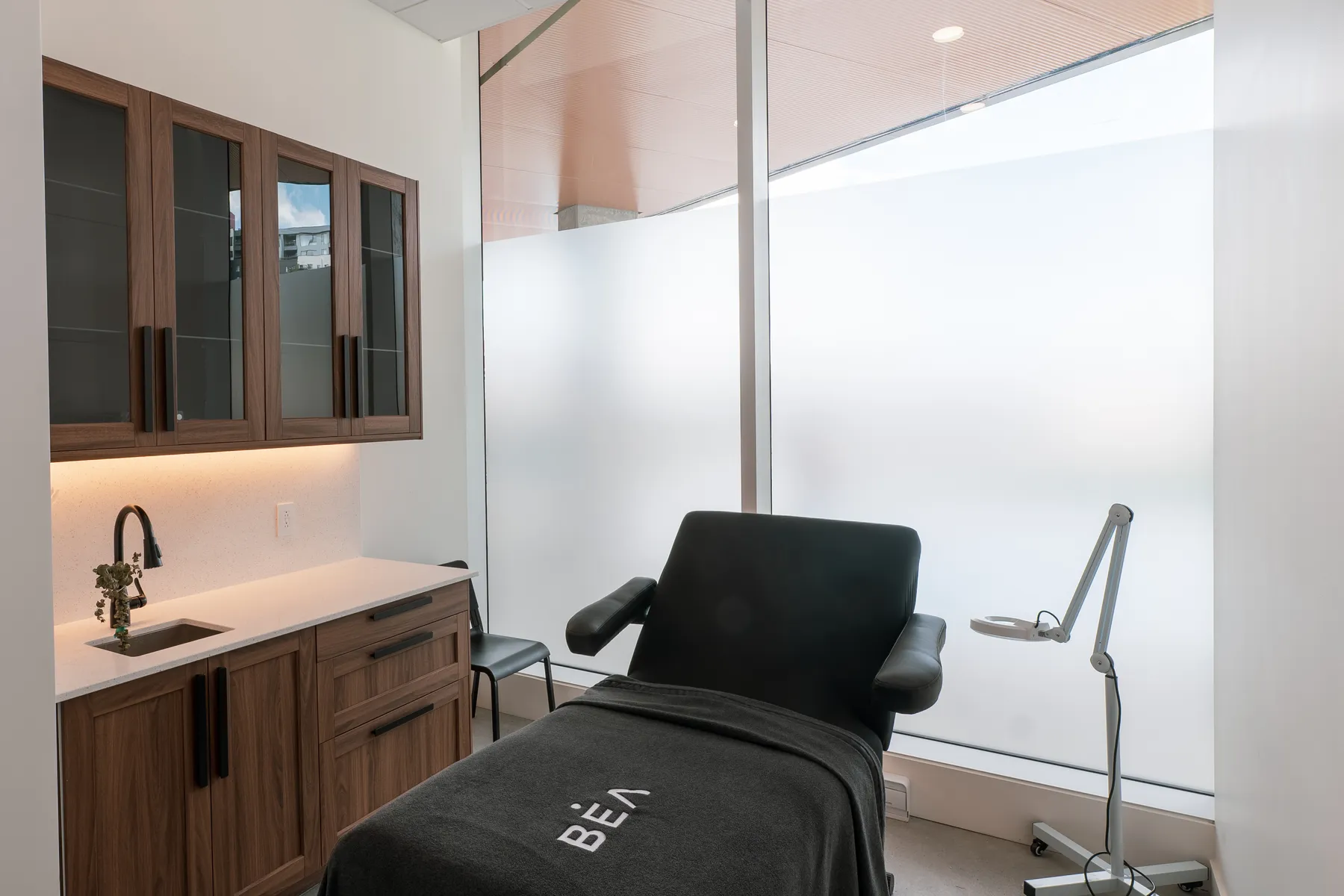
A procedure adjusted to your face
Four things decide the result, and none of them can be settled online.
- ASSESSING THE MOVEMENT
- The physician asks you to frown, to smile and to raise your brows. That step shows which muscles work in you and how strongly, which varies a great deal from one face to another.
- THE DOSE, NOT THE AREA
- Two people with the same line do not receive the same amount. That is why these products are counted in units rather than in sessions. Unit counts are only comparable within the same product: units differ from one neuromodulator brand to another.
- THE BALANCE BETWEEN MUSCLES
- Some facial muscles pull upward, others downward. The doctor takes that balance into account in order to limit the risk of asymmetry or of a result that does not match your natural expression.
- RESTRAINT
- An effect that is too strong cannot be undone straight away. The doctor may therefore take a conservative approach, then reassess the result at the follow-up before deciding whether an adjustment is medically indicated.
The appointment step by step
The physician follows the same steps at every appointment.
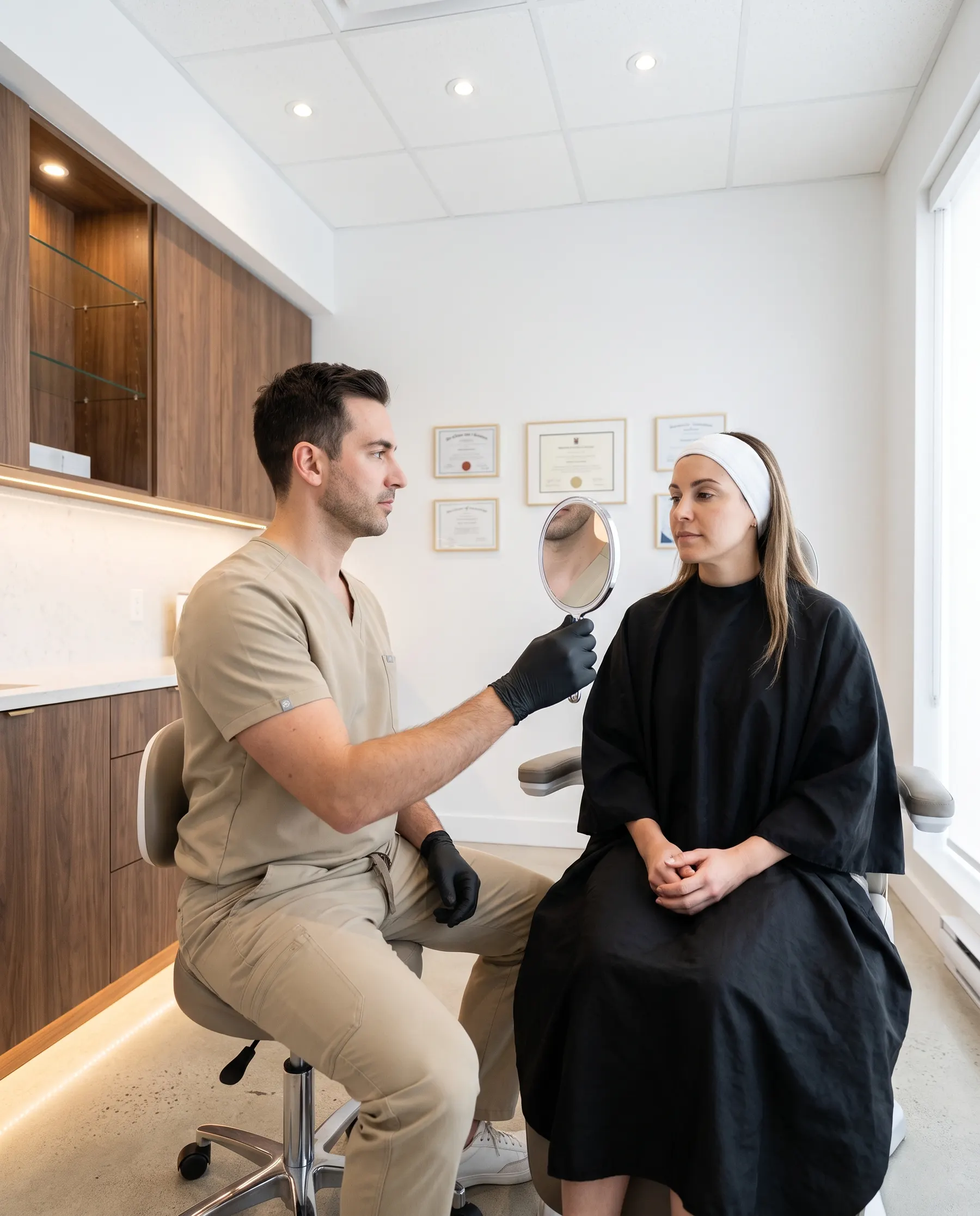
1
The assessment
He assesses your face at rest and in motion, and discusses with you what you are after and what you do not want.
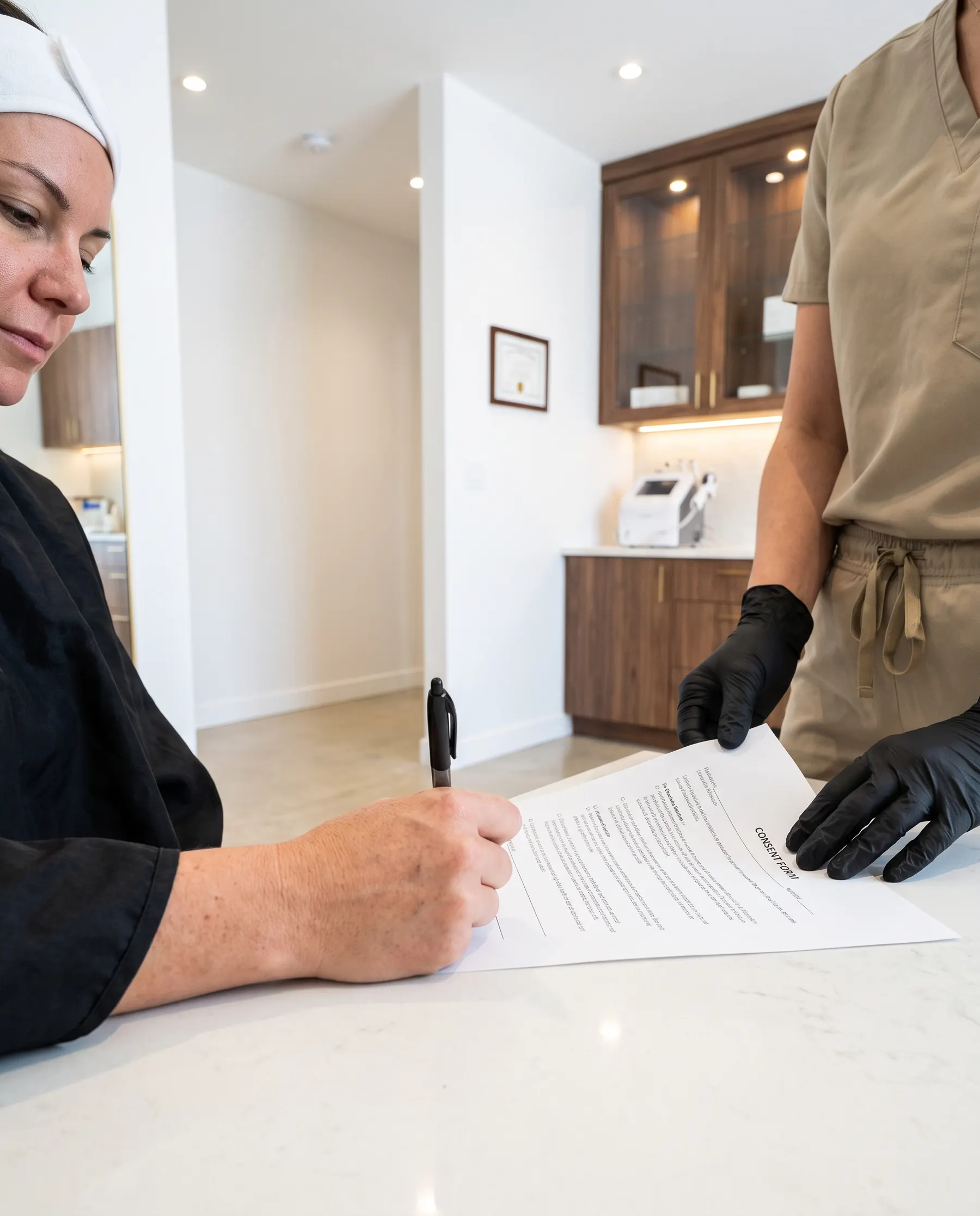
2
Information and consent
He explains the expected effects, the risks and the contraindications. You sign a written consent.
3
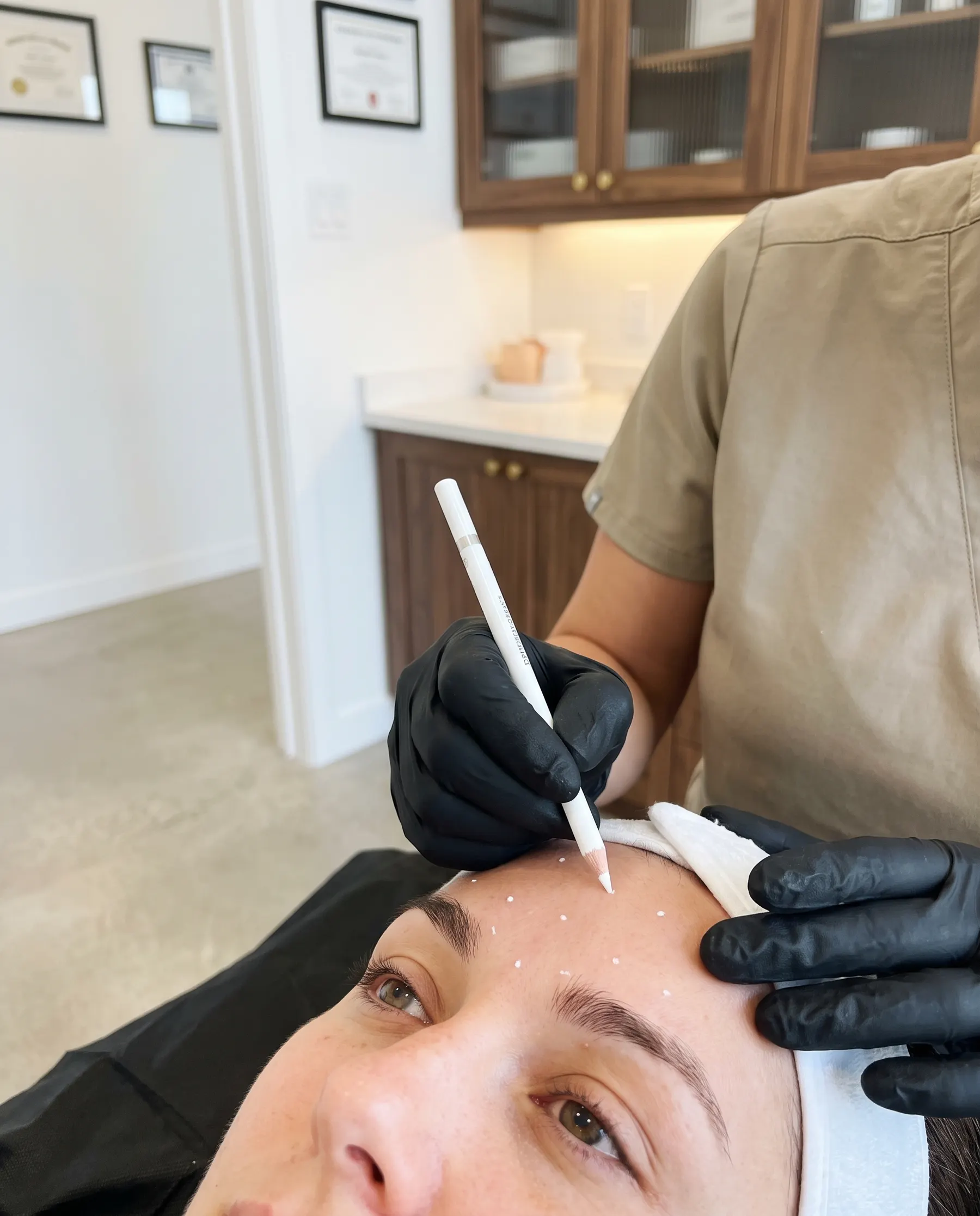
Marking
The area is cleaned and the injection points are marked on your face.
4
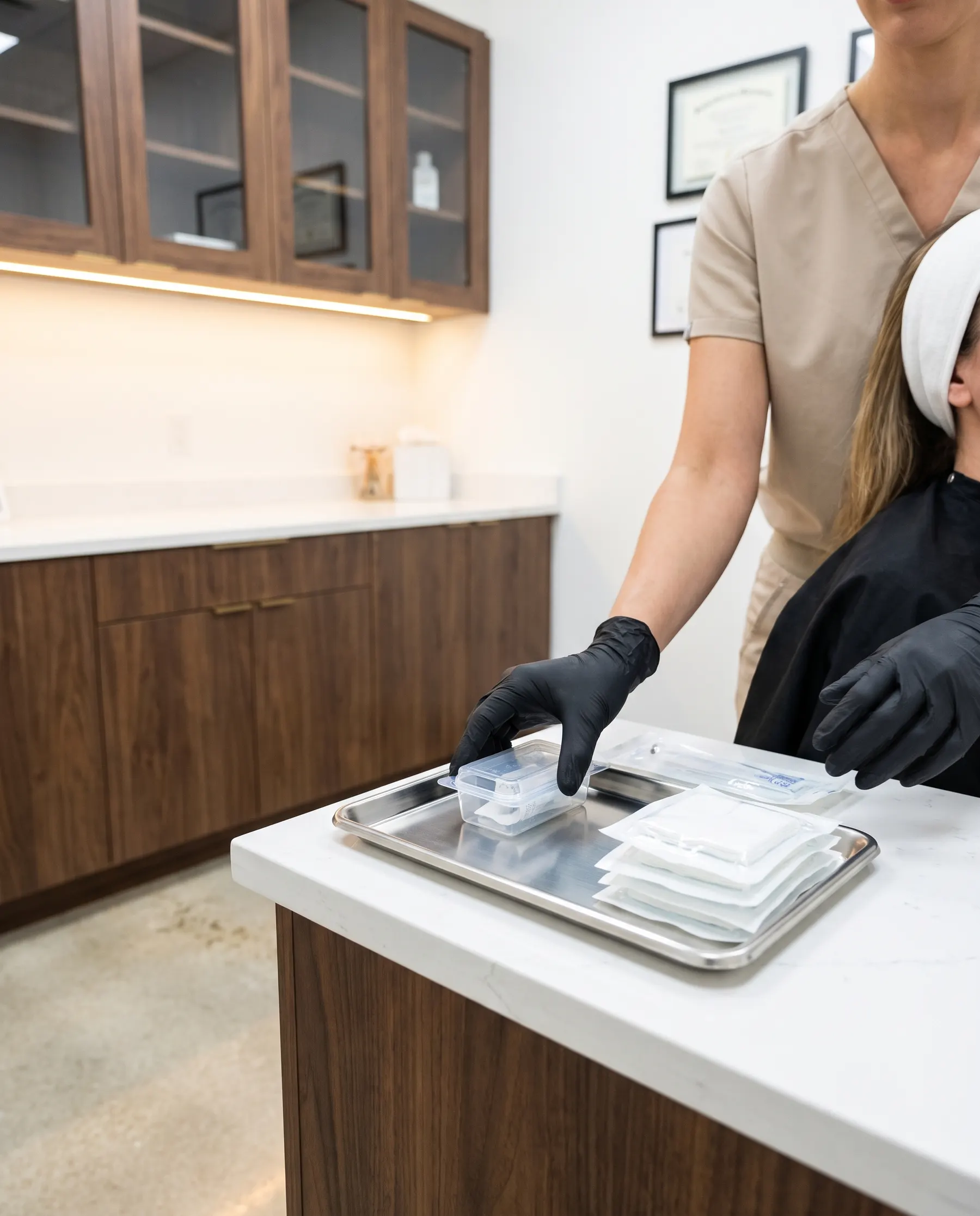
The injections
Done with a fine needle. The procedure takes a few minutes.
5
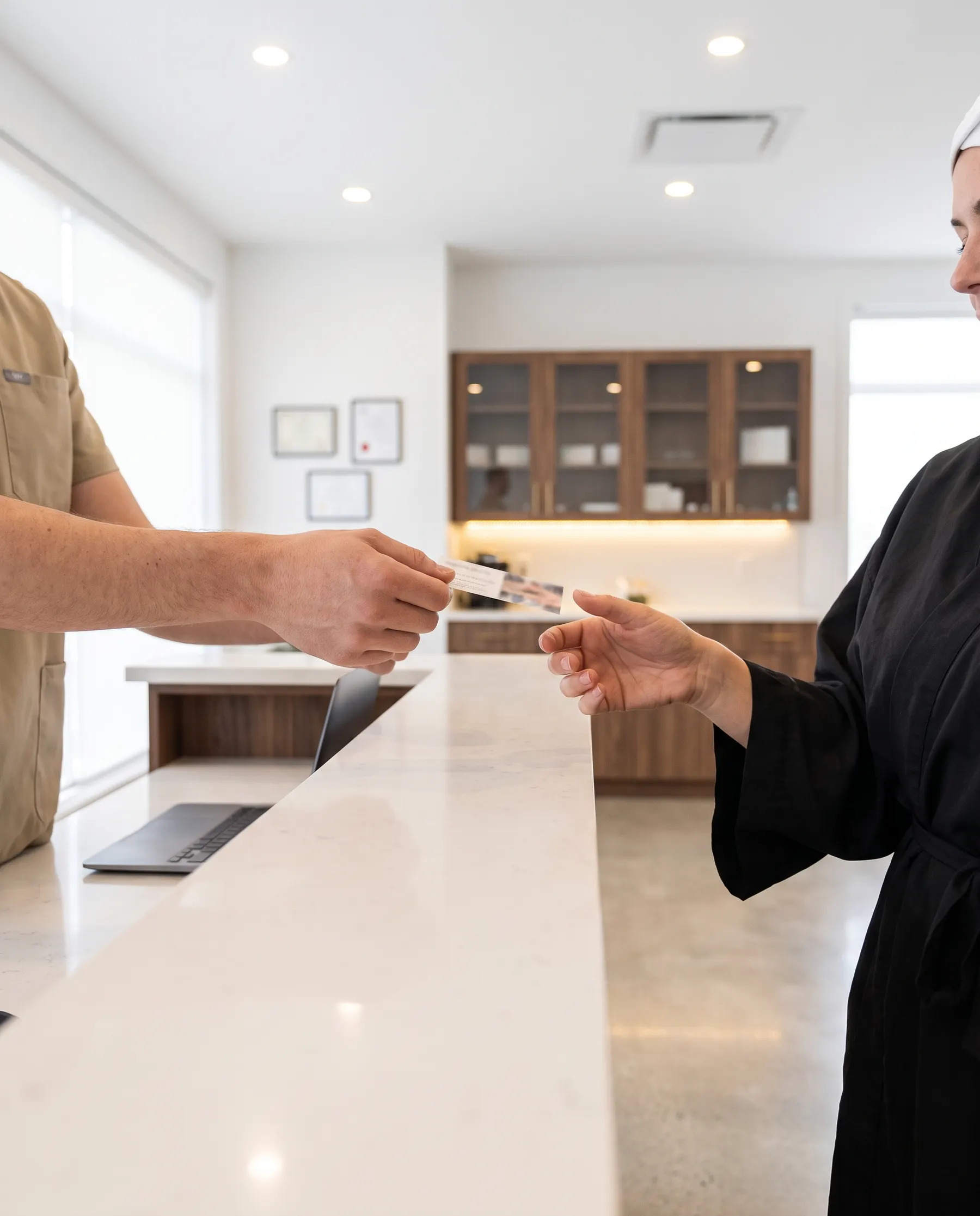
Instructions and follow-up
You are given the instructions for the hours that follow, and a follow-up appointment is set, about two weeks later.

Who performs this procedure
At L'Institut Béa, Dr Nyan Narine personally performs the neuromodulator injections. The institute's estheticians do not perform any injection.
He practises on the institute's premises, he keeps his own records and he bills his own fees. The institute does not sell his procedures, as the Collège des médecins du Québec requires.

Their experienceat Béa
Beautiful Spa that is a one stop shop for all your beauty, body and aesthetic needs. The staff is skilled, warm and inviting and the zen decor makes you want to never leave. I have loved all of my services thus far, and I will continue to come back to discover new services.
Kim B.
Fresha review
Frequently asked questions
Everything people ask us before a first session, answered plainly.
Does it hurt?
There is a brief prick at each injection point, with a very fine needle, and the whole procedure takes a few minutes. Most people describe it as bearable and no more. A red dot where the needle went in is common and short-lived, and a temporary headache can occur in some people. If your apprehension is mainly about the needle, say so to the doctor and he will take it into account.
Will I keep my expressions?
It is the most widespread worry, and it comes from excessive results we have all seen. The answer comes down to the dose: a muscle can be weakened without being immobilised, and there is a whole range in between. Well dosed, you keep frowning and smiling, the crease simply forms less deeply. The forehead is where excess shows most. Tell the physician, in plain words, that you want to keep your mobility: it is information that changes the plan and the number of units.
How long before it works?
Nothing happens on the day, and that is normal. The block sets in gradually: the first signs appear after a few days, and the full effect takes about two weeks. That is why the follow-up appointment is set then. The practical consequence matters if you have an event: count that delay backwards from the date, and add margin for the follow-up. Three weeks ahead rather than three days changes everything.
What happens if I stop?
The effect fades gradually and muscle activity returns. Expression lines reappear little by little: they do not become worse because you stopped, but your face naturally keeps changing with time. No dependency is created and nothing commits you to starting again.
What precautions apply after the appointment?
The doctor gives you his own instructions after the treatment, and they take precedence over general advice found online. They may include avoiding rubbing or massaging the treated areas and putting off certain activities for a few hours.
Which areas can be treated?
The three most requested are the forehead, the frown line and around the eyes, where muscle movement most visibly creates a crease. Other areas exist, and the consultation determines whether they are indicated for you: each area has its own anatomy, risks and contraindications. Areas are chosen after watching your face at rest and in movement, rather than from a set package.
How long does the effect last?
For lines of the upper face the effect often lasts around three to four months, but the duration varies with the product, the dose, the area and the person. The transmission between nerve and muscle returns gradually, so movement comes back little by little rather than all at once. The doctor will give you an estimate suited to your treatment.
What side effects are possible?
The most common reactions are temporary: redness, tenderness, a small bruise or swelling at the injection point. A headache can also occur. Depending on the area, temporary weakness of a neighbouring muscle, or a lower eyelid or eyebrow, are possible. The doctor also explains the rare complications before obtaining your consent.

Ready to meet the best version of yourself?
Send us your questions and we will guide you toward the treatments that suit you best.