
Microdermabrasion in Laval
A finer texture, less visible pores, a more even complexion. Microdermabrasion helps improve texture, enlarged pores, a dull complexion and surface marks.
NATURE OF THE TREATMENT
An esthetician's treatment. No medical procedure.
What is microdermabrasion
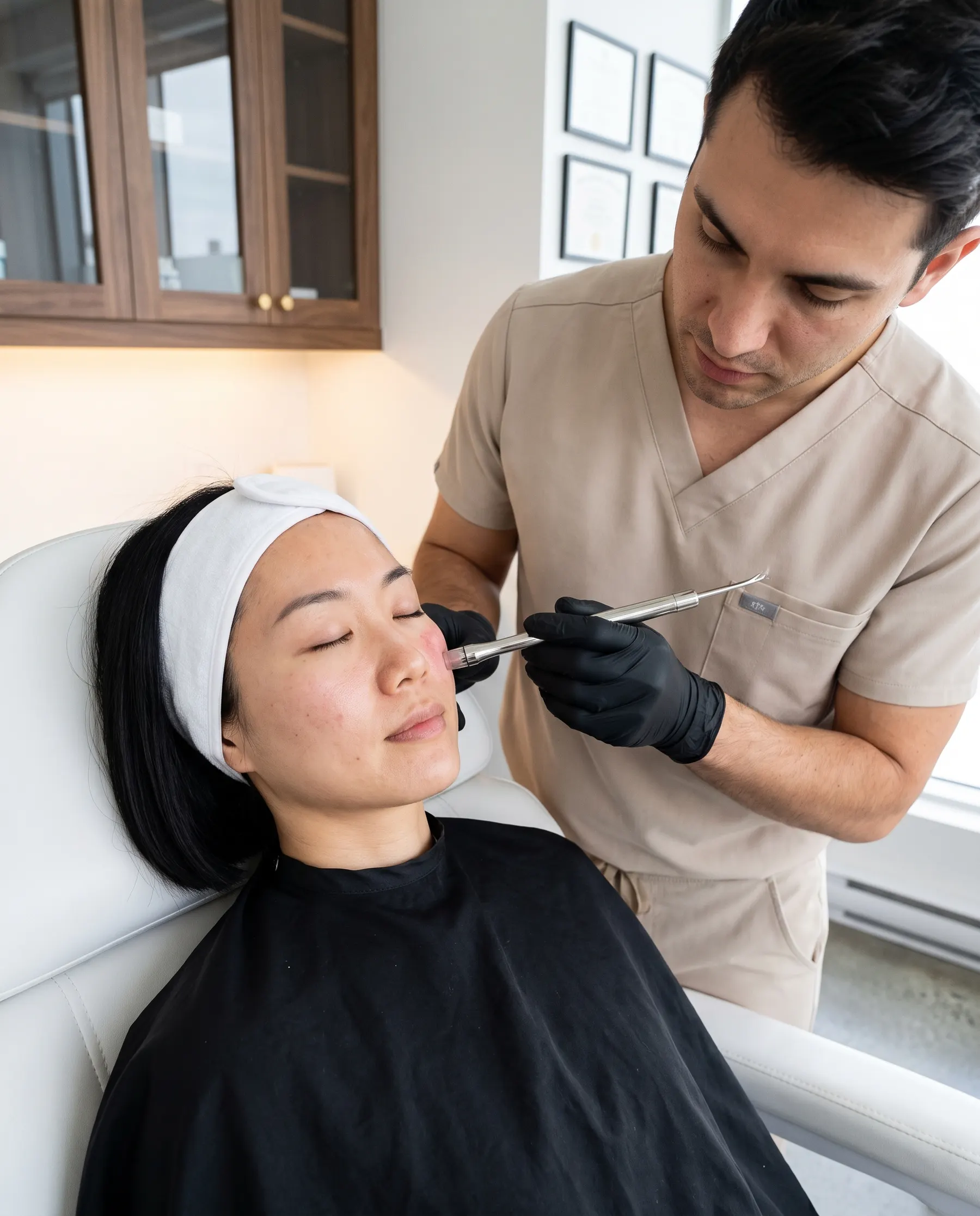
Microdermabrasion is a treatment that uses a diamond tip to abrade the surface layer of the skin, with suction that removes the loosened cells straight away.
It works mechanically, without exfoliating acid. The diamond tip exfoliates the dead cells at the surface while the suction helps draw them away.
This treatment is mainly used to improve uneven texture, enlarged pores, a dull complexion and surface marks.
From the moment you walk out, skin can look smoother, brighter and more even.
price
- $160 per session
- Several sessions may be required depending on your goal
length
- 75-minute appointment
- No complex preparation
- Tell us about your medications and your exfoliating products before the session
areas treated
- Full face
how it feels
- Usually painless
- A scraping and suction sensation
- More noticeable on the forehead and cheeks, where a coarser tip is used
after the session
- No downtime
- Slight redness is possible and often brief
- It can last into the next day on sensitive skin
- Sun sensitivity for a few days
- Sun protection essential afterwards
what it addresses
- Uneven texture
- Enlarged pores
- Dull complexion
- Congested skin
- Surface irregularities

Is microdermabrasion right for you?
Microdermabrasion can be worth considering if you want to refine your skin texture without going through an acid, and your main concerns are texture, pores or a complexion that has gone dull.
It is for you if:
A rough or congested texture
Microdermabrasion mechanically removes some of the dead cells built up at the surface.
Visible pores despite your routine
Areas where pores are more visible, such as the nose and the cheeks, can be worked more precisely.
A complexion that is dull all over
Dull everywhere rather than marked in one spot, which is what separates this from a peel.
You would rather have a mechanical exfoliation than an acid-based treatment
The exfoliation is done without exfoliating acid. If your skin is very reactive, that does not automatically make it a better option: we check its tolerance first.
Not sure this is the right treatment for you?
A skin analysis assesses your concerns and your goals in order to determine the most suitable treatment and plan.
Contraindications
WHAT WE CHECK BEFORE
We postpone the treatment on infected, broken or strongly inflamed skin. Rosacea, eczema, certain medications such as isotretinoin (Accutane), a tendency to abnormal scarring or a lesion that is changing must also be reported before the session. Your skin and the products you currently use are checked before we start.
VERY REACTIVE SKIN OR SKIN PRONE TO ROSACEA
On very reactive skin, with a weakened barrier, prone to rosacea or to visible small vessels, abrasion and suction can temporarily heighten redness and irritation. We favour a gentler approach in that case.
AN ACTIVE ACNE FLARE
With red, painful or strongly inflammatory lesions, we prefer to postpone or adapt the treatment rather than irritate the skin further.
TOO MUCH EXFOLIATION AT ONCE
A scrub at home, an acid at night and an in-clinic session in the same week end up weakening the barrier. Tell us what you already use before we set a rhythm.
A treatment adjusted to your skin
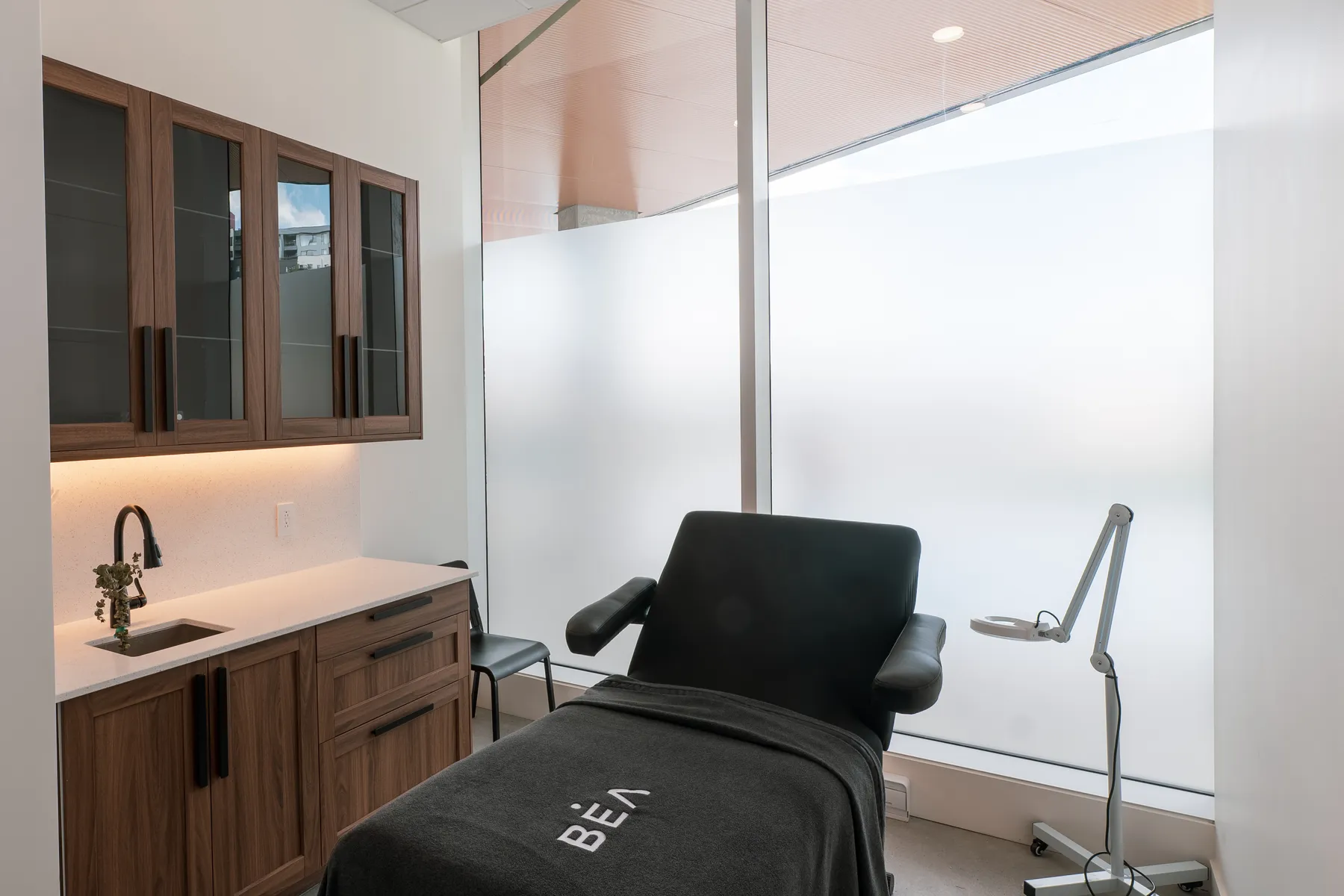
The result depends on settings decided during the session, based on your skin.
- THE GRADE OF THE TIP
- From the finest around the eyes to the coarsest on thicker areas. The choice is made area by area during the session, not once for the whole face.
- THE SUCTION SETTING
- The suction is matched to the area and to what your skin tolerates, so the treatment works without provoking an excessive reaction.
- THE NUMBER OF PASSES
- A congested area takes several, a thin cheek takes one. The overall intensity is built while working.
- THE FINAL SERUM
- Chosen after the treatment rather than before, based on what the skin showed during the exfoliation.
The session step by step
Before every session we check your skin and the settings it calls for. That is why every session follows the same steps.
1
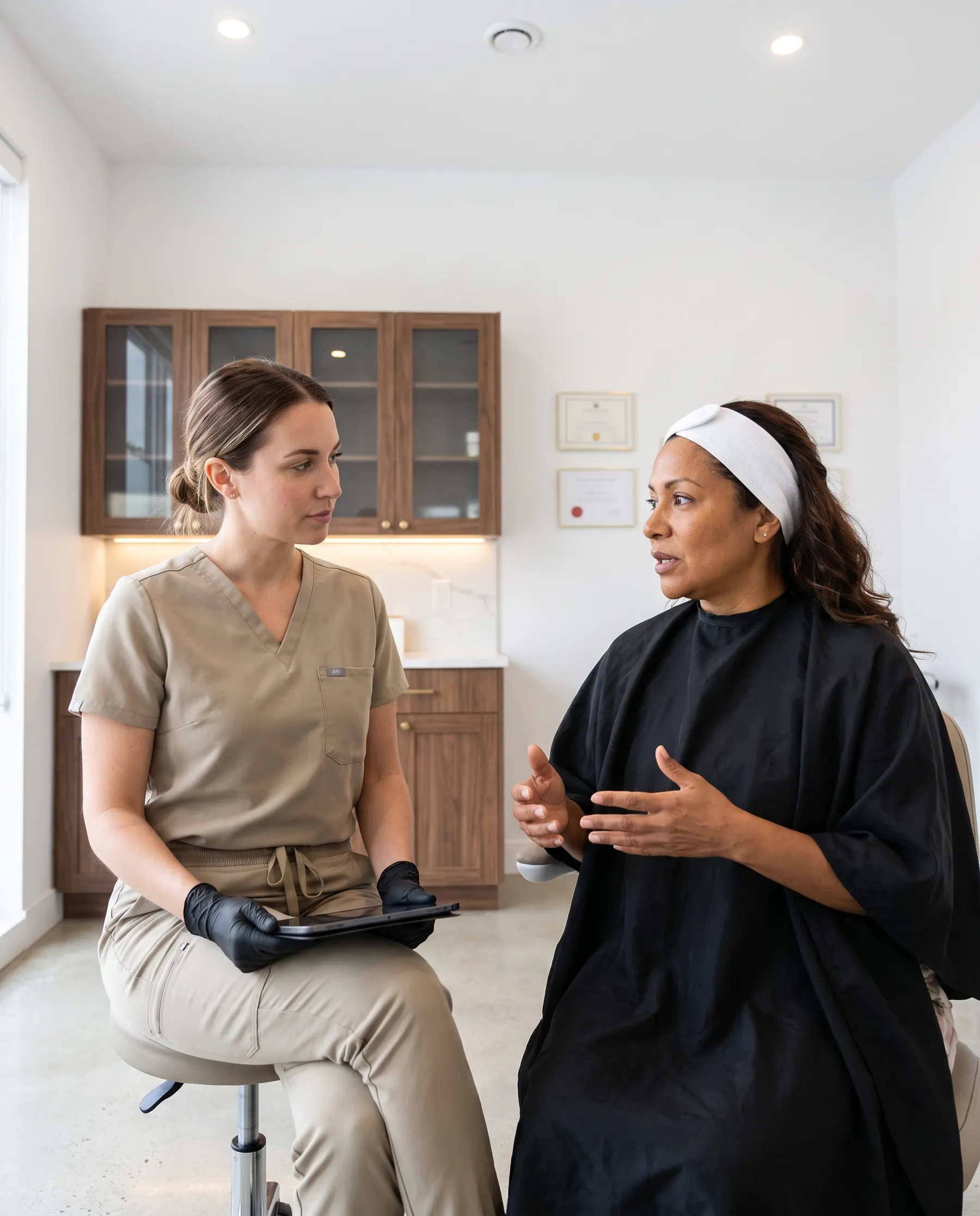
Talking through your goals
We look at your skin together to confirm this treatment answers what you are after, and to set how often to come back.
2
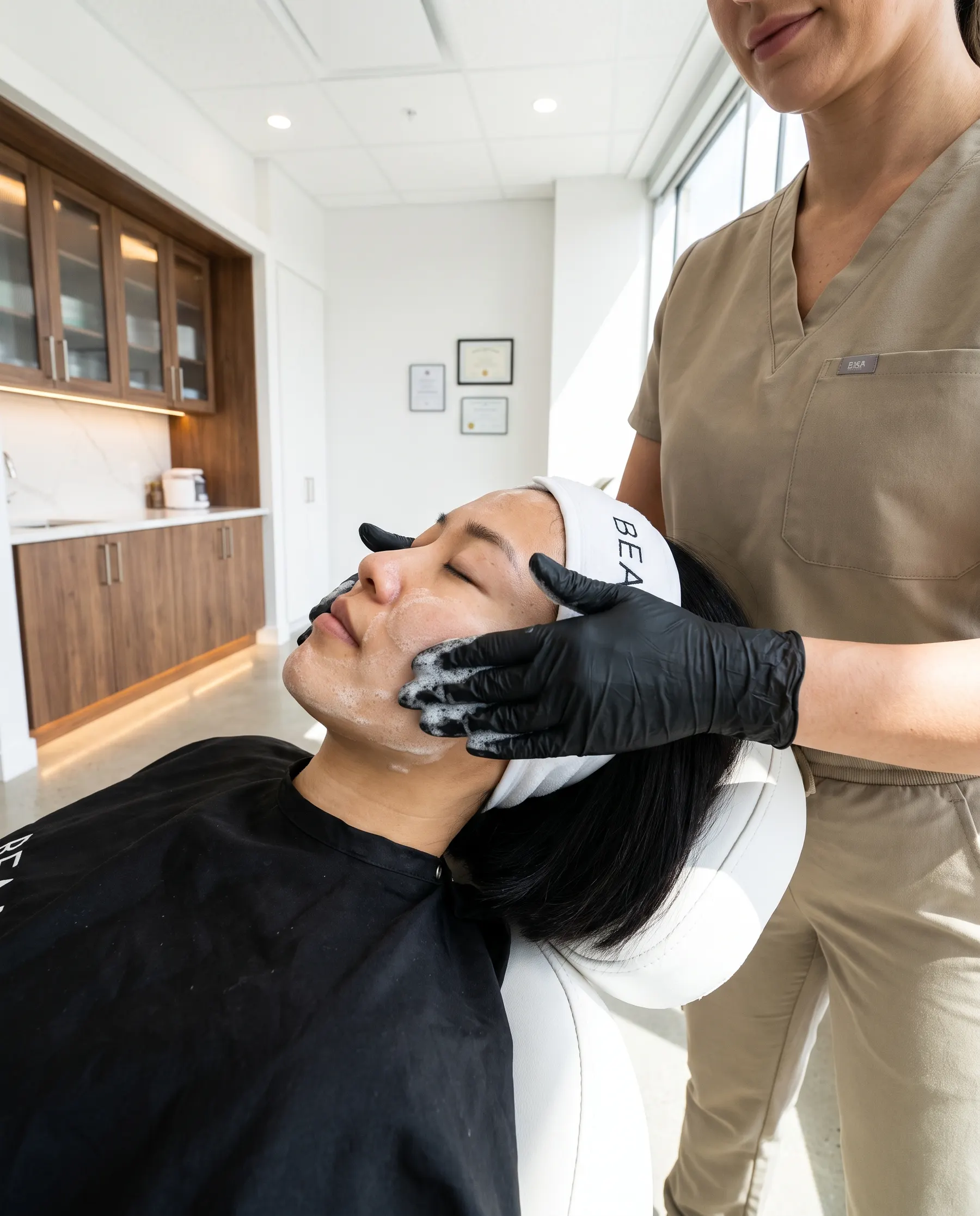
Cleansing and drying
The skin is cleansed then dried. The tip does not work on a damp surface.
3
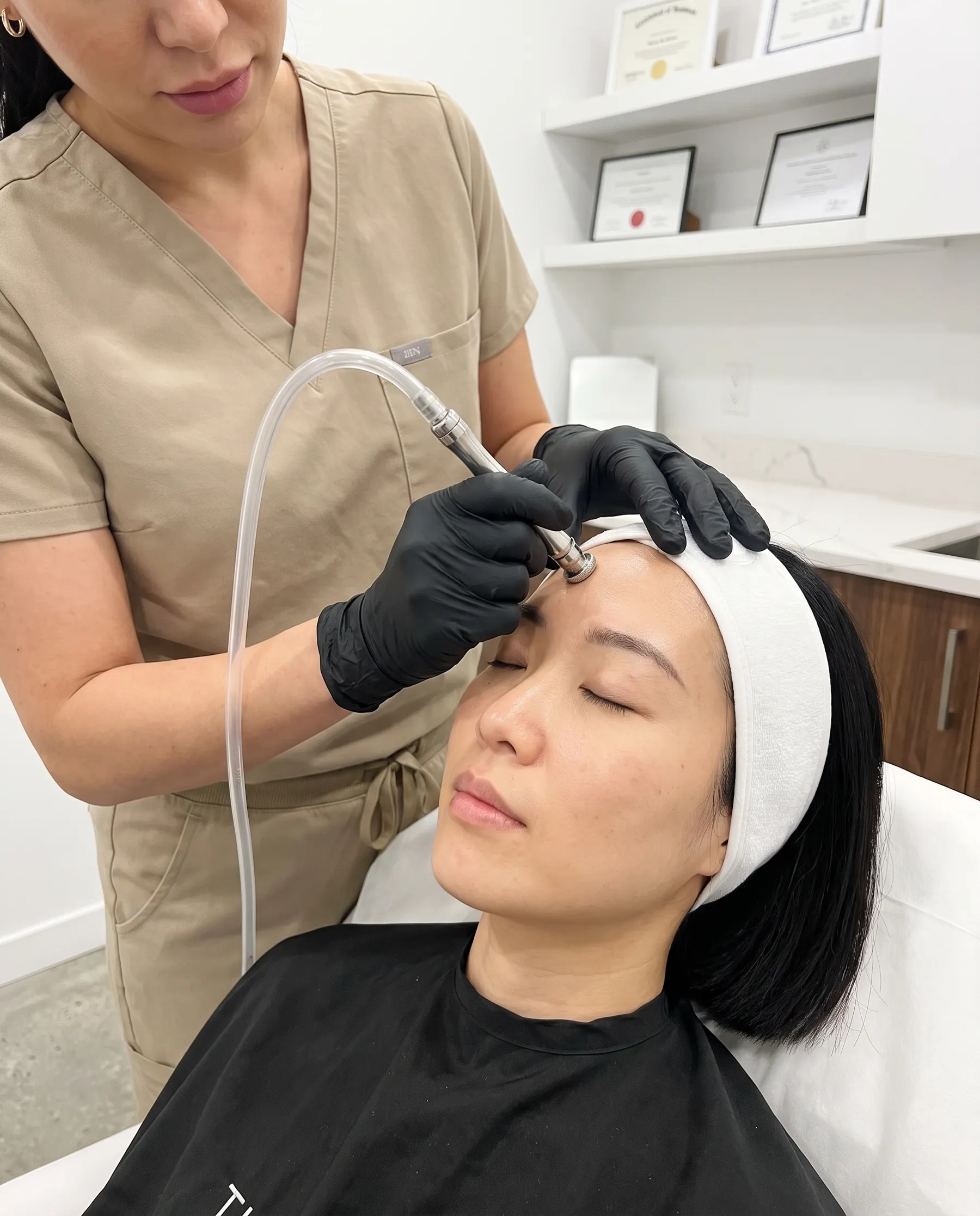
The tip pass
Area by area, with the grade suited to each spot. Suction removes the cells as it goes.
4
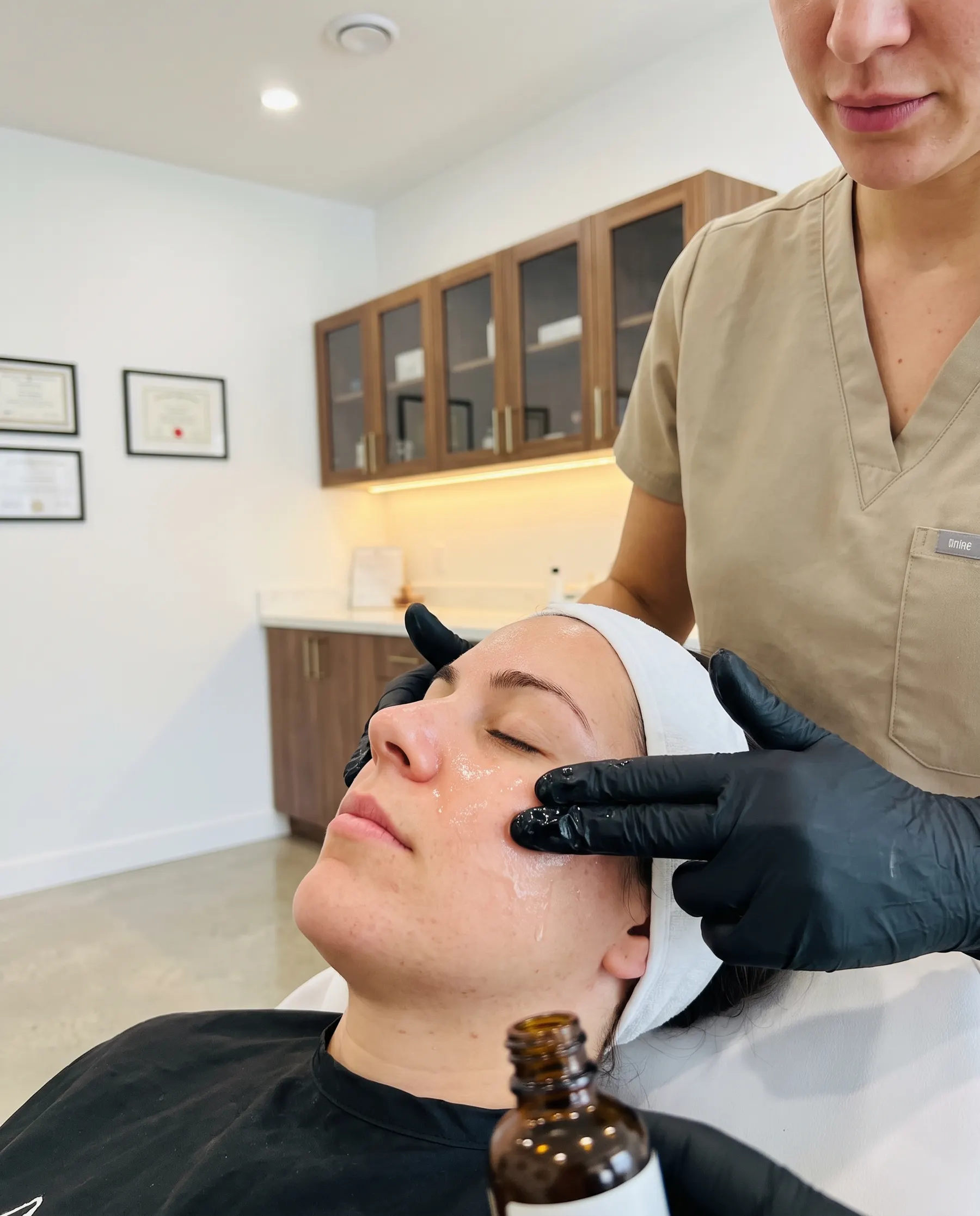
Applying the serum
The serum goes on skin that has just been exfoliated.
5
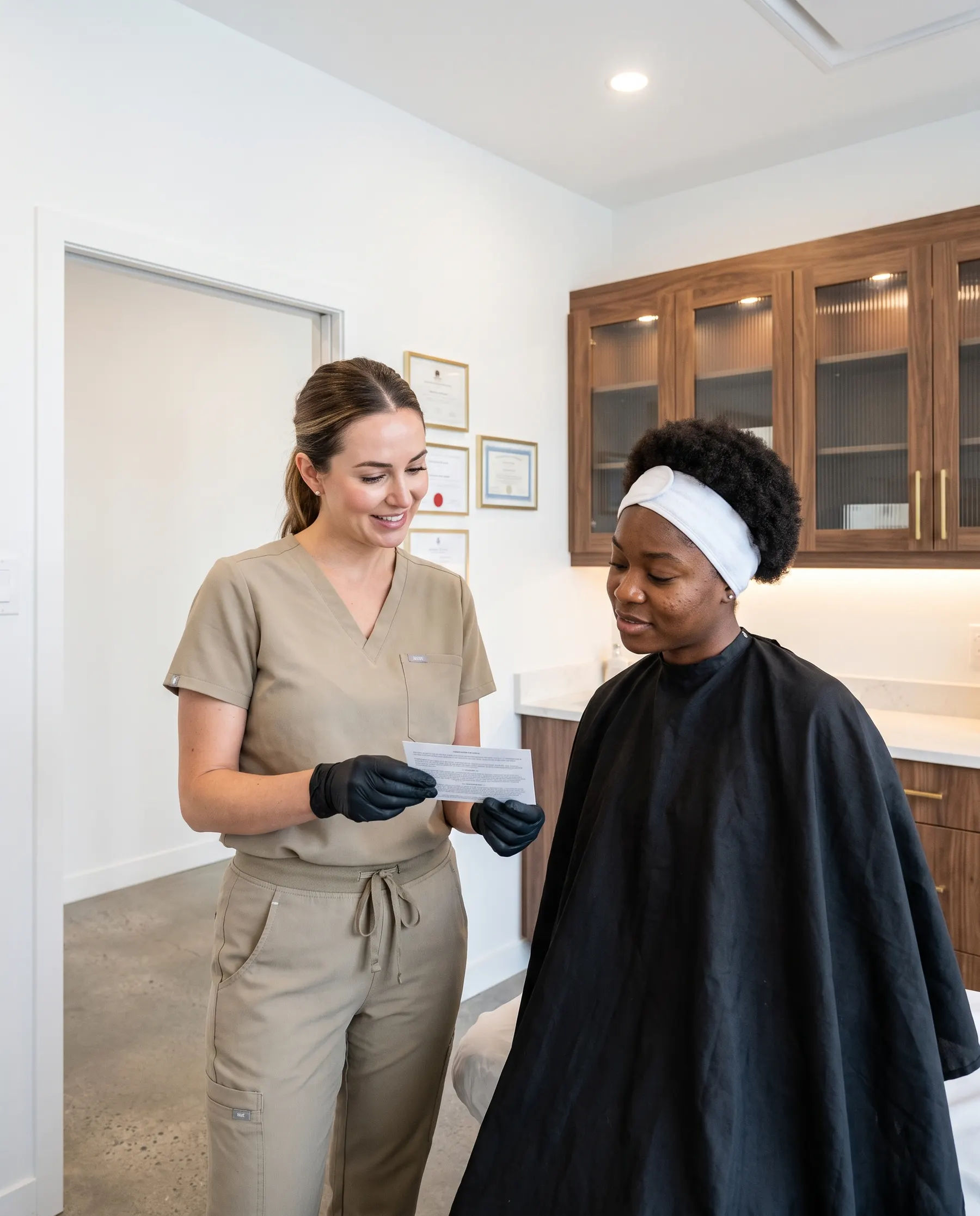
Aftercare instructions
We give you instructions suited to your skin, starting with sun protection.
Why choose L'Institut Béa
FINANCING
Medicard financing lets you spread the cost of a plan over several months.
A TEAM THAT CARES
The institute brings together professionals from different trades, with a single goal: the best version of you.
A PLAN BUILT FOR YOU
We build the plan around the state of your skin, your goals and how it responds to the first sessions.

Their experienceat Béa
Very professional and informative. Explains step by step the products and procedures during the facial. Enjoy my facials with Vanessa.
Anne Marie S.
Fresha review
Frequently asked questions
Everything people ask us before a first session, answered plainly.
Does microdermabrasion hurt?
Usually, no. The sensation combines a light scraping and a pull, often described as a cat's tongue. No heat, no needle, no numbing agent. What you feel changes with the tip: on the forehead and the cheeks, where a coarser tip is used, it is more noticeable than around the eyes. If the intensity bothers you, it is adjusted straight away, and there is nothing unusual about asking.
How many sessions should I plan for?
The rhythm depends on the intensity of the treatment and on how your skin responds: sessions can be close together or further apart. Going too fast does not give a better result, it weakens the skin barrier. The number depends on where you start from and on what you want to improve, and it is decided at the first appointment.
What is the difference with a peel?
Microdermabrasion mechanically exfoliates the surface, with an effect visible right away. A peel uses exfoliating actives instead, and how deep they work depends on the protocol. At Béa we lean towards microdermabrasion for texture and pores, and towards the MeLine peel when pigmentation is the main concern.
What should I avoid afterwards?
The skin has just been exfoliated and its surface barrier is temporarily more sensitive, so it is more vulnerable to the sun for a few days. Sun protection is not optional here. Also avoid strong actives, acids and retinol, along with heat, sauna and intense exercise for the rest of the day. Makeup is possible on the way out, but freshly exfoliated skin takes it better the next day.
Does it suit every skin?
No, and this is one of the rare treatments where the answer is frankly negative for some people. Very reactive skin, skin with a weakened barrier or skin prone to rosacea copes poorly with abrasion and suction. On those skins we point you towards another approach. Microdermabrasion works mainly on surface irregularities: for pitted acne scars we point you towards a treatment such as microneedling instead, after assessment.
Can my skin become more sensitive over time?
It happens, and it is a common phenomenon: skin that used to tolerate certain products starts reacting. It comes far more often from badly managed stacking, a scrub at home plus an acid at night plus an in-clinic session, than from one session that was too strong. So we space the sessions out, and we ask what you already use at home before setting a rhythm.
Can it be combined with other treatments?
Yes, with spacing. When microdermabrasion and a treatment such as microneedling are part of the same plan, we space them out to let the skin recover: the interval depends on the intensity of the microdermabrasion and on the state of your skin. The rule is simple: skin that has just been exfoliated does not take a second exfoliation on top, in any form.
Microdermabrasion or Hydrafacial?
Both can improve the look of pores, texture and glow, but they do not do exactly the same thing. Microdermabrasion relies on a mechanical exfoliation of the surface and suits sturdier skin with a rough or congested texture. Hydrafacial combines exfoliation, extraction and hydration in the same session. If you are torn between the two, the skin analysis lets you choose based on what your skin actually lacks.
Is the result permanent?
No. A session can leave skin smoother and brighter quickly, but that surface effect is temporary. How often you come back for upkeep depends on your skin, your routine and what you want to improve.

Ready to meet the best version of yourself?
Send us your questions and we will guide you toward the treatments that suit you best.