
Chemical peel in Laval
A more even complexion, softened spots, more luminous skin. A peel helps improve brown spots, melasma, marks left by acne, brown under-eye circles and the clarity of your complexion.
NATURE OF THE TREATMENT
An esthetician's treatment. No medical procedure.
What is a chemical peel
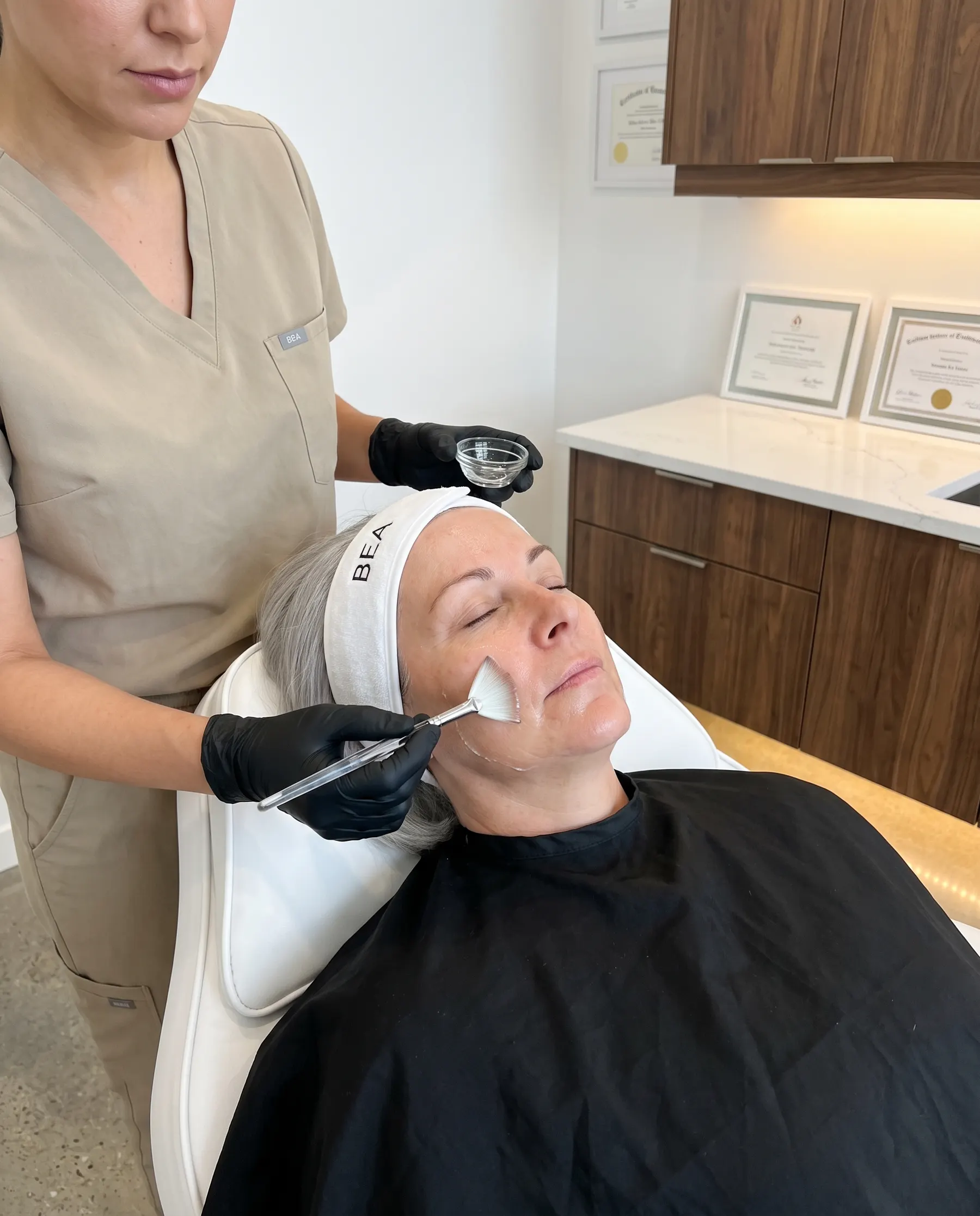
A chemical peel is a treatment that uses an acid solution, applied and then neutralised, to remove the surface layers of the skin.
It works by speeding up cell renewal down to the layer where melanin sits. A spot is not dirt sitting on the surface: it is a cluster of pigment produced by cells at the base of the epidermis, which is why no scrub ever gets rid of one.
This treatment is mainly used to improve brown spots, melasma, marks left by acne, the clarity of the complexion and brown under-eye circles.
After a series of sessions, skin can look more even, clearer and more luminous.
price
- $200 per session for the face
- $600 for the complete plan, with the home follow-up products
- Eye contour: $400 for the first session with the products, then $125 per session
- Several sessions may be required depending on your goal
length
- 60-minute appointment
- Skin preparation may be asked for before the first session
areas treated
- Full face
- The eye contour, with the formula the range provides for that area
how it feels
- A prickling or warm sensation while it sits
- It rises then settles, and it stops at neutralisation
- No numbing agent needed
after the session
- The skin peels for several days
- The peak is usually between day three and day five
- No makeup on peeling skin
- Sun protection is essential, with no exceptions
what it addresses
- Brown spots
- Melasma
- Marks left by acne
- Brown under-eye circles
- Uneven complexion
- Thick, dull skin
Is a peel right for you?
A peel can be worth considering if your main concern is an uneven complexion, and you are ready to plan for a few days of peeling skin.
It is for you if:
Brown spots that will not go
The acid reaches down to where the pigment sits, below the surface, which a scrub does not.
Darker areas that appeared with a pregnancy or a hormonal change
That is melasma, and it calls for a different approach from an isolated sun spot.
Coloured marks left by old breakouts
The colour, not the depth. For the depth, microneedling is what to look at.
Brown under-eye circles that stay when you stretch the skin
That is colour sitting in the skin, not the shadow of a hollow. The eye contour has its own formula in the range, and the dark circles page sorts out the four kinds.
A complexion that has lost its clarity with no specific spot
Thick skin that has gone dull overall.
Not sure this is the right treatment for you?
A skin analysis assesses your concerns and your goals in order to determine the most suitable treatment and plan.
Contraindications
RECENT SUN EXPOSURE
Tanned or recently exposed skin reacts badly to an acid, and the risk is creating the very spot you were trying to remove. We postpone, and autumn remains the best season to start.
ISOTRETINOIN (ACCUTANE) TREATMENT
Accutane leaves skin fragile for several months after stopping. Ongoing or recent treatment means postponing. Mention it when you arrive, with the date you stopped.
A DAMAGED SKIN BARRIER
Skin that feels tight, that is flaking or that stings on contact with water is not ready. An acid on an already fragile barrier makes things worse rather than better.
A treatment adjusted to your skin
The result depends on settings decided during the session, based on your skin.
- HOW LONG IT SITS
- This is the central variable. The same solution left on for two minutes or six does not produce the same result or the same recovery time.
- YOUR SKIN TONE
- Deeper skin produces pigment more readily, so the intensity is set more cautiously to avoid the pigment reaction the treatment is meant to address.
- WHAT THE SKIN SHOWS AS IT WORKS
- The skin is watched throughout. That is what makes it possible to choose the stopping point from what it shows, rather than from a timer.
- NEUTRALISATION
- The protocol calls for a decided stop, rather than letting the action wear itself out.
- THE AREA
- The eye contour does not get the solution used on the cheek. The MeLine range provides a separate formula for that area, built for far thinner skin, and that is the one used there.
The session step by step
We want to do everything we can to bring you toward the best version of yourself. That is why every session follows the same steps.

1
Talking through your goals
We look at your skin together to identify where the pigmentation comes from, check your skin tone and set the calendar for the series.
2
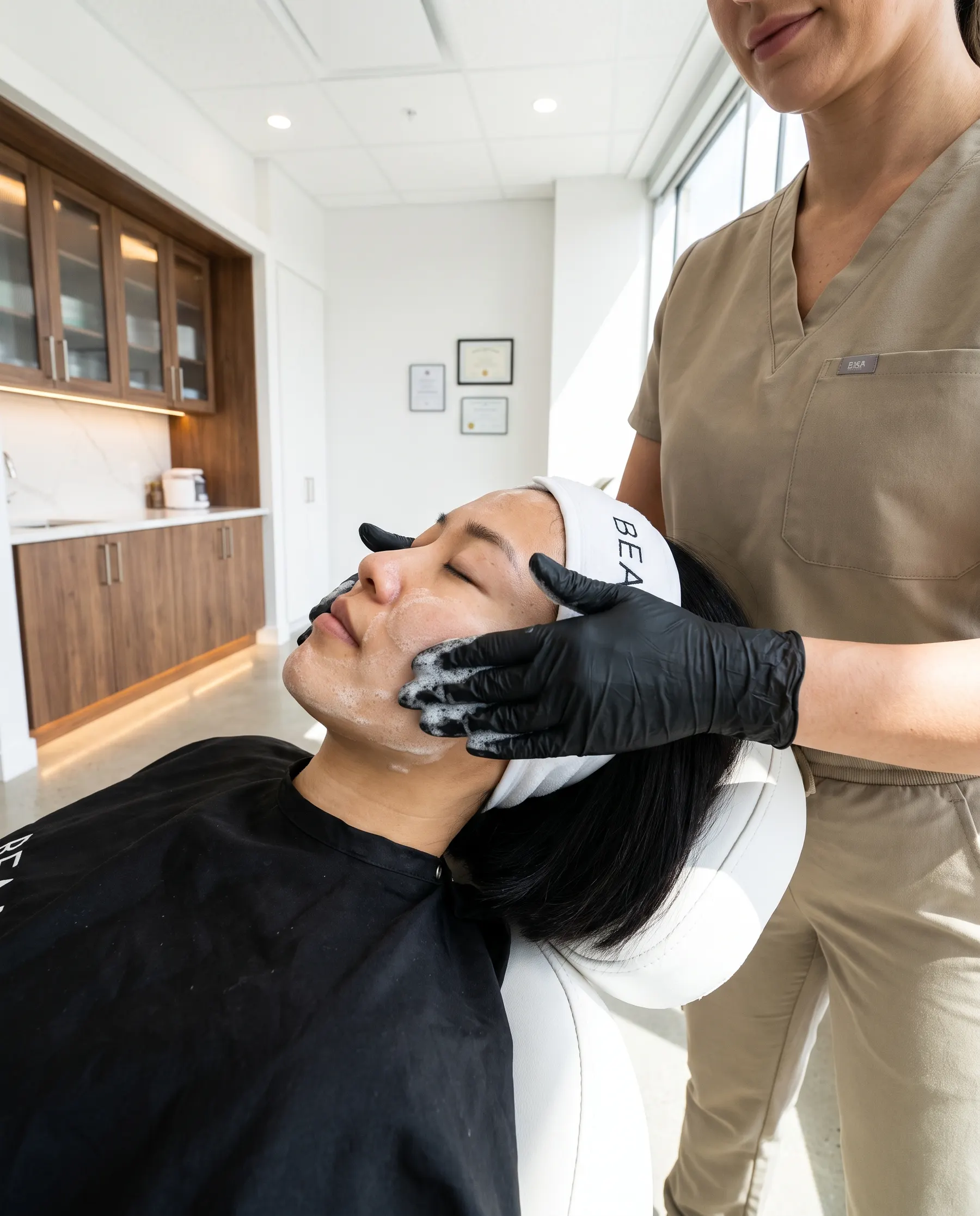
Preparing the skin
The skin is cleansed and degreased. An acid does not act the same way on a poorly prepared surface.
3
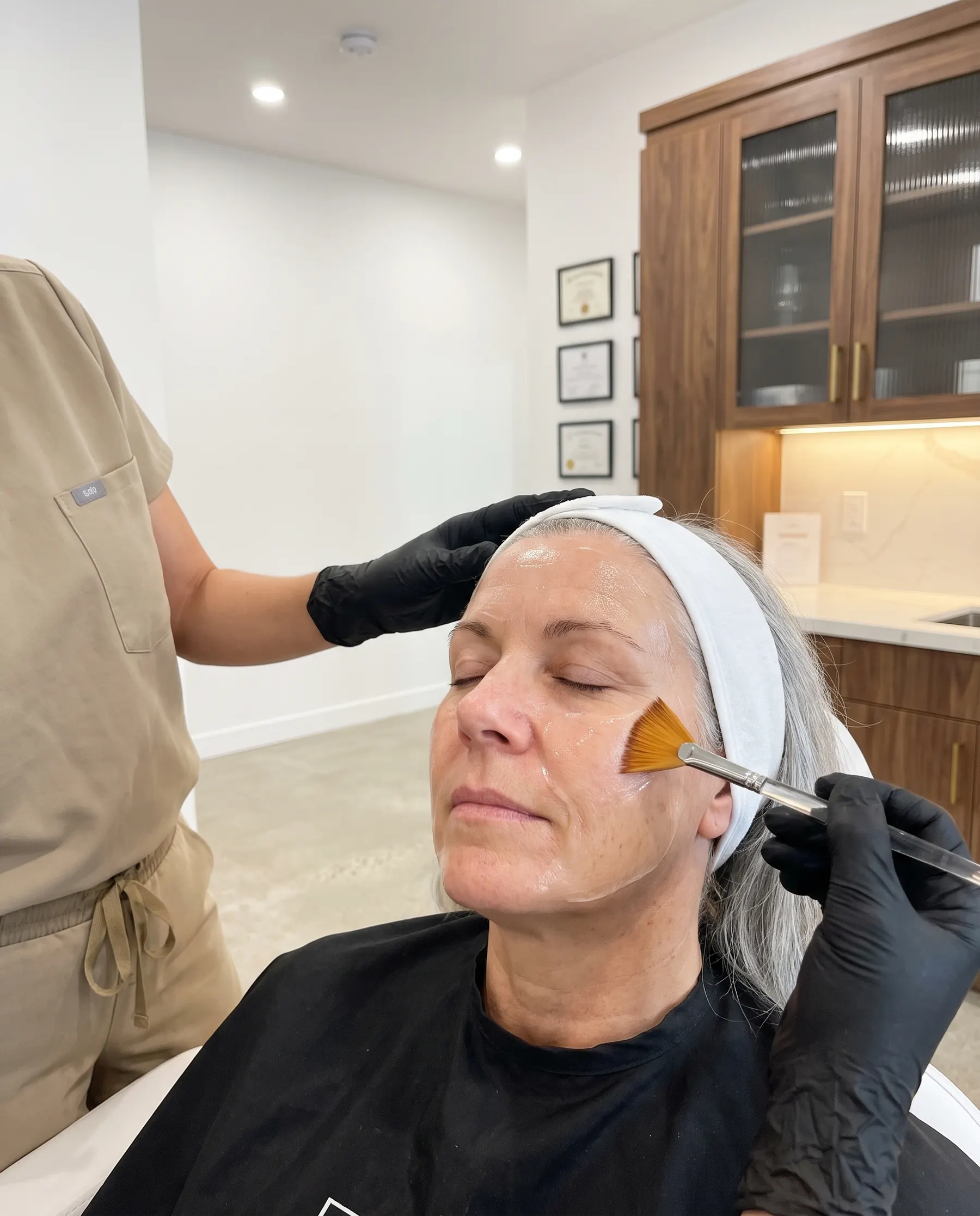
Applying the solution
With a brush, area by area. You feel a prickling that rises, then settles.
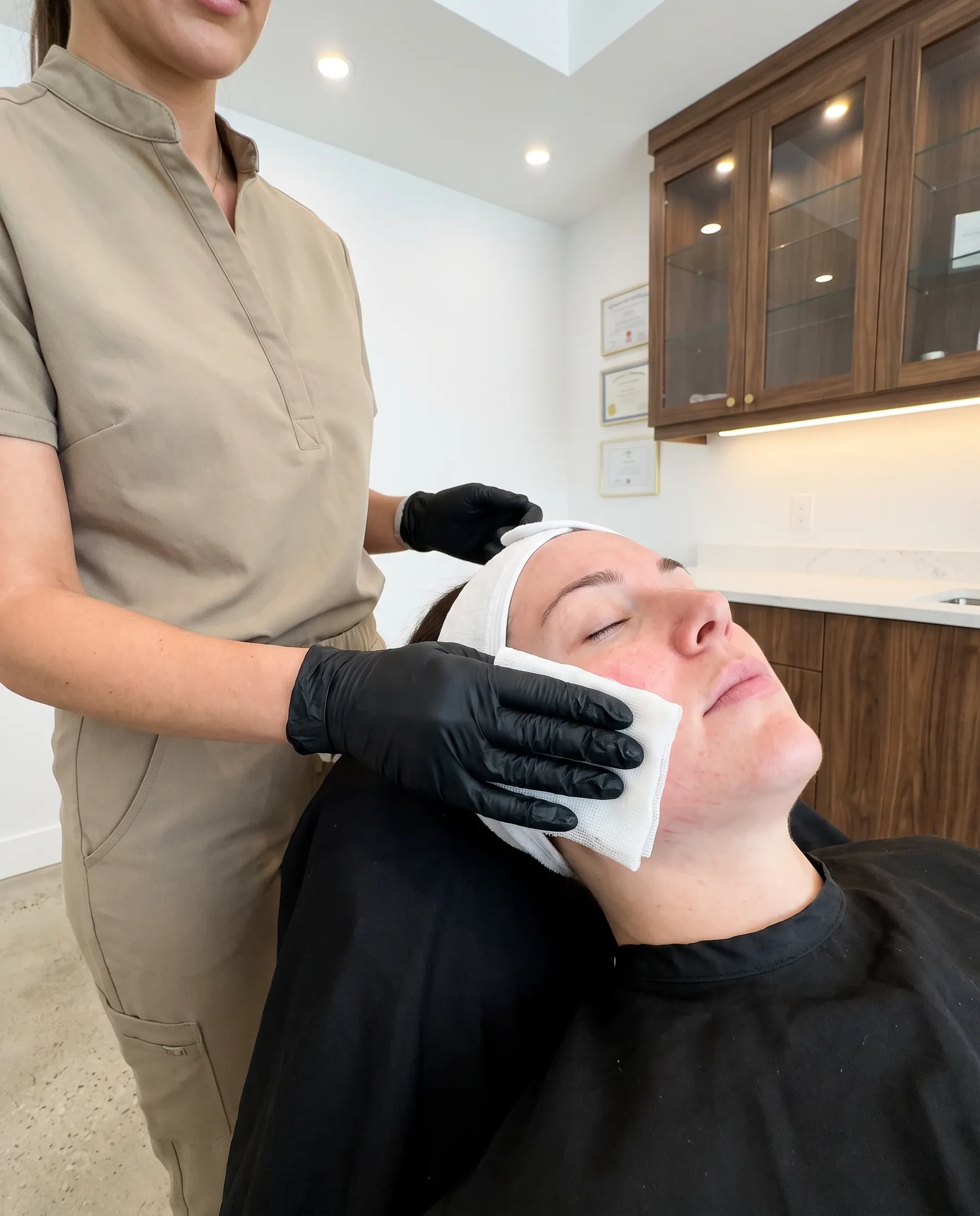
4
Neutralisation
The action is stopped at the decided moment, based on what your skin showed while it sat.
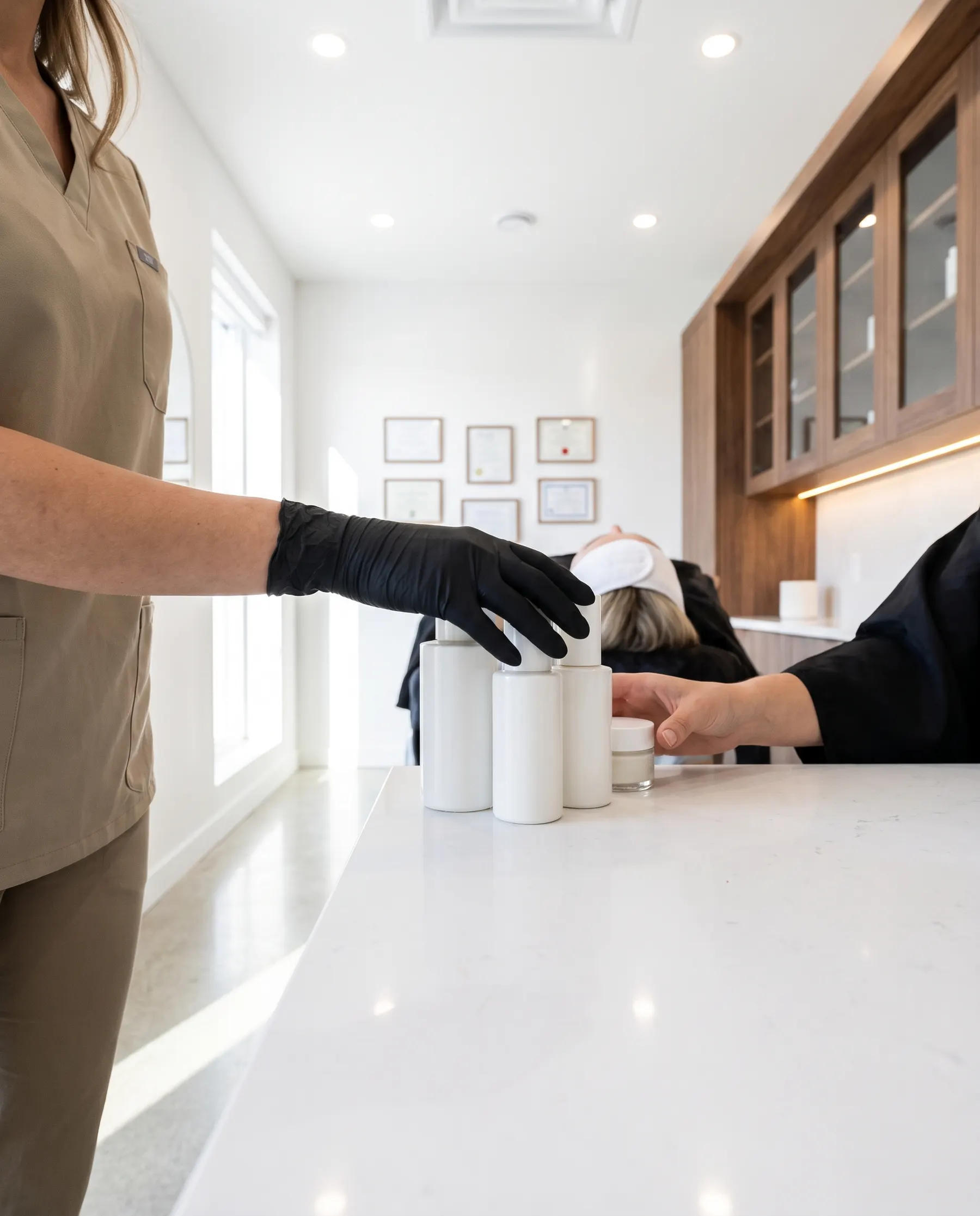
5
Aftercare instructions
We give you the peeling and sun protection instructions, along with the follow-up products if your plan includes them.
Why choose L'Institut Béa
FINANCING
Medicard financing lets you spread the cost of a plan over several months.
A TEAM THAT CARES
The institute brings together professionals from different trades, with a single goal: the best version of you.
A PLAN BUILT FOR YOU
We build the plan around the state of your skin, your goals and how it responds to the first sessions.

Their experienceat Béa
Did a chemical peel, it was absolutely amazing. Laura explains everything so well. Highly recommend.
Bianca A.
Fresha review
Frequently asked questions
Everything people ask us before a first session, answered plainly.
Does a peel burn?
You feel a prickling or warmth while it sits, rising gradually then settling. It is not a burn, and the sensation stops dead at neutralisation. The intensity depends on the formula and on how long it sits, both adjusted to your skin. A fan is available if the warmth becomes uncomfortable. If the sensation becomes genuinely unpleasant, say so: neutralisation can happen earlier, and that is exactly why the skin is watched the whole time.
How many sessions should I plan for?
Pigmentation protocols are generally counted as a series, spaced several weeks apart to let the skin rebuild in between. Going too fast causes precisely the inflammation that makes new pigment. Count in months rather than weeks for a result that stays. The calendar is given to you at the skin analysis, so you know what you are getting into.
When in the year should I do it?
Autumn and winter, in the large majority of cases. A peel makes skin temporarily more vulnerable to sun, and sun is precisely what makes the pigmentation you are trying to remove. Starting a series in June amounts to working against yourself. If you are heading south in the following weeks, we push it back. Daily sun protection, on the other hand, is not negotiable in any season.
How long does the skin peel?
Peeling generally starts on day two or three, peaks around day three to five, then stops. This is not skin coming off in sheets: most often it is a fine veil that lifts, mostly around the mouth and the nose. What genuinely helps: pulling nothing off, moisturising with a fragrance-free product, and protecting from the sun. What does not help: scrubbing to speed it up, which leaves a mark instead.
Does it work on melasma?
Partly, and it is worth being precise about that. Melasma is hormonal, which means its cause keeps acting while we treat what shows. An isolated sun spot generally responds well and durably, whereas melasma comes back far more easily. That is why we ask you questions about where the spot came from before announcing anything. We announce a real and lasting improvement, never an erasure.
Does it suit deeper skin tones?
Yes, with different settings. Deeper skin produces pigment more readily, which makes the risk of a pigment reaction higher if the solution is left on too long. The caution is about how long it sits and which formula is chosen, not about whether to treat at all. That is exactly why your skin tone is assessed before the first session.
Can a peel be done under the eyes?
Yes, and not with the solution used on the face. The MeLine range provides a separate formula for the eye contour, built for skin far thinner than the cheek. It targets colour sitting in the skin, meaning the brown under-eye circle. It does not fill a hollow and it does not drain puffiness: those are three different things, and the dark circles page explains how to tell them apart before choosing. As with the face, the plan continues at home over several weeks. That part is what holds the result, and without it the series works at a loss.
What is in the plan with the products?
The complete plan includes the session and a follow-up range to use at home between appointments, which explains the price difference with the peel on its own. Those products extend the action on pigmentation in between, and that is often what separates a result that holds from one that fades.

Ready to meet the best version of yourself?
Send us your questions and we will guide you toward the treatments that suit you best.