
Dermaplaning in Laval
Smooth skin, a brighter complexion, makeup that stays put. Dermaplaning helps improve skin texture, facial peach fuzz, how makeup sits and how well your products absorb.
NATURE OF THE TREATMENT
An esthetician's treatment. No medical procedure.
What is dermaplaning
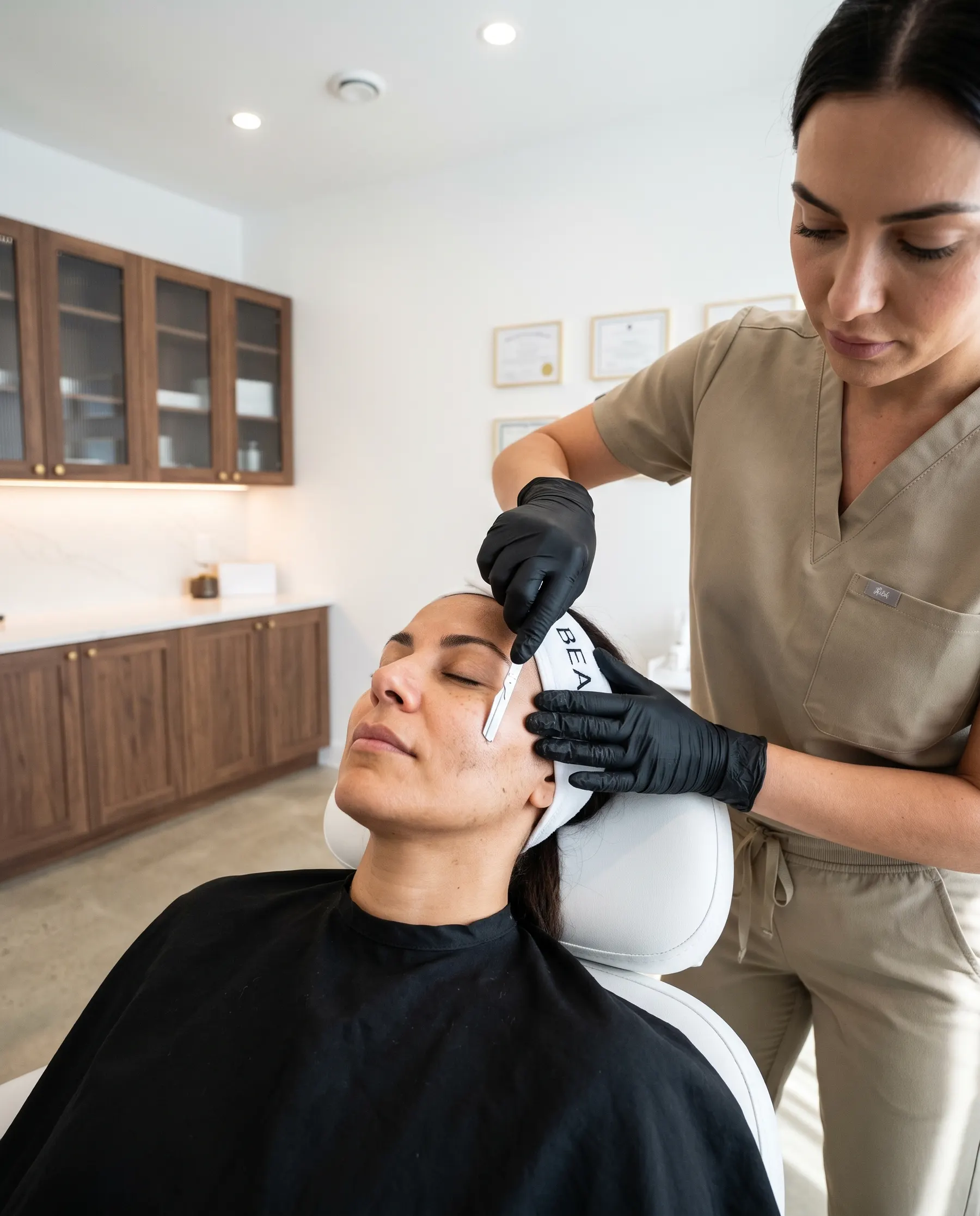
Dermaplaning is a treatment that uses a sterile blade to remove the layer of dead cells and the peach fuzz on the surface of the face.
It works by exfoliating mechanically, with no acid and no abrasion. The blade passes flat, at an angle, and takes off what stays clinging to the surface and scatters light instead of reflecting it.
This treatment is mainly used to improve skin texture, facial peach fuzz, how makeup sits and how well the products applied afterwards absorb.
From the moment you walk out, skin can look smoother, brighter and more even.
price
- $99.99 per session, mask included
- Usually repeated every four weeks
length
- 30-minute appointment
- No particular preparation
areas treated
- Full face
how it feels
- Generally painless
- A light scraping sensation, close to shaving
- No numbing agent needed
after the session
- No downtime
- Slight redness is still possible on reactive skin
- Makeup possible as soon as you leave
- Sun protection recommended for the following days
what it addresses
- Uneven texture
- Facial peach fuzz
- Dull complexion
- Makeup that catches
- Products that do not absorb
Is dermaplaning right for you?
Dermaplaning can be worth considering if you want immediately smoother skin and your main concerns are peach fuzz, texture or how your makeup sits.
It is for you if:
Skin that feels dull more than it looks dull
The treatment removes the layer of dead cells still clinging to the surface.
Peach fuzz that shows in photos or in raking light
It comes off with the surface layer, in a single session.
Foundation that pills by the end of the day
Makeup sits on a smooth surface instead of catching on the fuzz.
Products that seem to stay on top
Skin takes in what is applied straight afterwards far better. That is also what makes dermaplaning useful before a Hydrafacial.
Not sure this is the right treatment for you?
A skin analysis assesses your concerns and your goals in order to determine the most suitable treatment and plan.
Contraindications
SKIN IN A FLARE
Inflammatory acne, a cold sore or an open lesion mean postponing the session. Running a blade over active lesions risks spreading them, and a passing blemish can then become a lasting mark.
RAISED SPOTS IN THE AREA
A raised mole, a wart or a scab catch the blade. We work around the area, or we postpone if the raised area is extensive.
VERY DEHYDRATED SKIN
Skin flaking in patches needs preparing before it can be shaved. We check that at the start of the appointment, and it does happen that we postpone.
A treatment adjusted to your skin
The result depends on settings decided during the session, based on your skin.
- THE ANGLE OF THE BLADE
- Held at roughly forty-five degrees. Too upright, it catches. Too flat, it glides without taking anything off.
- HOW THE SKIN IS HELD
- The free hand keeps the skin taut at every pass. Without that tension, it is the skin that takes the pull.
- HOW THE FACE IS DIVIDED UP
- The forehead, the cheeks, the jawline and around the mouth are not worked the same way, because the contours and the thickness change.
- THE MASK AT THE END
- Chosen according to what the skin showed while the blade was passing, and applied to a surface that takes it in better than usual.
The session step by step
We want to do everything we can to bring you toward the best version of yourself. That is why every session follows the same steps.
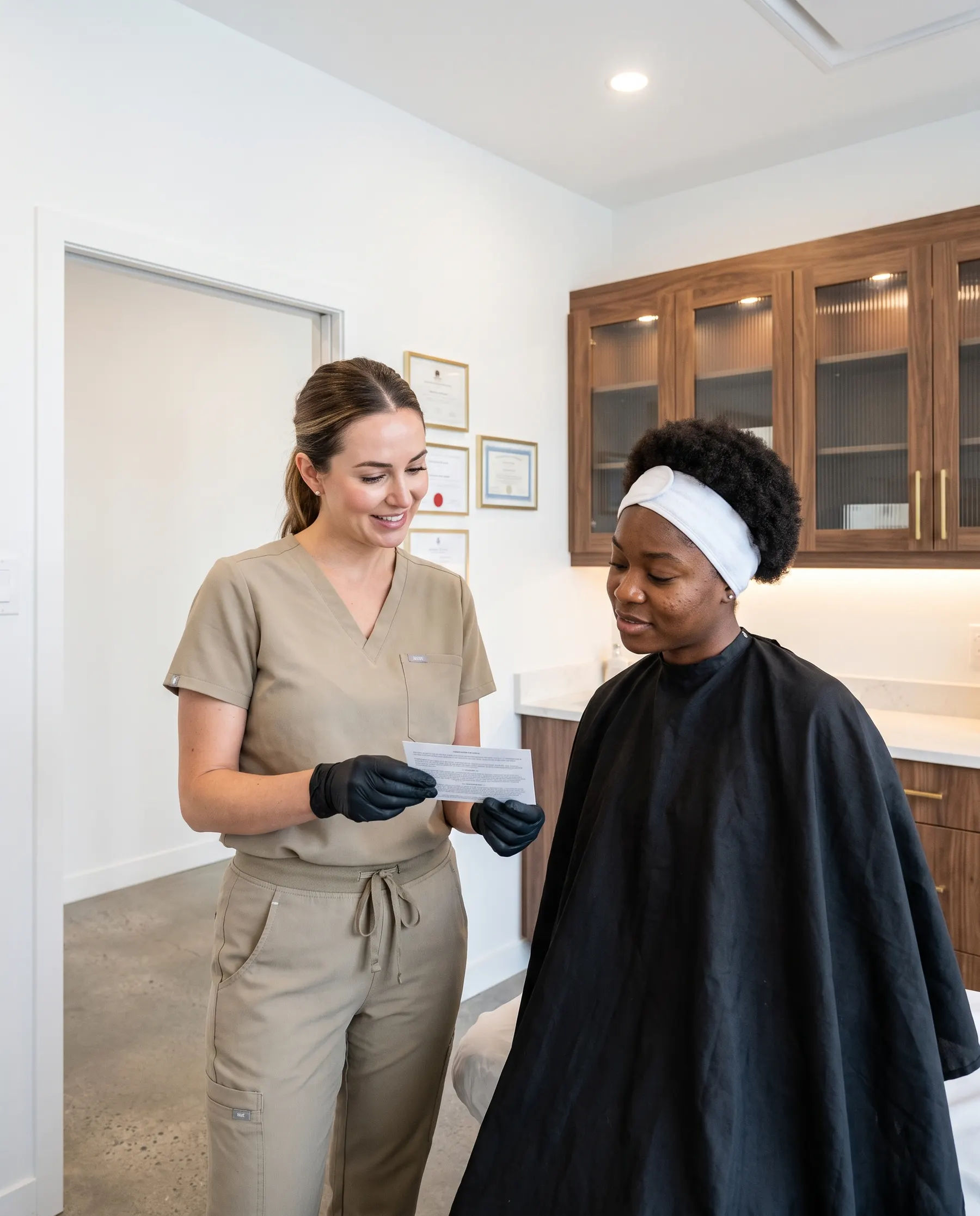
1
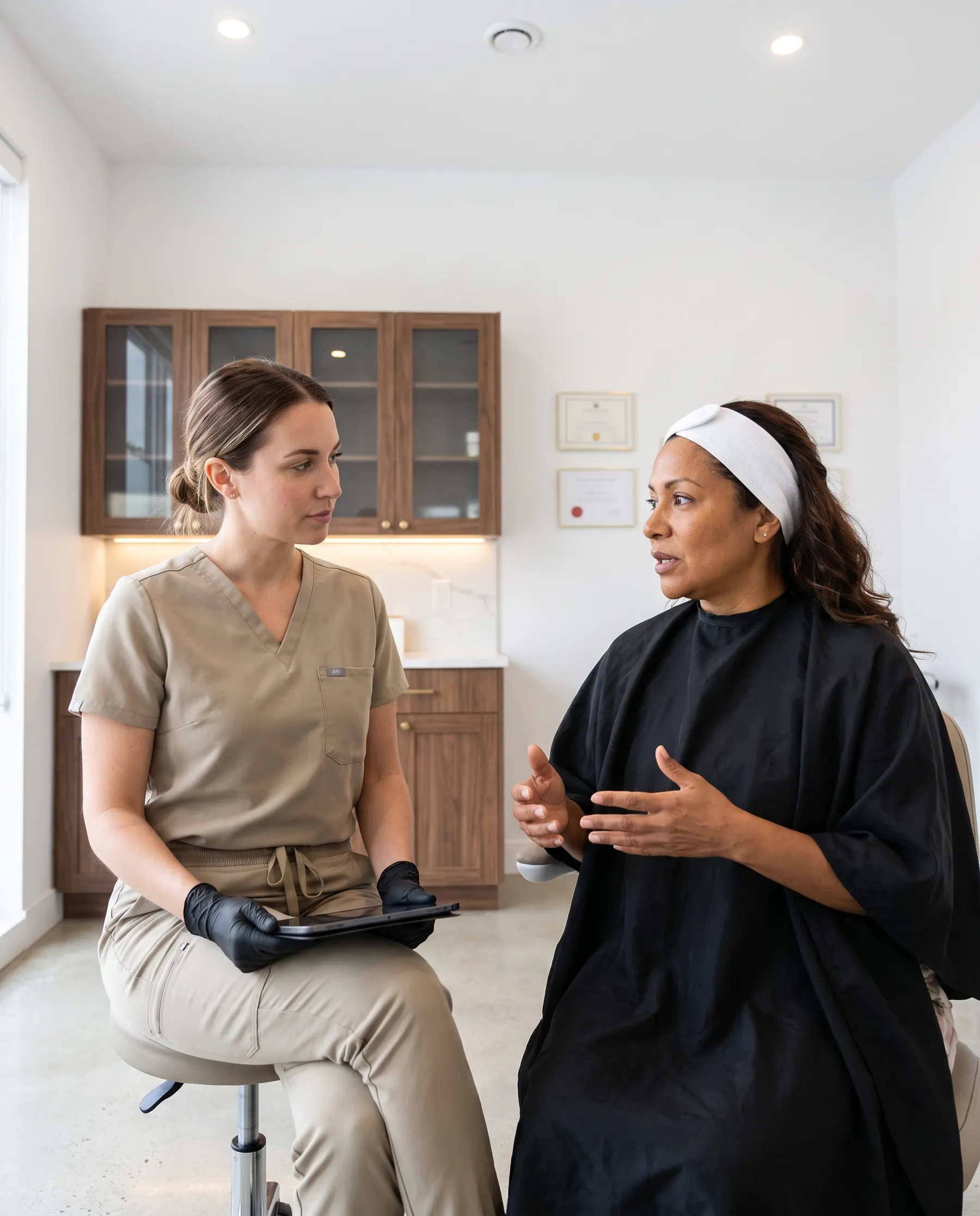
Talking through your goals
We look at your skin together to confirm that no active inflammation stands in the way of the blade, and to establish how often to come back.
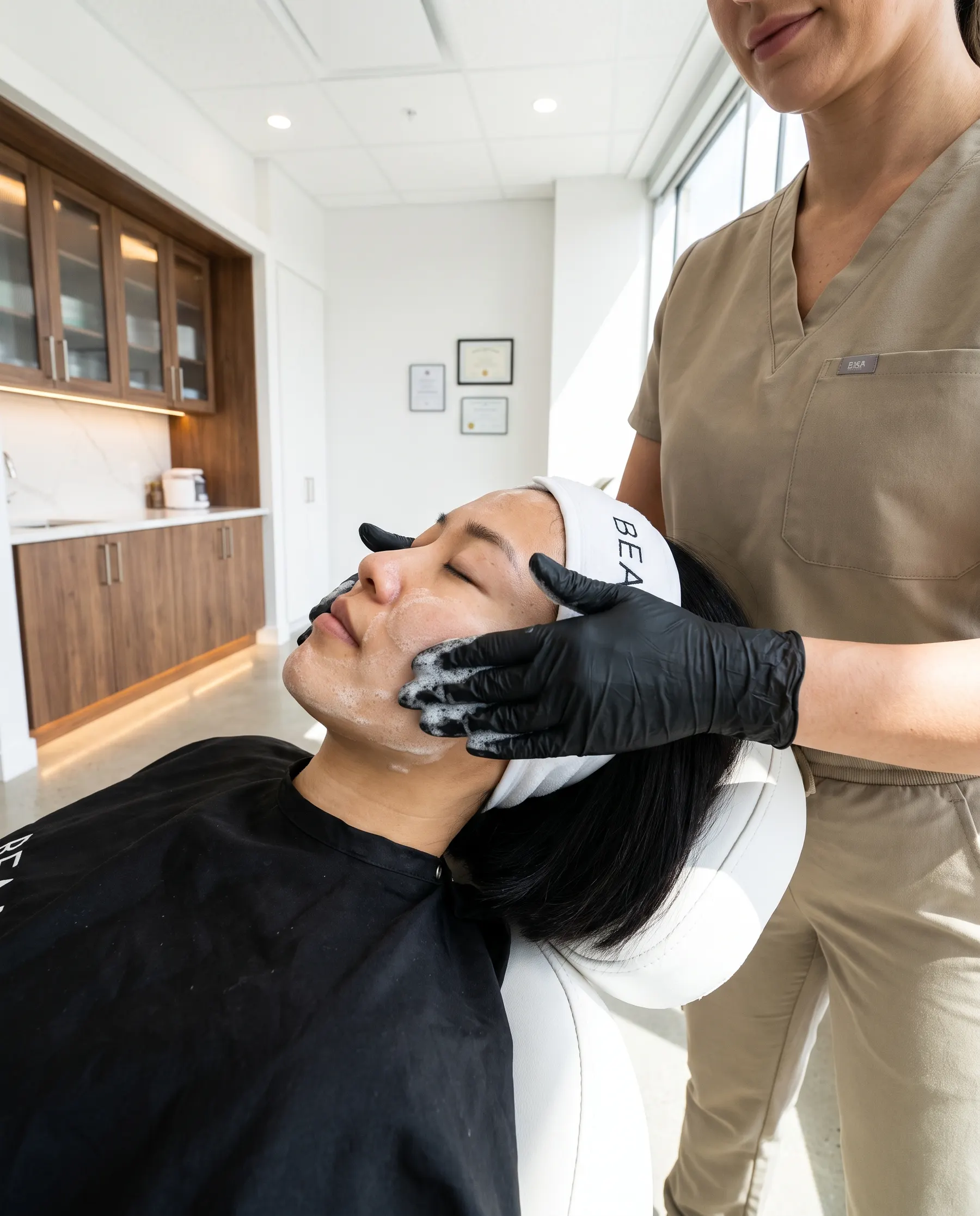
2
Cleansing and drying
The skin is cleansed then dried completely. The blade does not work on damp skin.
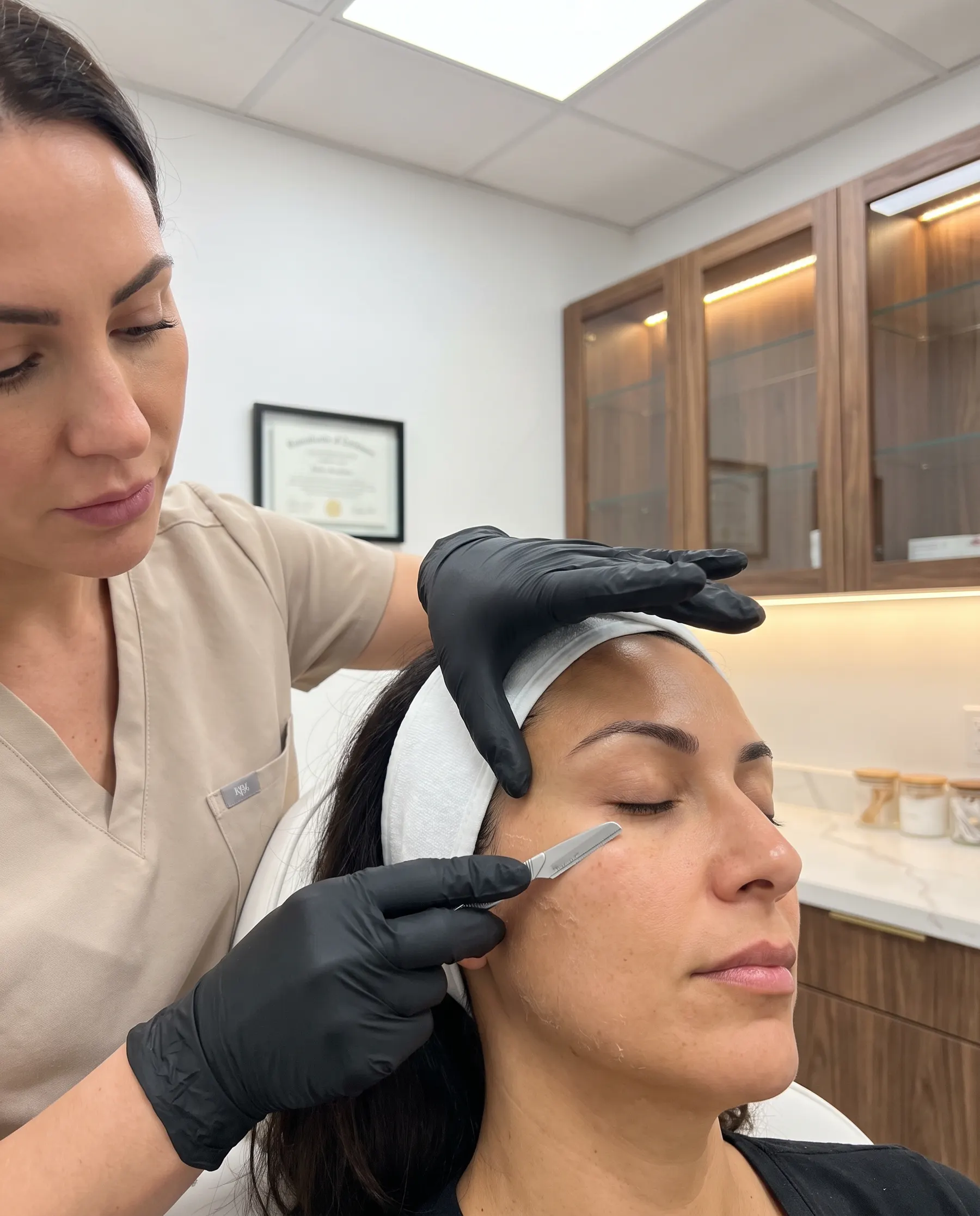
3
The blade pass
Area by area, in small strokes, with the skin held taut. The angle is adjusted to each part of the face.
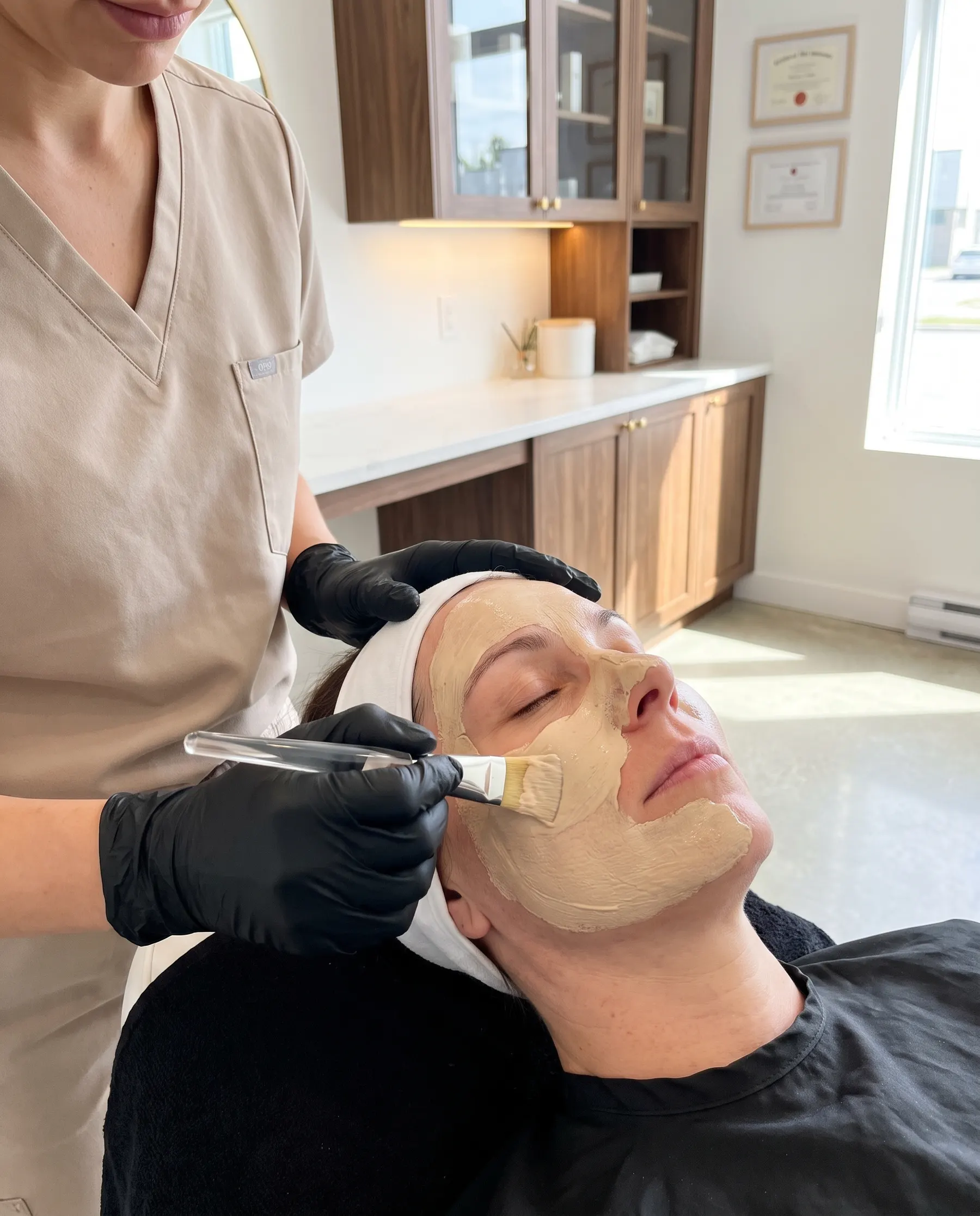
4
Applying the mask
The mask goes onto skin that has just had its surface layer taken off.
5
Aftercare instructions
We give you instructions suited to your skin: what to avoid, and for how long.
Why choose L'Institut Béa
FINANCING
Medicard financing lets you spread the cost of a plan over several months.
A TEAM THAT CARES
The institute brings together professionals from different trades, with a single goal: the best version of you.
A PLAN BUILT FOR YOU
We build the plan around the state of your skin, your goals and how it responds to the first sessions.

Their experienceat Béa
So happy with my experience! My skin feels and looks refreshed and healthy. Amber is amazing!
Zoe L.
Fresha review
Frequently asked questions
Everything people ask us before a first session, answered plainly.
Does the fuzz grow back thicker afterwards?
No. It is the most widespread worry about this treatment, and it does not hold up. The blade cuts the hair flush with the skin without touching the follicle, and the follicle alone determines thickness and colour. What changes is the feel: a hair cut straight across has a flat end instead of a tapered point, so it prickles slightly to the touch for a few days. Nothing has grown in thicker, the shape of the tip has changed. The fuzz then goes back to exactly the way it looked before.
Does it hurt?
No, and that is what surprises people most. The sensation is a light scraping, close to shaving, with no heat and no sting. No numbing agent is needed. Areas where the skin is thinner, around the mouth and the sides of the nose, are felt a little more than the cheeks, without ever becoming painful. If anything is uncomfortable, say so and the pressure is adjusted straight away.
How often should I come back?
Dermaplaning is generally repeated every four weeks, which matches the skin's renewal cycle. Coming back sooner adds nothing: the layer of dead cells has not had time to build up again. The right rhythm depends on your skin and on what you expect from it, and it is decided at the first appointment.
What should I avoid afterwards?
Your skin has just lost its surface layer, so it takes in the good and the not-so-good alike. Avoid strong actives, acids and retinol, for a few days, along with any fragranced product you have never tried. Heat, saunas and hard exercise wait until the next day. Sun protection, on the other hand, becomes essential: freshly exfoliated skin marks more easily. Makeup is fine as soon as you leave.
What is the difference with shaving at home?
The blade first: the dermaplaning one is finer, single-use, and designed to work flat across a surface. A razor is made to cut through coarse hair, not to exfoliate. Then the angle, held at forty-five degrees and adjusted area by area. And the tension, with the skin held taut at every pass. A razor removes the fuzz; dermaplaning removes the fuzz and the layer of dead cells, which is not the same result.
Does dermaplaning suit acne-prone skin?
It depends entirely on the state of your skin on the day. On calm skin, even with a history of acne, the treatment goes ahead without difficulty. During an active flare, with red lesions, the blade risks opening a blemish and spreading the inflammation to neighbouring areas. That is the mechanism by which a passing mark becomes a lasting one. So we look at the state of your skin at the analysis, and if it is flaring we point you toward what will calm it first. The acne and scarring page explains in what order to tackle the two.
Why a mask at the end?
Because that is the moment the skin takes things in best. Without its layer of dead cells, it absorbs more of whatever is applied. A mask laid on right after dermaplaning gives more than the same mask on another day, which is why the two are sold together. The choice of mask is made after the blade pass, based on what the skin showed.

Ready to meet the best version of yourself?
Send us your questions and we will guide you toward the treatments that suit you best.