Brown and red do not come from the same mechanism, and mistaking one for the other leads to the wrong treatment. Sun makes both worse without being the whole story, and that is where you have some control.
Pigment builds up
The cells that make melanin deposit too much of it in one place, driven by sun, hormones or past inflammation.
Vessels become visible
Small surface vessels end up showing through, and in rosacea repeated flushing can leave a redness that settles.
Sun makes both worse
It drives melanin production and ranks among the most common triggers of a rosacea flare, which makes daily protection the highest-return habit on this concern.
It depends on what is producing the colour, and light pressure on the area already gives you a clue.
Redness that comes from vessels pales under pressure and returns when you let go. Brown pigment does not move. That is a clue and not a diagnosis: we also look at how the area looks, how it has changed and what your history is, and having both families at once is very common.
What can be treated
Solar lentigo
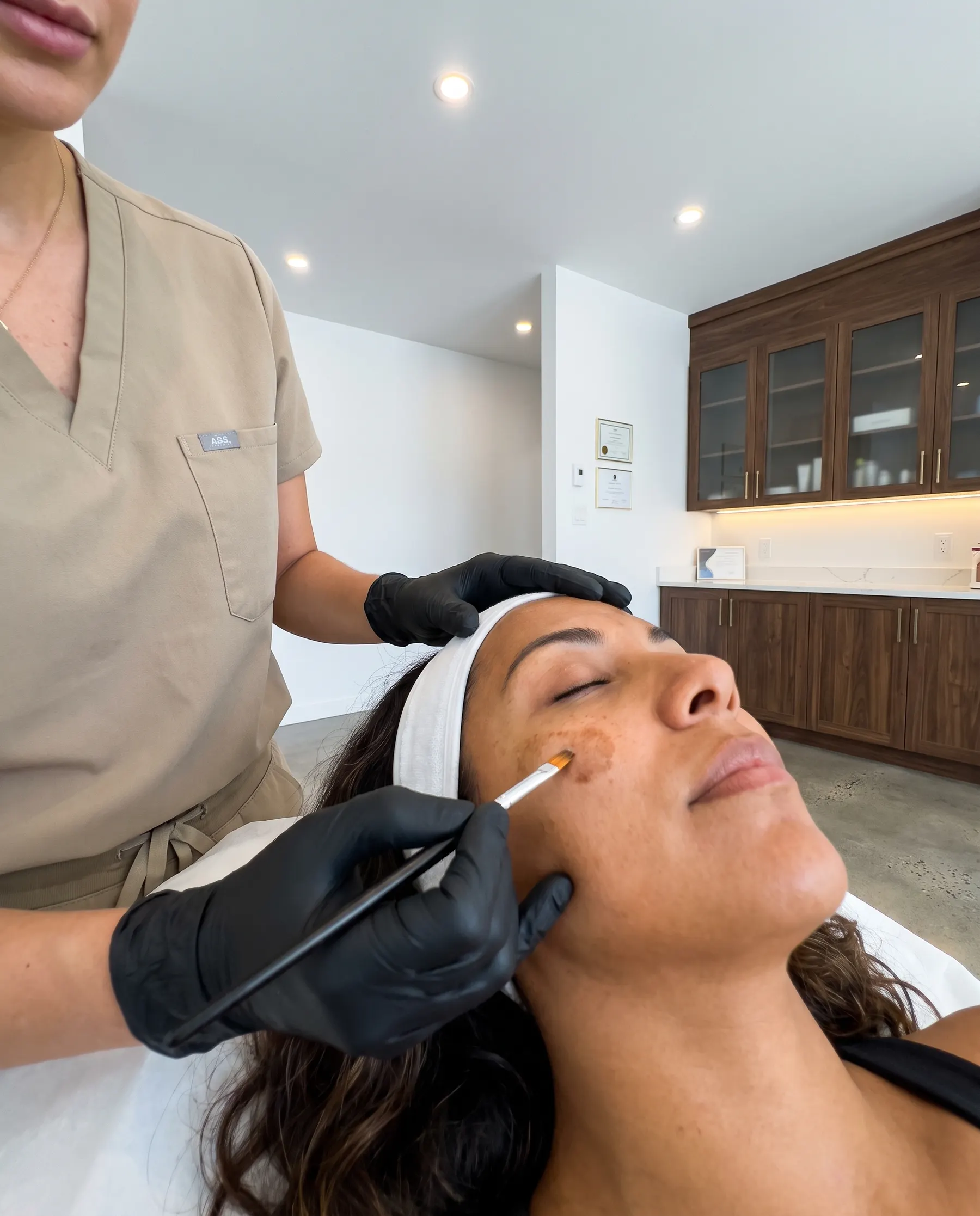
The sun spot: brown, clearly outlined, on an exposed area such as the face or the hands. Unlike a freckle it usually stays visible all year, and pigment is what we target.
Melasma
Brown or greyish-brown patches, broader and blurrier, often symmetrical across the cheeks, forehead or upper lip. Hormones can play a part, so can sun and visible light, and the protocol is built cautiously.
The mark left by a breakout
A flat, darker trace where there was inflammation, on skin that stayed smooth. It can fade on its own, faster or slower depending on how deep the pigment sits and on the skin itself.
Redness and visible vessels
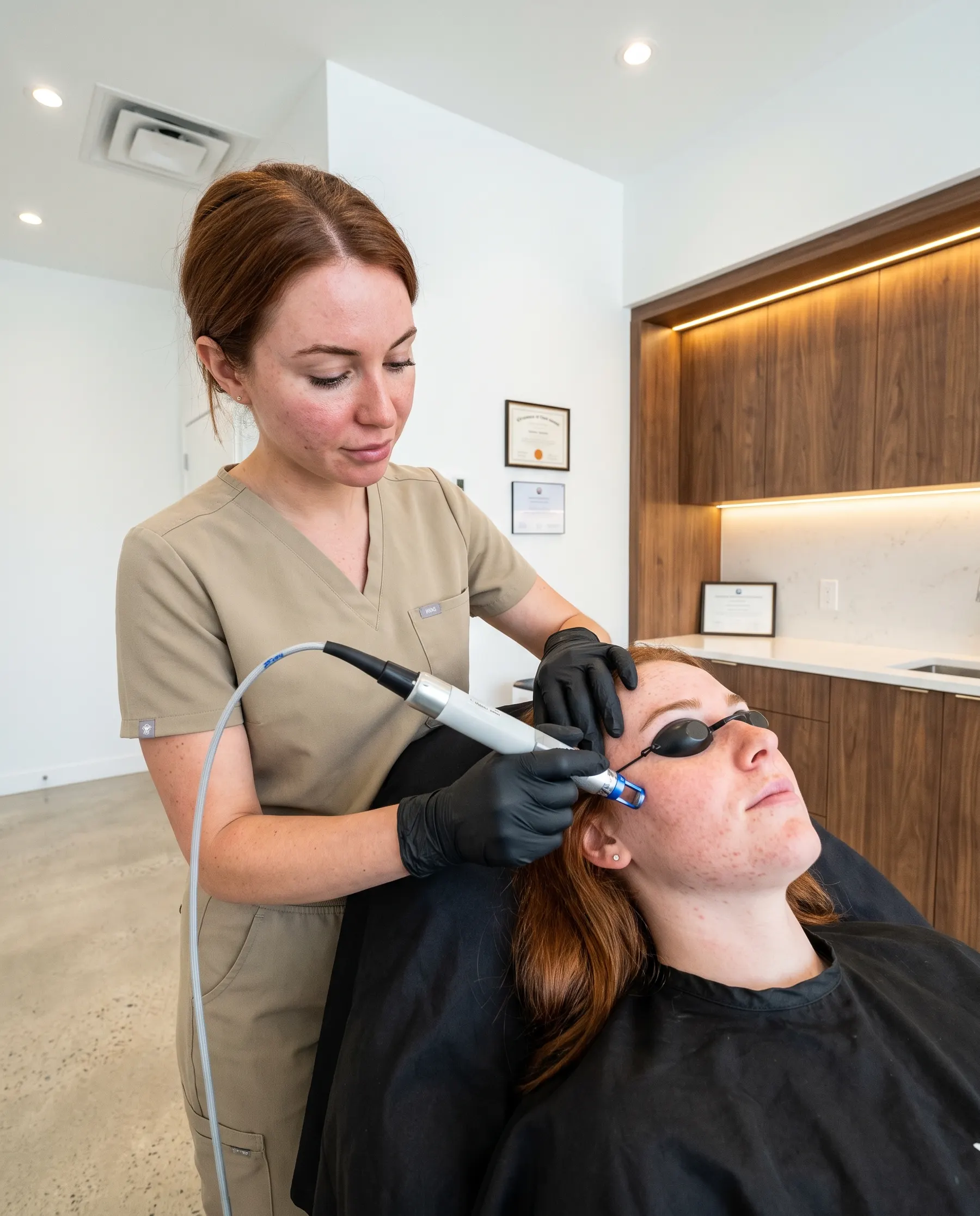
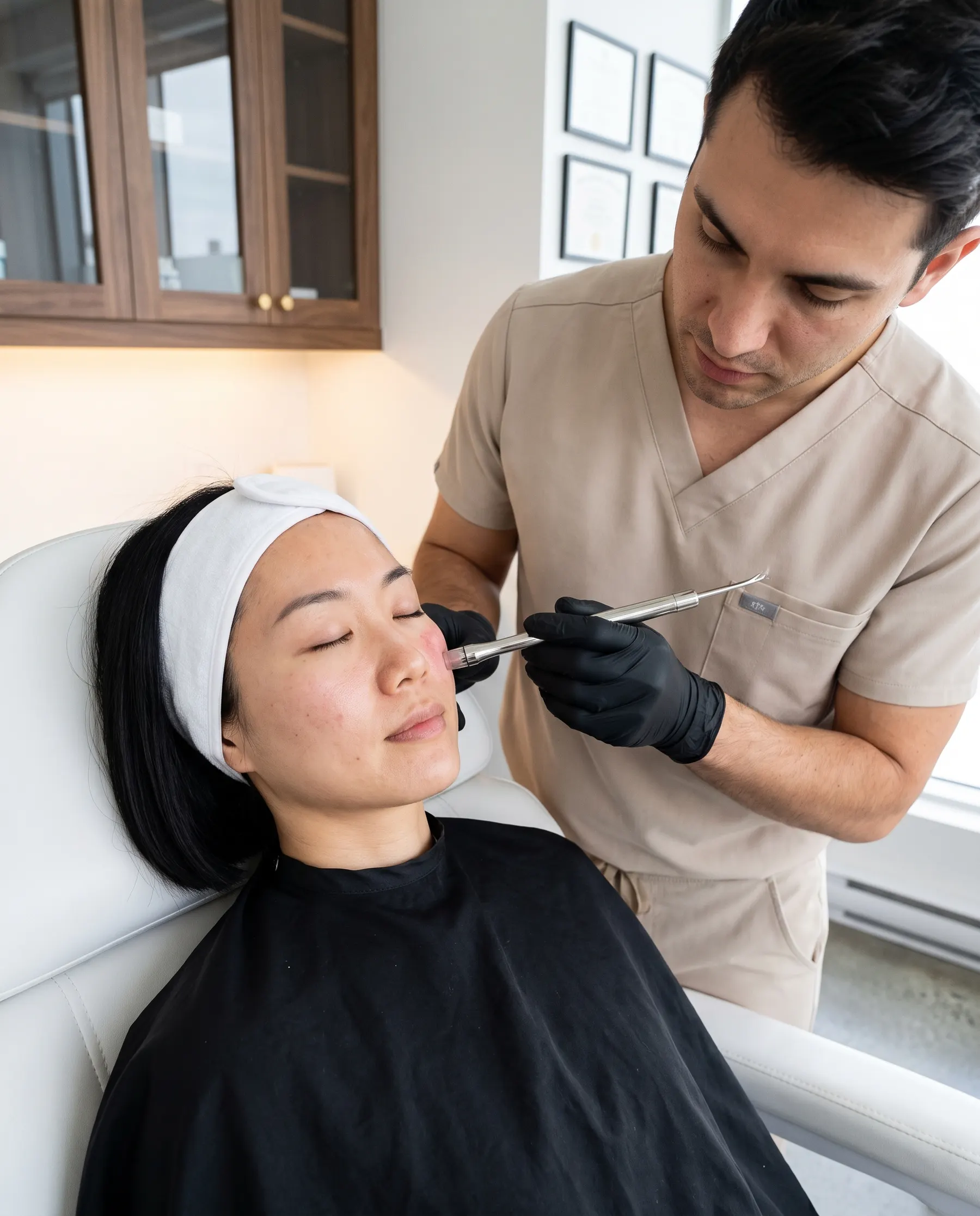
Redness that no longer settles down, fine red lines around the nostrils, an isolated cherry angioma. Those are what the vascular laser targets, not a pigment treatment.
What we do not treat here
Rosacea itself
It is a skin condition, with its flares and its triggers, and it is diagnosed by a doctor. A vascular treatment can improve some of the visible signs of rosacea that has already been assessed, it does not cure the condition, and treating skin during a flare can make things worse.
A spot that changes
A spot that changes shape, colour or size, that itches, that bleeds or that does not heal goes to a doctor without delay. That is not a cosmetic question.
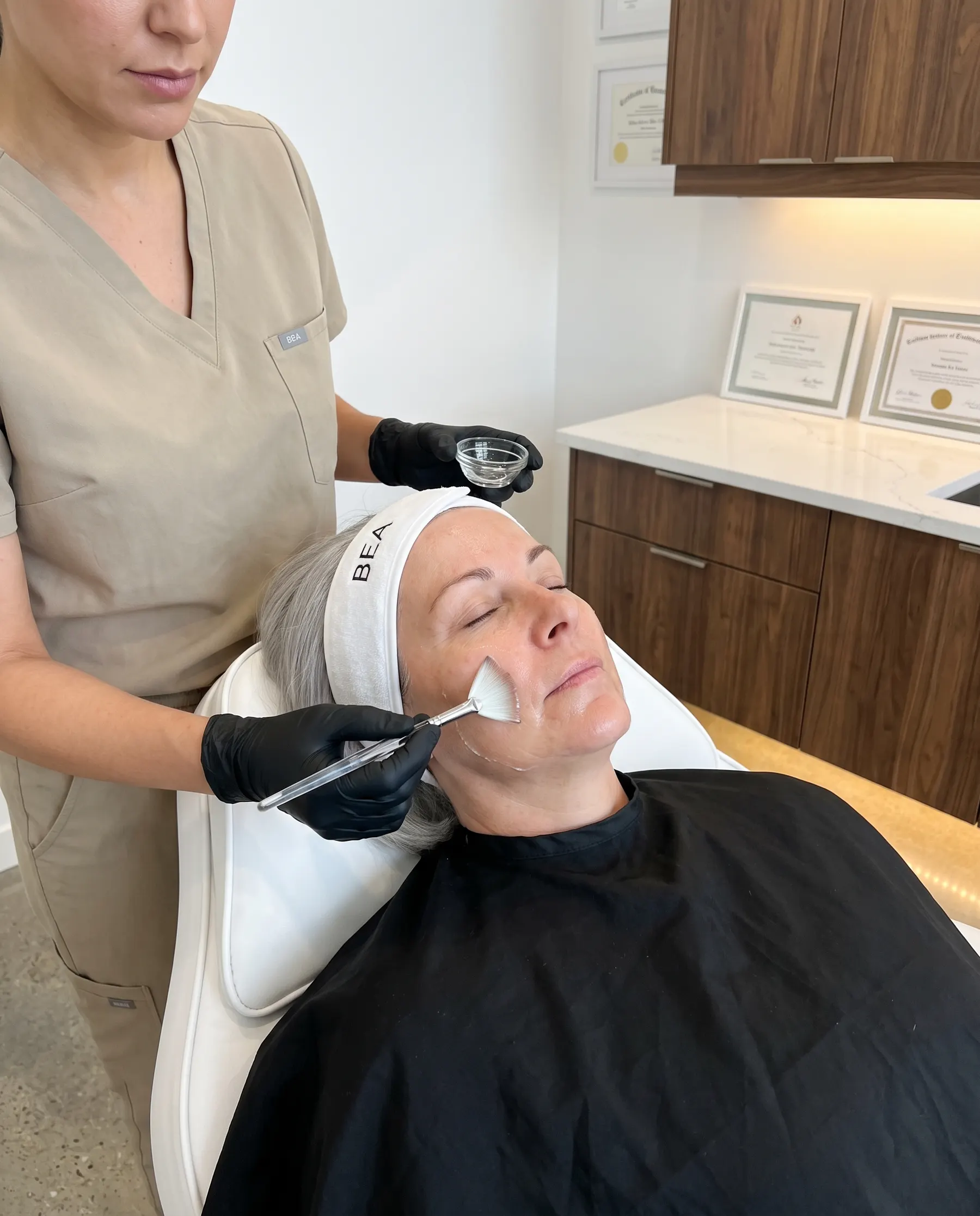
How we treat pigmentation and redness
Targeted treatments to lighten pigment, calm redness and even out the complexion.
Choosing the right treatment means knowing where the colour comes from. That is exactly what the free consultation is for: we look at your skin together, we tell you whether your concern looks mainly pigmentary, vascular or both, and we point you to a doctor when it needs to be diagnosed first.
Beautiful Spa that is a one stop shop for all your beauty, body and aesthetic needs. The staff is skilled, warm and inviting and the zen decor makes you want to never leave. I have loved all of my services thus far, and I will continue to come back to discover new services.
Everything people ask us before a first session, answered plainly.
Do spots fade away on their own over winter?
It depends on the kind of spot, which is exactly why we do not treat them all the same way. A freckle can fade a great deal over winter, while a solar lentigo usually stays visible all year. Melasma shifts with sun and with other triggers, and it can stay for years. A mark left by a breakout can fade on its own over time, faster or slower depending on the skin. One thing holds for all of them: autumn and winter are the right time to start a protocol. Skin is less exposed, and what you gain does not get undone in the following weeks.
Do brightening serums do anything?
Yes. Some topical products play a real part in pigmentation, including melasma and marks left by inflammation. What makes the difference is the active you use, how deep the pigment sits, and staying with it for months. A serum picked at random is not the same thing as an active chosen for your kind of spot. That is why so many people finish three bottles without seeing any change on the spot that bothers them most. We can point you to cosmetic products that suit your skin. When a prescription treatment is what the situation calls for, it belongs to a professional licensed to prescribe it, and we will tell you so rather than selling you a series of sessions.
Can a peel make things worse?
The risk is real, and it rises when skin pigments easily or when we create too much inflammation. Exfoliating too hard creates inflammation, and inflammation creates pigment. That does not mean a peel is off the table on deeper skin tones or on melasma. It means the formula, the depth and the pace call for more caution, and that is the whole reason the consultation exists. So we do not start with the strongest formula. The protocol is built upward, and it stops where your skin responds.
Why does it take months rather than weeks?
Because pigmentation is not a colour sitting on top of the skin. Pigment can sit at different depths, and it keeps being produced for as long as whatever triggers it is still around. Trying to speed that up with closely spaced sessions often produces the opposite: the extra inflammation makes new pigment while the old is being removed. Sessions are therefore spaced on purpose, and we judge the change over weeks or months rather than between two appointments. We explain that in consultation so you know what you are getting into.
Can brown and red be treated at the same time?
Yes, sometimes, and having both is common. There is no rule that says one colour has to be completely settled before the other can be touched. What gets decided is the order and the spacing, based on the treatments chosen, your skin type and how your skin reacts to the first session. A peel and a vascular laser do not go on the same skin on the same day. It is also why we start by working out which of the two dominates. The plan follows that reading, it does not come before it.
Do spots come back?
Yes, some can come back, and new ones can appear elsewhere. A treated area can stay lighter for a long time, but a solar lentigo can return with sun exposure. Melasma is the most likely of the three to come back, because what triggers it does not disappear with the session. Daily sun protection is therefore what protects the result, year-round and not only in summer. On melasma, a tinted sunscreen containing iron oxides adds a barrier against visible light, which matters here as much as UV does.
Ready to meet the best version of yourself?
Send us your questions and we will guide you toward the treatments that suit you best.