
PRP for hair in Laval
A medical treatment made from your own plasma, used when hair is thinning gradually. PRP may help reduce shedding and improve density, with no guarantee of a result.
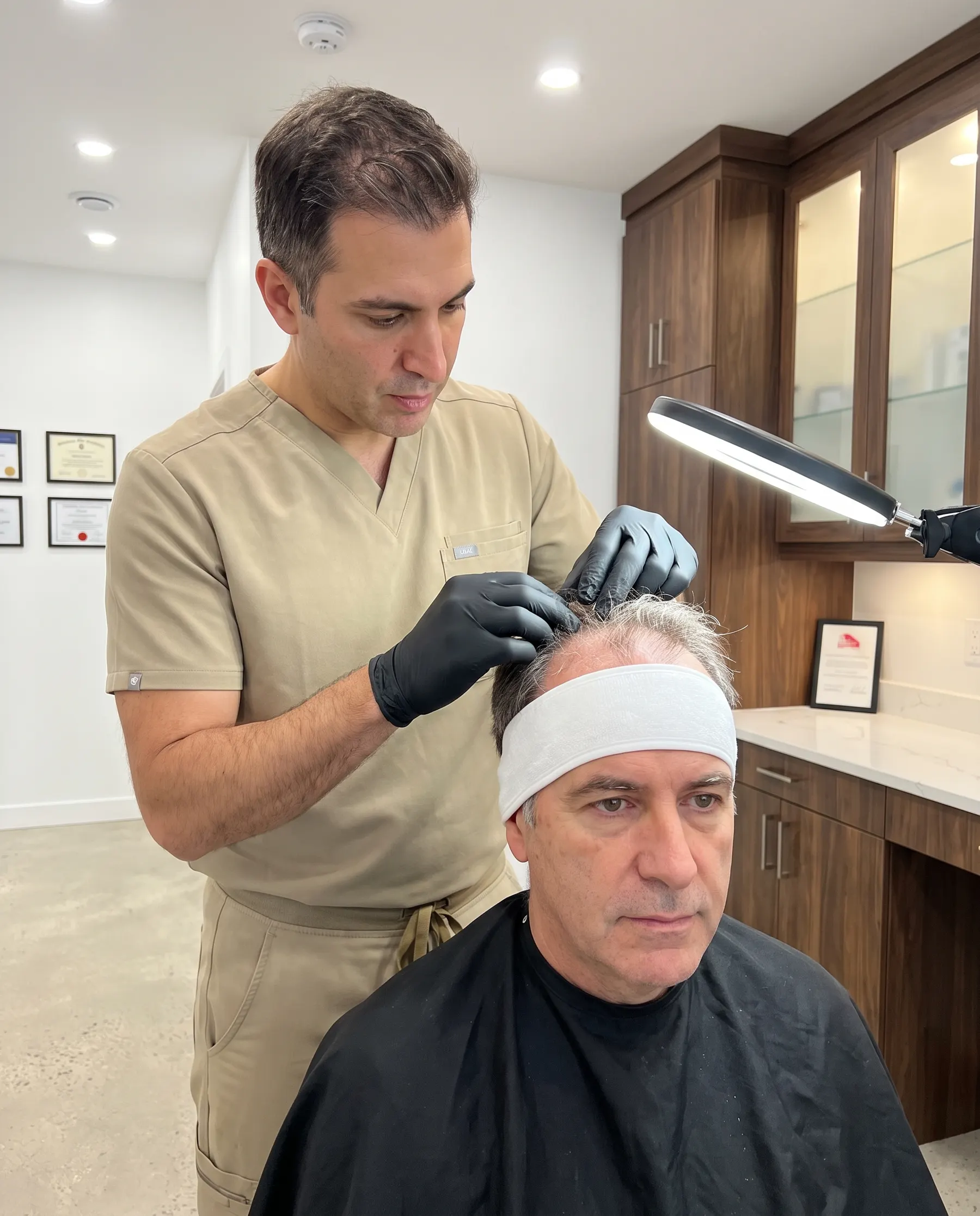
MEDICAL PROCEDURE
Performed by a physician. Blood draw. Medical consultation required.
What is PRP for hair
PRP stands for platelet-rich plasma.
A small amount of blood is drawn from you. It is spun on site, which separates the plasma and concentrates the platelets in it. That plasma is then put back into the scalp: by injection, through microneedling channels, or both, depending on what the physician chooses for your case.
Platelets contain growth factors and signalling molecules involved in tissue repair. Their possible role on the hair follicle is one of the reasons PRP is studied in certain forms of hair loss.
PRP is prepared from your own blood. Being autologous sets aside certain concerns tied to a product from a donor, but it does not remove the risks of the draw, the preparation and the procedure itself. The physician explains them to you before the consent.
price
- A paid medical consultation beforehand is required, at $120
- Set by the physician, who bills his own fees
- The cost of the plan is explained to you during the consultation
length
- The appointment covers the draw, the spin and putting the plasma back
- The number of sessions is decided after assessment
area treated
- The scalp
- The draw and the spin are done on site
- Nothing is stored and nothing is sent elsewhere
- For the skin of the scalp, see Keravive
how it feels
- A blood draw, like any blood test
- Then injections into the scalp, microneedling, or both
- Scalp sensitivity varies a great deal from one person to another
after the session
- Scalp tenderness, temporary
- Small red dots or slight swelling possible
- The exact instructions are given to you by the physician
what it addresses
- Hair that is thinning gradually
- Density dropping on the top of the head
- A part that is widening
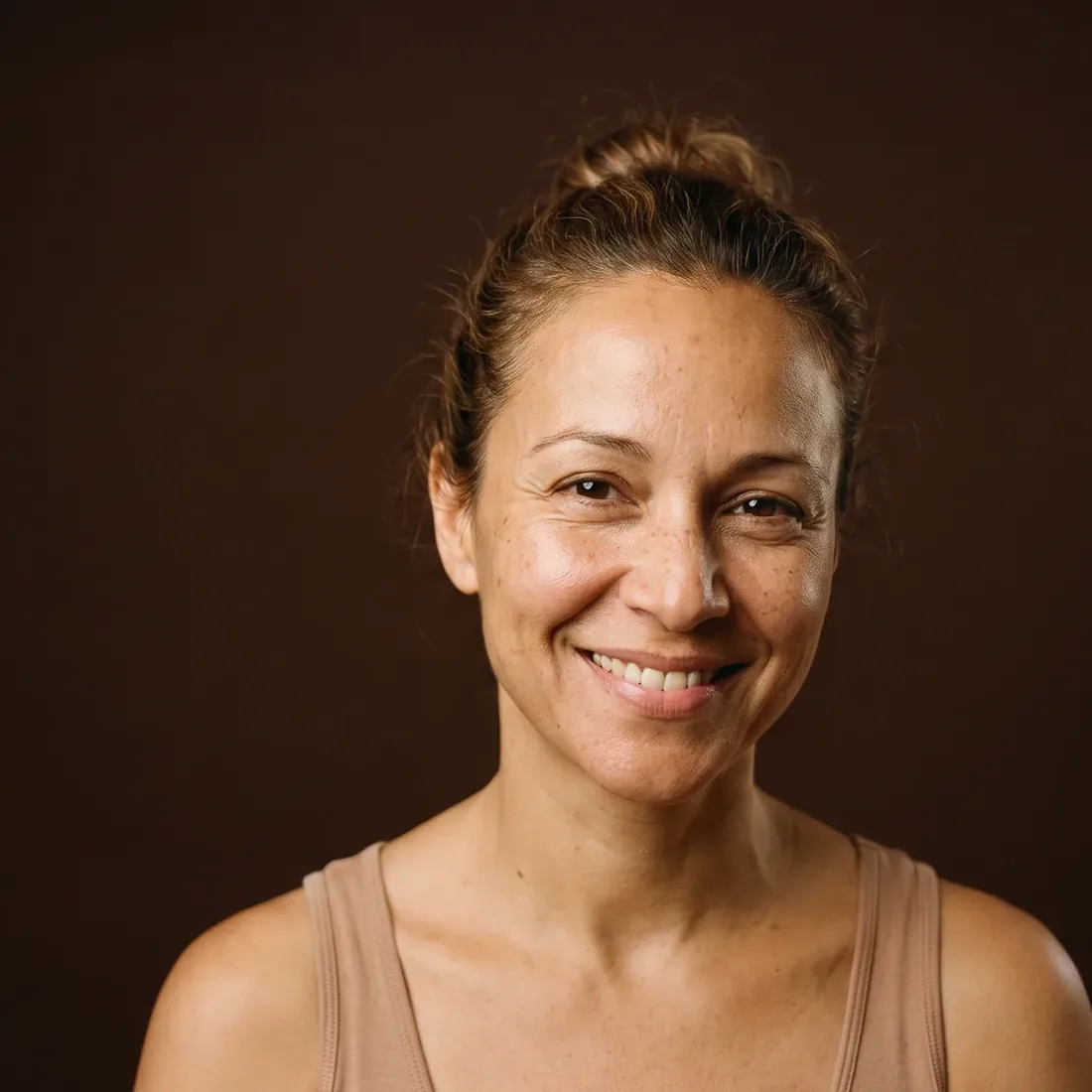
Is this procedure right for you?
The physician answers that question, and nobody else. Here is what you can know before meeting him.
Hair that is thinning gradually
The plasma is prepared from your blood, drawn and spun on site the same day.
Pattern hair loss, in men as in women
A part that is widening, density dropping on the top of the head, hair that has become finer, an early recession in some men. That is the profile the data supports best.
Some situations call for a diagnosis first
Sudden or very recent shedding, diffuse loss after an illness, a pregnancy or significant stress, patches with no hair, an inflamed or painful scalp. Those situations call for a work-up before considering anything.
The diagnosis matters more than the procedure
PRP is not a generic treatment for shedding: it is more relevant in some diagnoses than in others. Not sure yet which type of loss you have? See our guide on hair loss.
Nobody here will tell you how much hair you will get back, or whether you will get any back
Research is progressing, results vary from one person to another, and the physician will tell you what he usually observes, what depends on your situation and what does not depend on him.
Contraindications
What we already know, and what will appear there. Certain infections, blood disorders, platelet abnormalities, significant anaemia or medications that can affect clotting or platelets may change or prevent the treatment. The physician checks these and decides whether blood work is needed before starting.
Do not stop any medication on your own before the consultation.
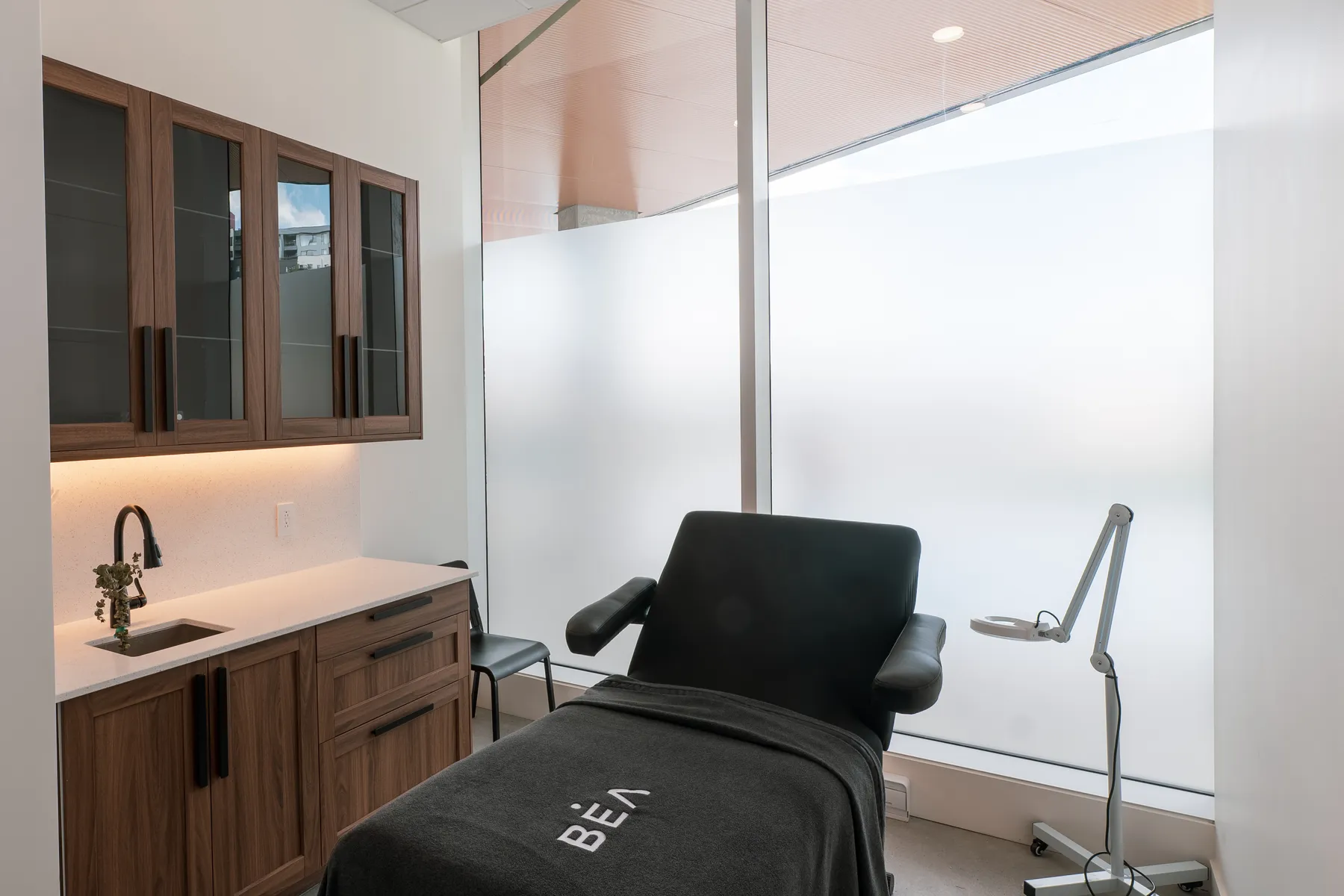
A procedure adjusted to your situation
What is established: the physician assesses your scalp, the type of loss, how long it has been going on and your history, then determines whether the procedure makes sense for you and at what rhythm. The plan comes from that assessment, not from a package.
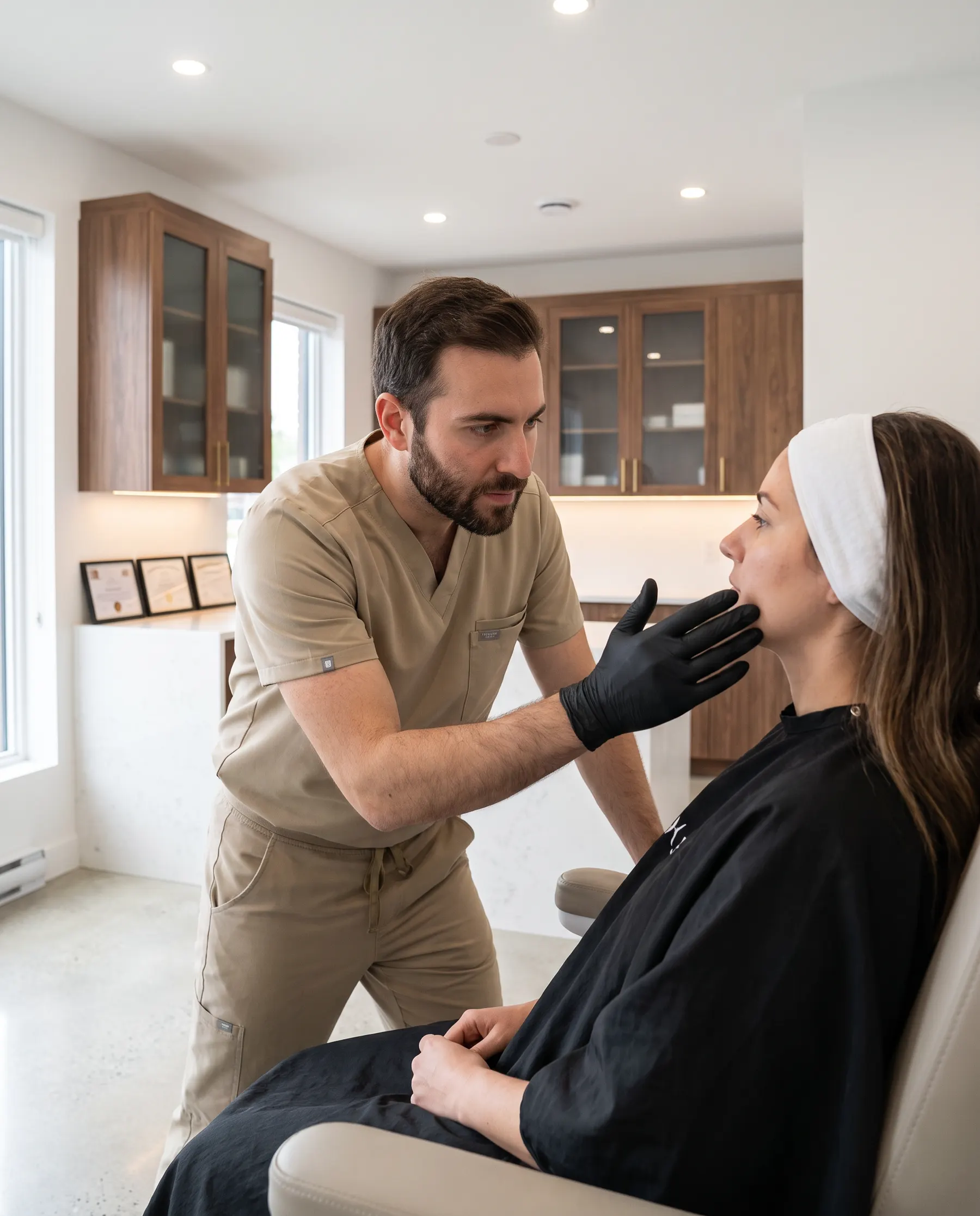
The appointment step by step
The physician follows the same steps at every appointment.
1
The medical consultation
Separate from the institute's free consultation, with its own fee and its own records.
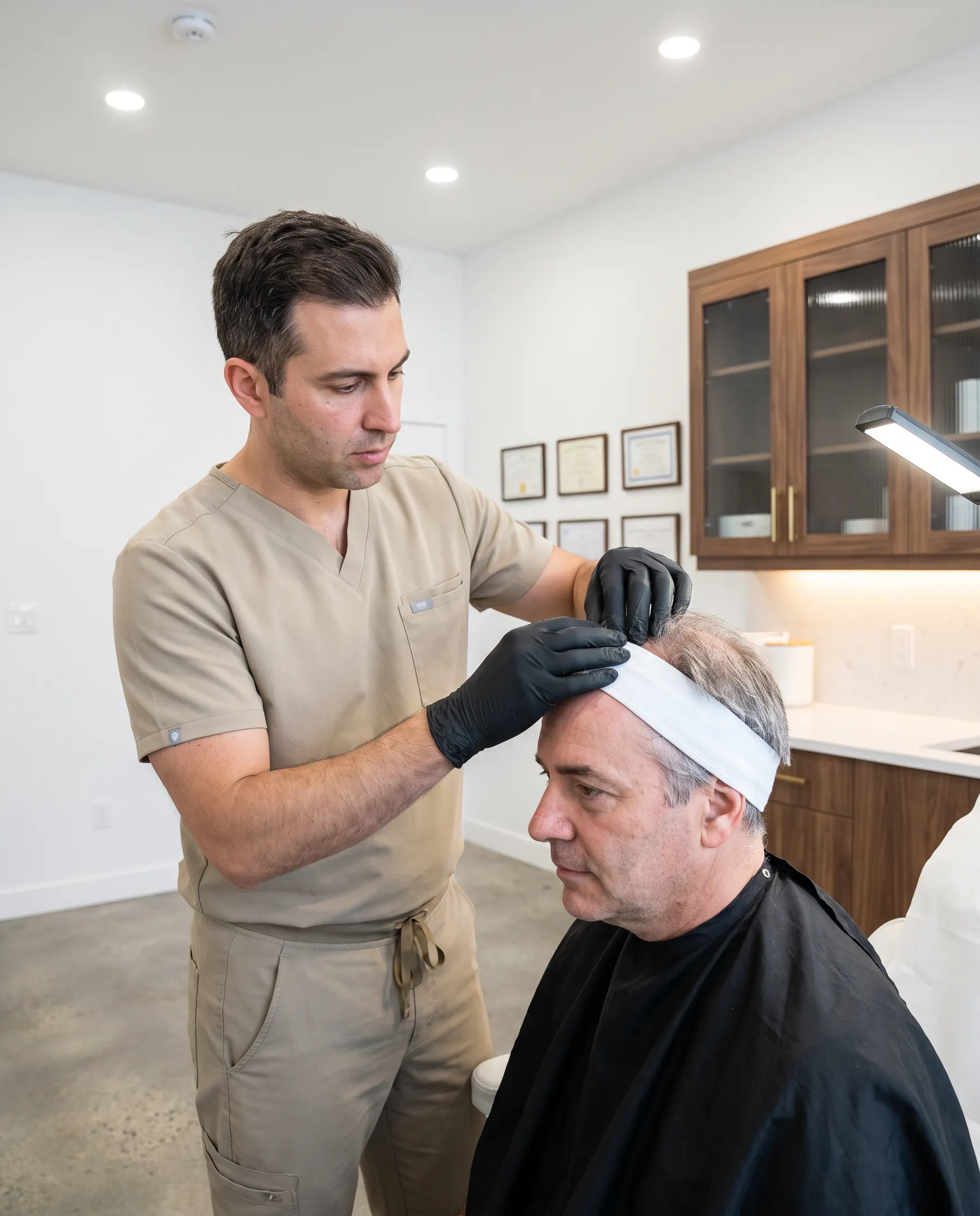
2
The assessment
The physician looks at your scalp, asks you about your history and your medication, and determines whether the procedure makes sense for you.
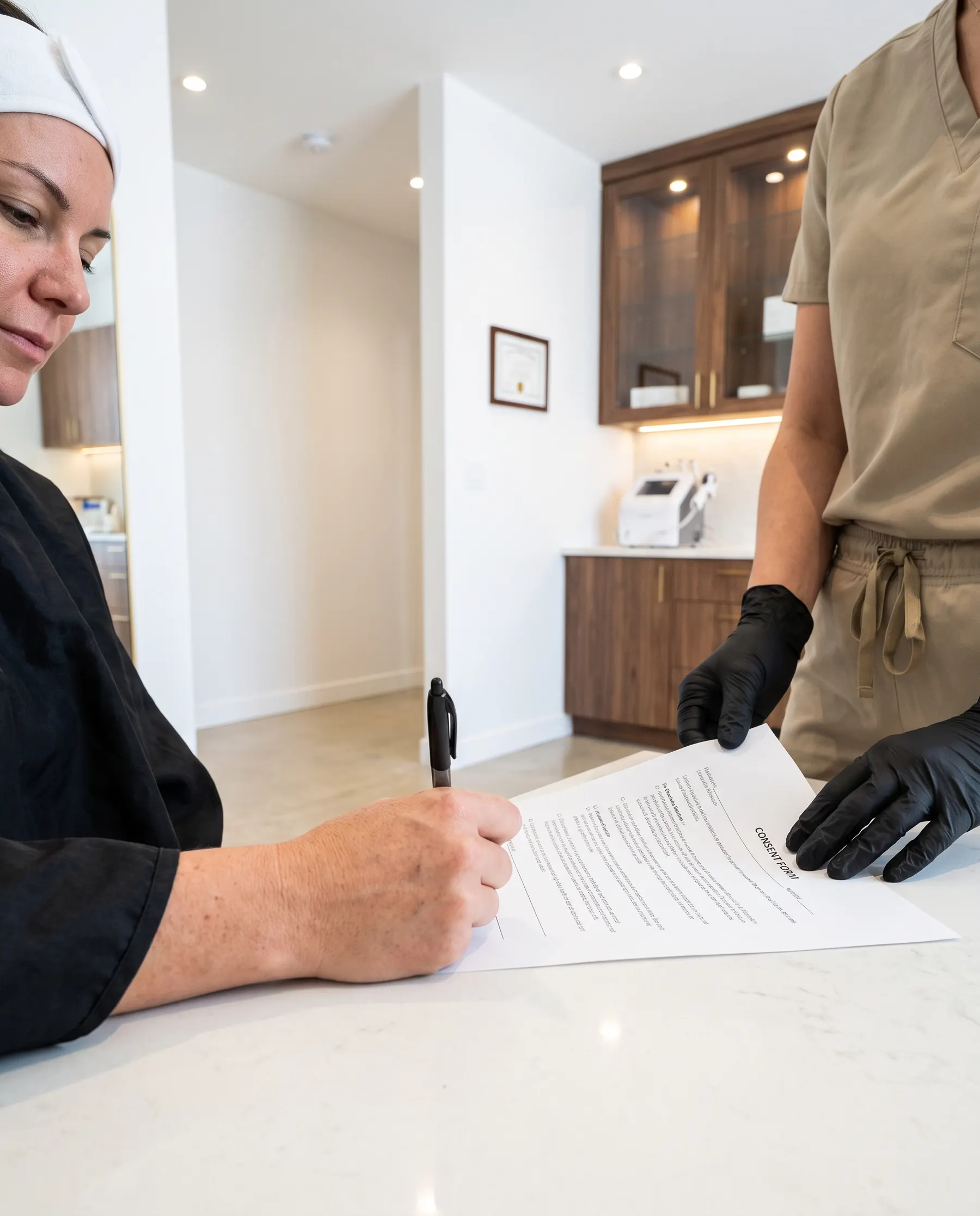
3
Written consent
Signed before anything is done. It sets out the risks.
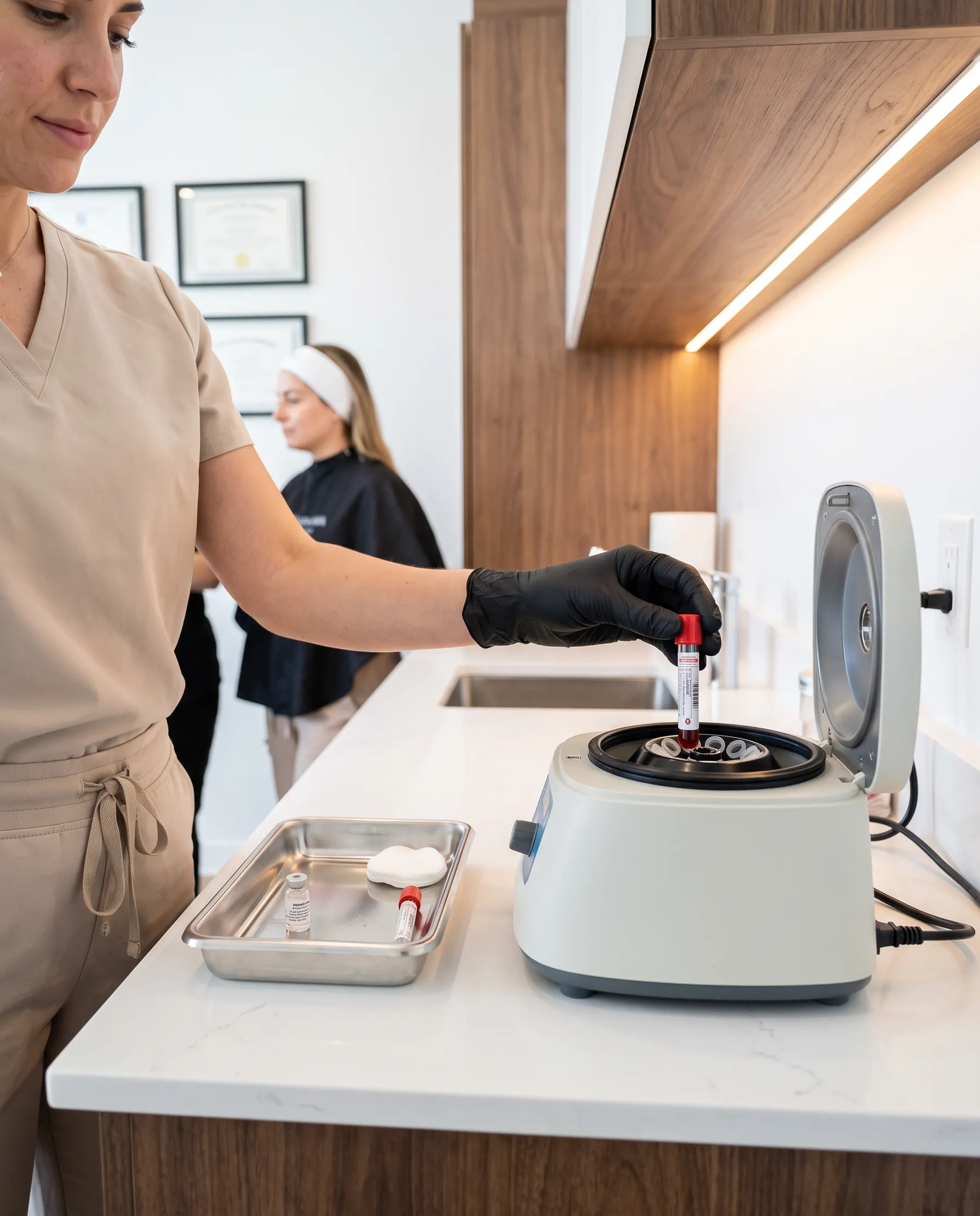
4
The draw and the spin
A small amount of blood is drawn, then spun on site, in front of you.
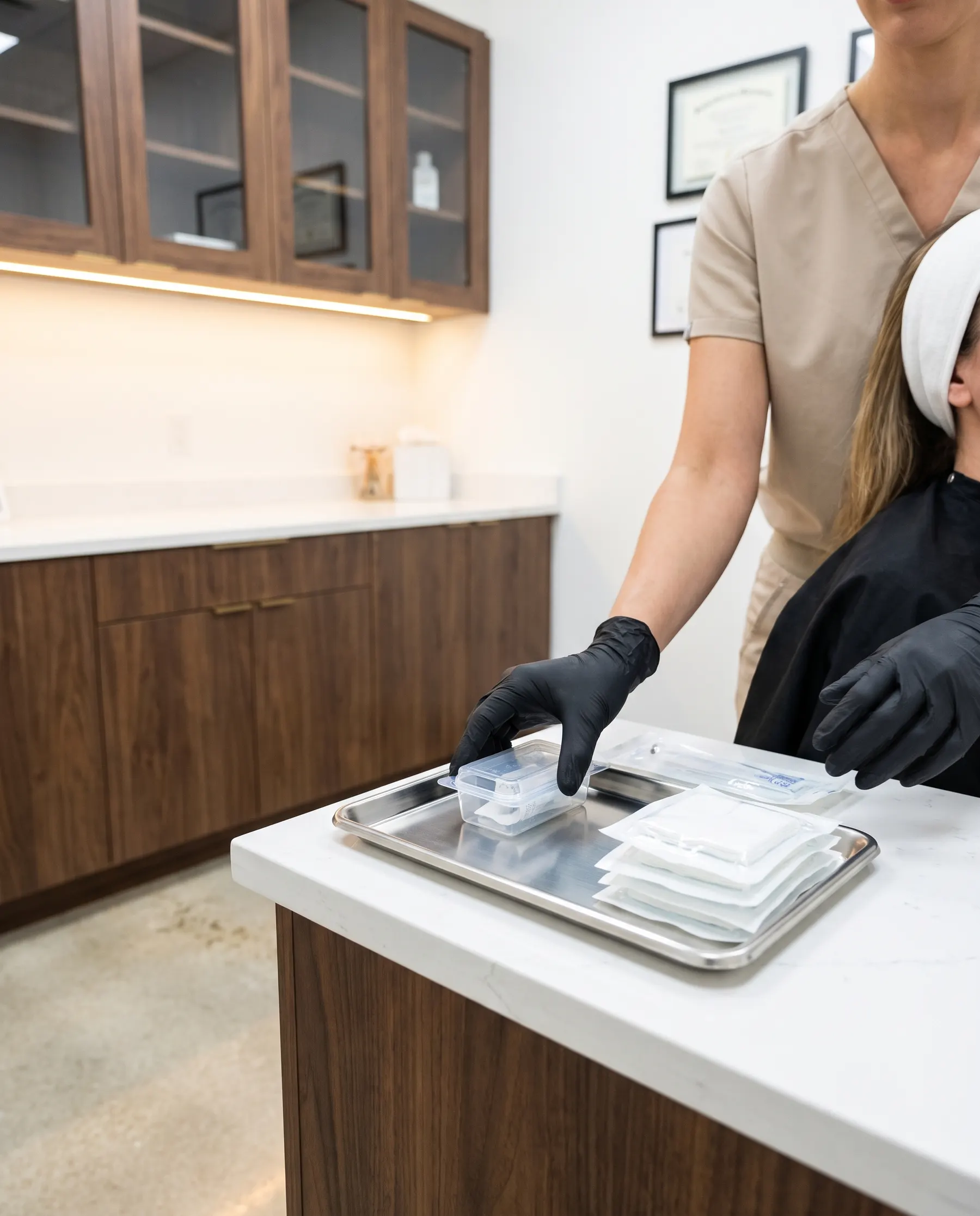
5
Putting the plasma back, and the instructions
The plasma is put back into the scalp, by injection, through microneedling channels or both, and you are given the instructions for the following days.
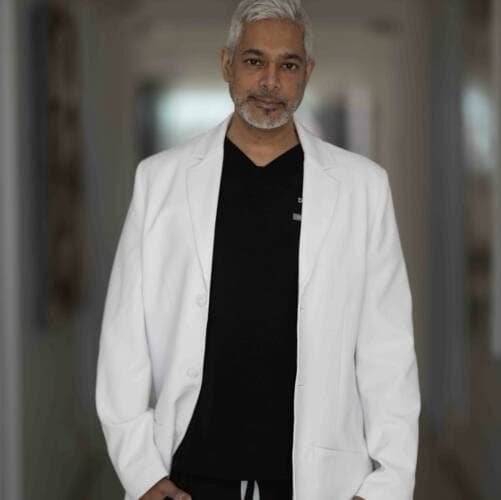
Who performs this procedure
At L'Institut Béa, Dr Nyan Narine personally performs the PRP hair injections. The institute's estheticians do not perform any injection.
He practises on the institute's premises, he keeps his own records and he bills his own fees. The institute does not sell his procedures, as the Collège des médecins du Québec requires.
Their experienceat Béa
Beautiful Spa that is a one stop shop for all your beauty, body and aesthetic needs. The staff is skilled, warm and inviting and the zen decor makes you want to never leave. I have loved all of my services thus far, and I will continue to come back to discover new services.
Kim B.
Fresha review
Frequently asked questions
Everything people ask us before a first session, answered plainly.
Does it hurt?
There are two moments: the draw, which is an ordinary blood test, then the procedure on the scalp. Sensitivity in that area varies a great deal from one person to another. What to take from this now: ask him in consultation, before booking the session, rather than on arrival.
Who exactly does the injection?
At L'Institut Béa, Dr Nyan Narine personally performs the injections. The institute's estheticians do not perform any injection, in the scalp or anywhere else.
Is the institute's free consultation enough?
No, they are two different appointments and it is better to know that before booking. The institute's consultation is free, it covers esthetic treatments and it is not required. The medical consultation is paid, it is done by the physician, and it is required before any medical procedure. The physician bills his own fees and keeps his own records.
Is the blood drawn on site?
Yes, the same day. A small amount of blood is drawn, spun immediately, then injected back. Nothing is stored, nothing is sent elsewhere, and the product injected into you is your own, prepared in front of you. That is what separates this procedure from every other in the pillar: there is no purchased product, there is yours.
How many sessions should I plan for?
Most of the protocols studied use several sessions rather than one. A common pattern starts with a few treatments about a month apart, after which maintenance sessions may be proposed. The exact plan depends on your diagnosis and on how you respond, and the physician sets it after assessing you. The result is not judged after a single injection: studies follow the change in density over several months.
What is the difference with Keravive?
Everything, except the area. Keravive is an esthetic treatment, done by an esthetician, which cleans and hydrates the skin of the scalp, with nothing breaking the skin. PRP for hair is a medical procedure, with a blood draw and an injection. The two do not aim at the same thing, are not done by the same person and do not fall under the same framework. Neither one promises regrowth.
Does it work?
The data is most encouraging for pattern hair loss, in men as in women. Several meta-analyses of randomised trials report an average improvement in hair density compared with control, but results vary a great deal between studies and the preparation protocols are not yet standardised. PRP does not work on every cause of shedding and does not guarantee visible regrowth. The physician will tell you what he observes in his practice, and what depends on your situation.

Ready to meet the best version of yourself?
Send us your questions and we will guide you toward the treatments that suit you best.