Acne and the traces it leaves are two problems that follow each other, and the first explains the second. Three mechanisms run in sequence, from a blocked pore to the mark that stays.
Several factors combine
Heavier sebum production, cells building up inside the follicle, a bacteria normally present on the skin, and inflammation settling in.
Inflammation leaves a trace
The redder, more swollen and longer-lasting the breakout, the more the skin keeps a mark afterwards, and sometimes a pit.
In adults several threads cross
Hormonal shifts can play a part, so can stress, genetics and the products being used, and acne that persists despite a suitable routine is worth having assessed.
It depends which kind, and light coming from the side already points you somewhere.
A pitted scar casts a shadow that shifts with the angle. A mark of colour keeps a smooth surface. That is a clue about relief and not a diagnosis: plenty of people have both at once, and get discouraged because they treat them the same way.
What can be treated
The flat brown mark
A darker trace where there was inflammation, on skin that stayed smooth. That is excess pigment, and it is more common and more stubborn on skin that pigments easily.
The flat red or pink mark
The same smooth surface, but colour that comes from the inflammation just past rather than from pigment. It often fades on its own, and it is not treated like a brown mark.
The pitted scar
It has depth, and it comes in more than one shape: narrow pits, saucers with defined edges, or a broader rolling relief. The shape matters as much as the depth in deciding what answers it.
Mainly comedonal acne
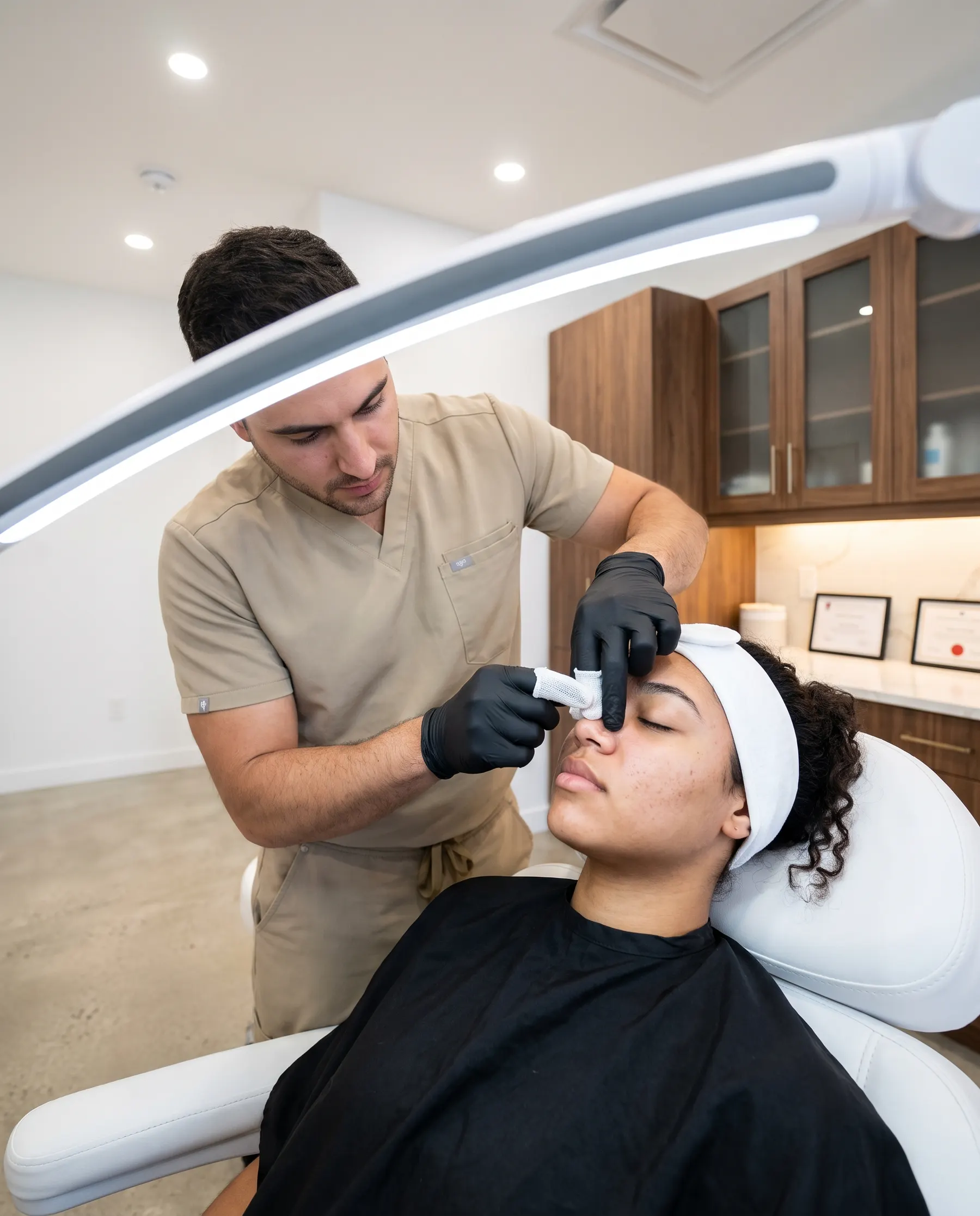
Open or closed comedones, blackheads, congested pores, without marked redness or pain. A treatment can clear the congestion, and it is the routine that limits its return.
What we do not treat here
Inflammatory, cystic or painful acne
It deserves a medical assessment, and no esthetician's work replaces a prescription. Acne that is leaving scars right now is the kind that gains most from being seen quickly.
A raised scar or a keloid
A thick, raised scar, sometimes spreading past the original lesion, comes from too much tissue rather than too little. It is not treated like a pit, and our microneedling is not what it calls for. We point you to a doctor.
Erasing a scar completely
Lost tissue is not replaced identically. The depth softens, sometimes a great deal, and nobody can honestly promise new skin.
How we treat acne and its marks
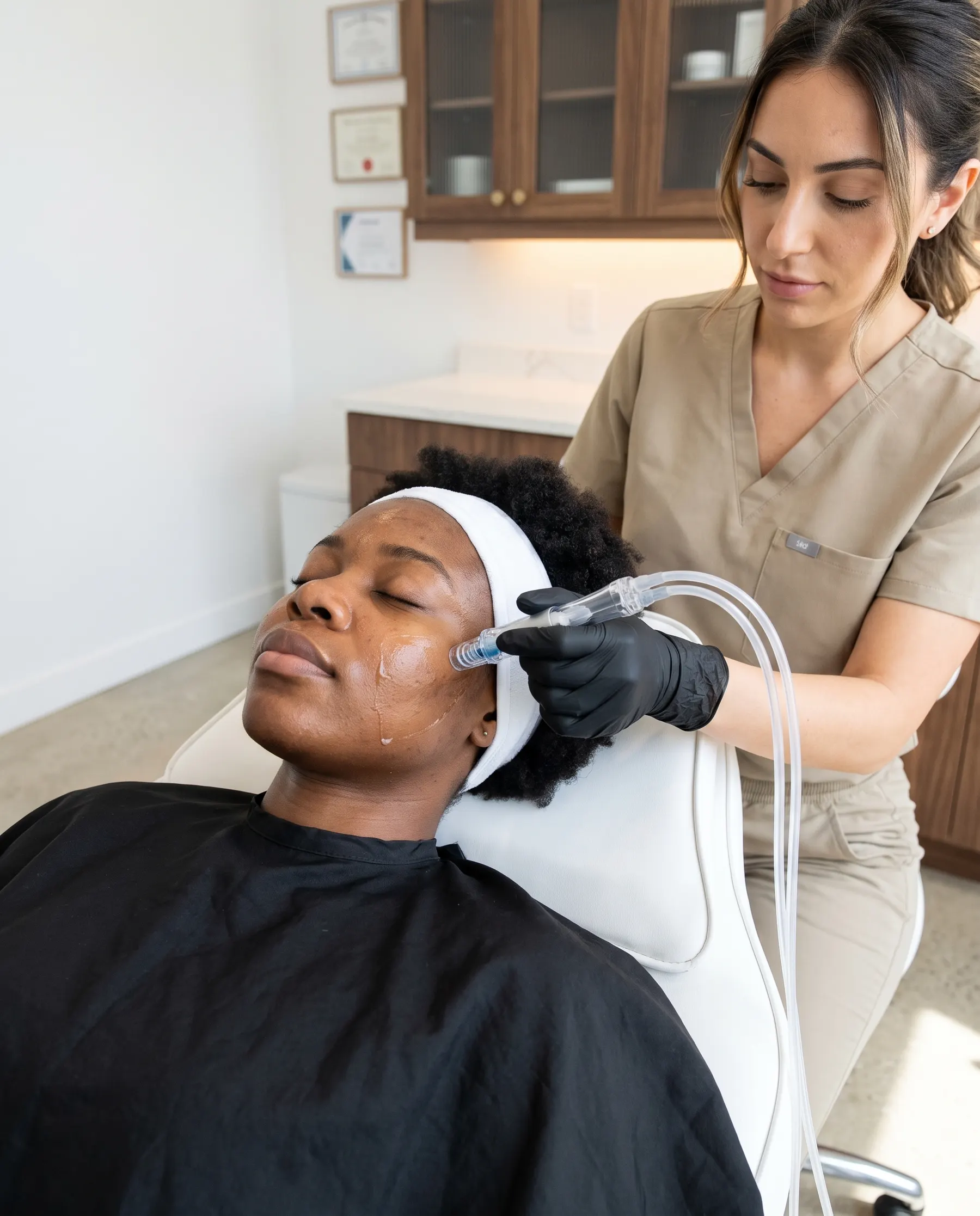
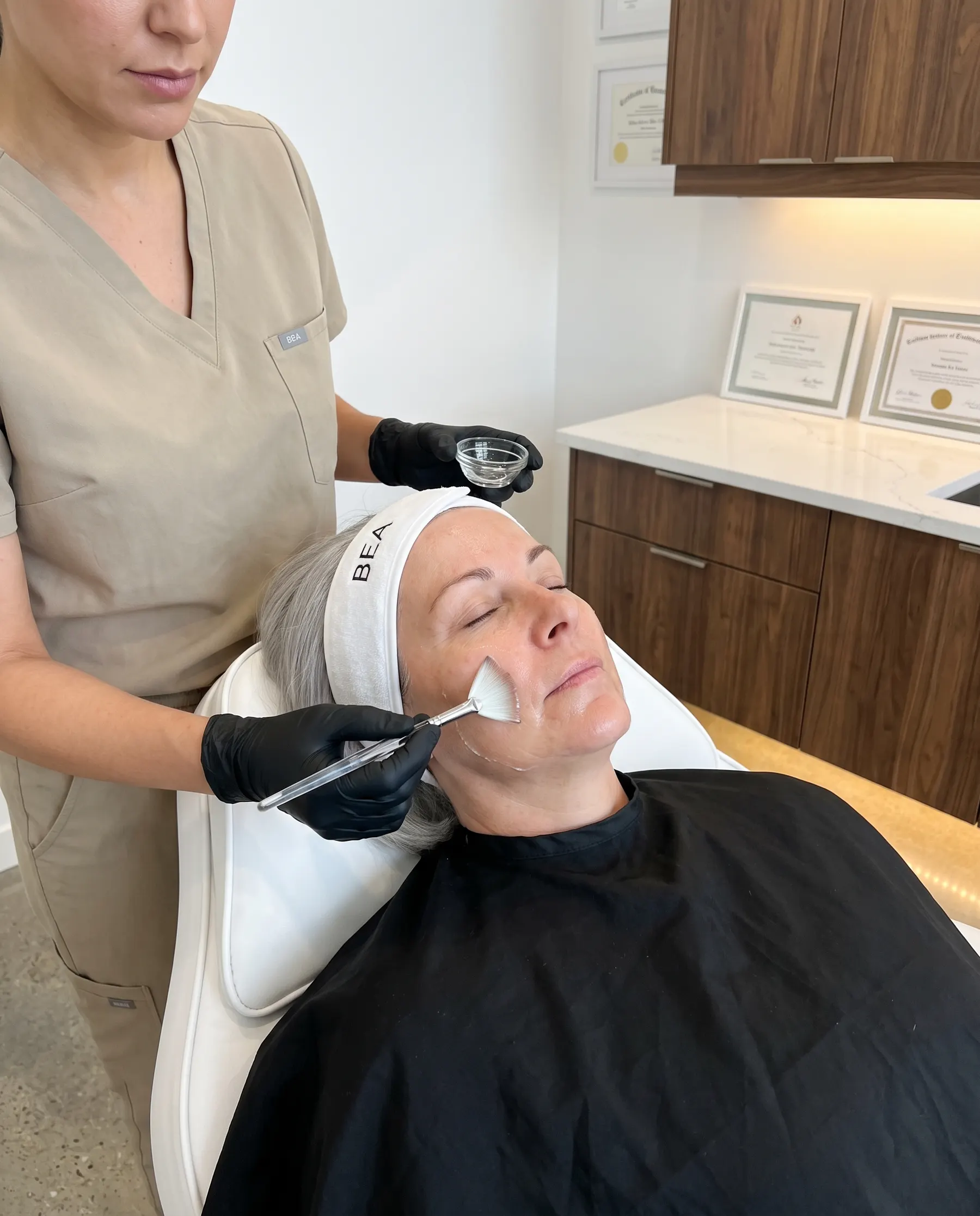
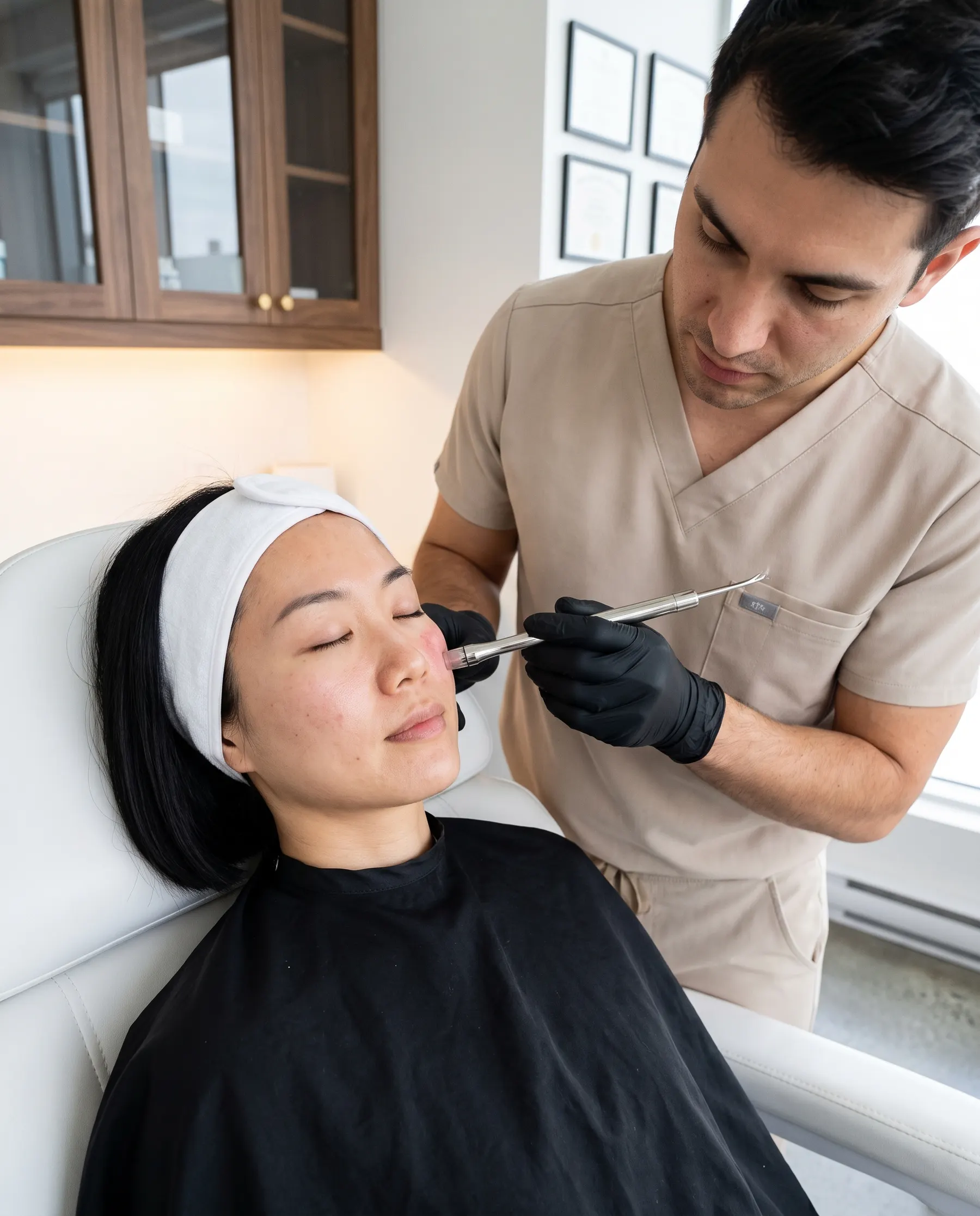
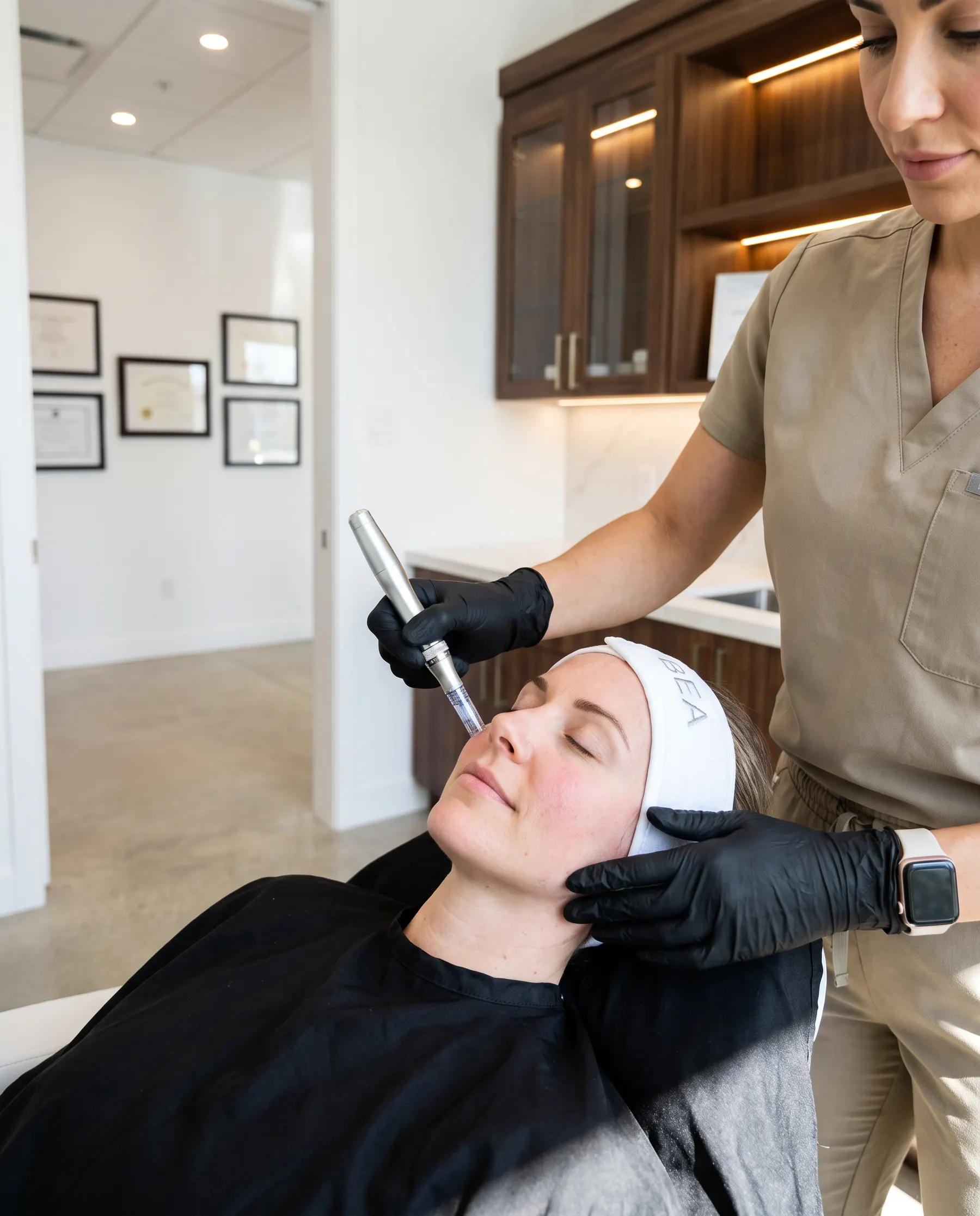
Targeted treatments to unblock, calm, even out and rebuild the surface.
Choosing the right treatment starts with knowing whether your priority is still the acne, a mark of colour or a real scar. That is exactly what the free consultation is for: we look at your skin together, we tell you what our treatments can actually improve, and we point you to a doctor when the acne needs handling first.
Beautiful Spa that is a one stop shop for all your beauty, body and aesthetic needs. The staff is skilled, warm and inviting and the zen decor makes you want to never leave. I have loved all of my services thus far, and I will continue to come back to discover new services.
Everything people ask us before a first session, answered plainly.
Do I have to wait until the acne is over before dealing with the marks?
It depends what you want to treat, and the answer is not the same for a mark and for a scar. For a pitted scar, yes: reworking old pits while new ones are forming amounts to repairing while the damage continues. For a flat mark it is different. Part of what calms acne also works on the colour it leaves behind, and the two can move forward together. What we do not do is microneedle active inflammatory lesions, and we adapt the peel to what the skin shows on the day. The good news is that the wait is not wasted: a flat mark often fades on its own over several months.
Can drugstore products be enough?
On mild acne, often, and it is worth trying before paying for a series of treatments. Actives such as adapalene, benzoyl peroxide, salicylic acid or azelaic acid have real evidence behind them, and the choice depends on the kind of acne. What they do not do is reach a pitted scar. And if the acne is painful, deep, still there after several weeks of a suitable routine, or leaving scars, having it assessed beats stacking on a fourth product. What makes things worse shows up daily: piling on products, scrubbing, trying to dry the skin out completely, and the habit of picking. A simple, steady routine does better.
Can it get worse before it gets better?
A few lesions can show up over the following days, and it is better to know in advance. Acne-prone skin keeps evolving on its own, some lesions were already forming, and a treatment can leave the skin irritated for a while. ⛔ We do not present that as a necessary purge, nor as proof that the treatment is working. An extraction does not push next week's breakouts to the surface. It is still why a first session is not booked three days before an event: the skin can redden or react. A widespread, painful or unusual flare, on the other hand, should be reported rather than expected.
How many sessions for a pitted scar?
Several, spaced out, and the scale is months rather than weeks. Microneedling triggers collagen production, and skin builds at its own pace without any technique speeding it up. What progresses between two sessions is not visible right away. That is why this work is judged over a full series rather than on one visit. An honest number cannot be given before seeing the pitting. And depth is not the only thing that counts: a broad rolling relief and a narrow, deep pit do not respond the same way, and some shapes call for a technique we do not offer.
Does makeup make acne worse?
Not in itself, and that is a relief for a lot of people. What matters is the formula, whether it blocks pores, and above all removing it completely at night. A non-comedogenic foundation properly removed causes fewer problems than skin washed three times a day with a stripping product. Sleeping in makeup, on the other hand, encourages blocked pores, even with a product labelled non-comedogenic. There is one exception: after an extraction or a peel the skin can stay sensitive or irritated, and depending on what it shows we will ask you to wait until the next day.
Do I need to keep going once the marks are gone?
It depends on what caused them. As long as the acne keeps producing new lesions it keeps producing new marks, and it is the acne that needs following rather than the marks. Daily sun protection is what protects the result most, because sun can darken a recent mark and keep it visible longer. Choose a non-comedogenic one. It is the habit that costs the least and returns the most.
Ready to meet the best version of yourself?
Send us your questions and we will guide you toward the treatments that suit you best.