
Hyaluronic acid filler for the face in Laval
Softer features, by giving support back where it is missing. Hyaluronic acid addresses volume loss, deepened folds and facial contours that have dropped.
MEDICAL PROCEDURE
Performed by a physician. Medical consultation required.
What is hyaluronic acid
Hyaluronic acid is a molecule your body produces naturally, in the skin, the joints and the eyes. Its main property is holding a large amount of water relative to its weight.
Fillers reproduce a stabilised form of it, modified so it stays in place and breaks down slowly rather than within days.
This procedure addresses volume loss, deepened folds and contours that have dropped.
These products come in different densities, and that is the heart of the matter: a very soft gel cannot support a cheekbone, and a dense gel placed in a fine area can be seen and felt.
price
- Set by the physician, who bills his own fees
- It depends on the number of areas and the quantity of product
- A medical consultation beforehand, which is paid, is required
- No fee is quoted by the institute
length
- About a one-hour appointment
- The result is judged once the swelling has gone down
- Allow a few days before you really see it
- A follow-up appointment may be set
areas treated
- Cheeks
- Folds between the nose and the mouth
- Jawline and lower face
- Chin
how it feels
- Pressure and a sting at each point
- Bony areas are felt more
- Comfort options are discussed with the physician
- A feeling of tightness for a few days
after the session
- Swelling for a few days
- Bruising is possible, depending on the area and on you
- Avoid exercise, heat and alcohol for 24 hours
- Do not judge the result on your way out
what it addresses
- Volume loss in the cheeks
- Deepened folds
- A jawline that is less clearly defined
- A recessed chin

Is this procedure right for you?
This procedure gives support back; it does not erase a surface line.
It is for you if:
Your face has hollowed
The cheekbones have flattened, and the lower face has followed.
A fold has settled in
Between the nose and the mouth, or from the corner of the mouth toward the chin.
Your jawline is less clearly defined
The contour has softened and the line is less distinct.
A cheekbone flattening or a temple hollowing
The upper face has lost some of its relief, and the lower face looks less supported.
These signs suggest a lack of volume, they do not prove it
Moving the skin of your cheeks in front of a mirror changes the look whatever the cause: that is a clue, not a test. Only the physician determines, after looking at the whole face, whether adding volume will genuinely improve what bothers you. The institute's esthetic consultation is free and will point you the right way first.
Contraindications
The complete list is established by the physician in consultation, from your history and your medication. What is written here does not replace it.
PREGNANCY AND BREASTFEEDING
This procedure is not performed during pregnancy or while breastfeeding.
AN ACTIVE INFECTION OR A LESION IN THE AREA
The product is not injected through infected skin. A cold sore outbreak postpones the procedure in the areas near the mouth.
CERTAIN HISTORIES AND CERTAIN MEDICATIONS
A clotting disorder, a blood thinner, an autoimmune condition or a previous reaction to a filler. It is one of the reasons the medical consultation is required.

A procedure adjusted to your face
Four technical decisions determine the result, and none of them can be made online.
- THE CAUSE, NOT THE SPOT THAT BOTHERS YOU
- A deep fold between the nose and the mouth often comes from a lack of support higher up, at the cheekbone. Filling it directly thickens the fold. Lifting from higher up makes it disappear without the area itself being touched.
- THE DENSITY OF THE PRODUCT
- A soft gel for a fine area, a dense gel to support a structure. The wrong choice can be seen and felt.
- THE DEPTH
- Depending on the area, the product sits against the bone, in the deep fat or just under the skin. The same product at the wrong level gives a puffy look instead of a supported one.
- RESTRAINT
- It is simpler to add at the follow-up than to correct an excess. The product also takes on water in the following days, which slightly amplifies what was placed.
The appointment step by step
The physician follows the same steps at every appointment.
1
The assessment
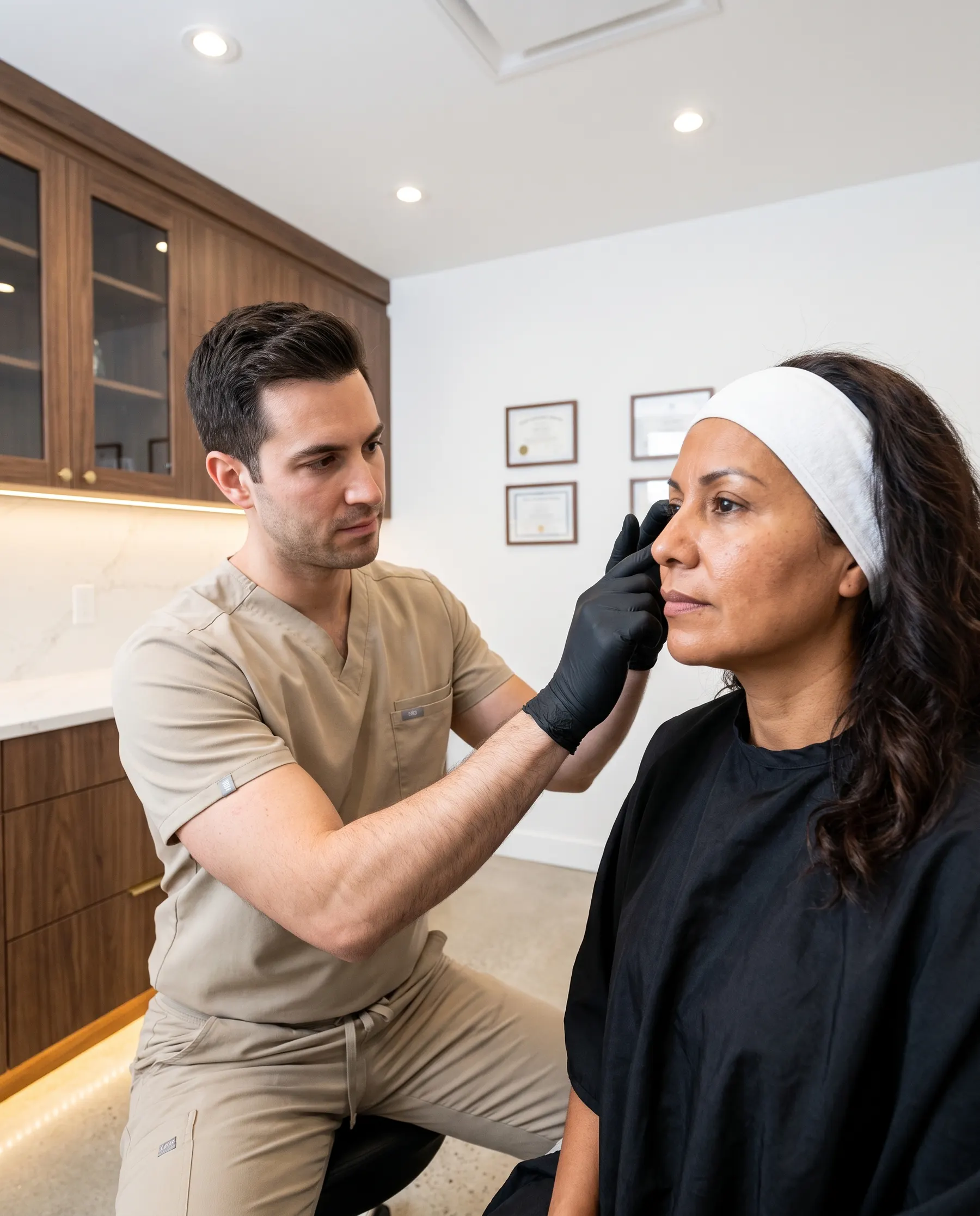
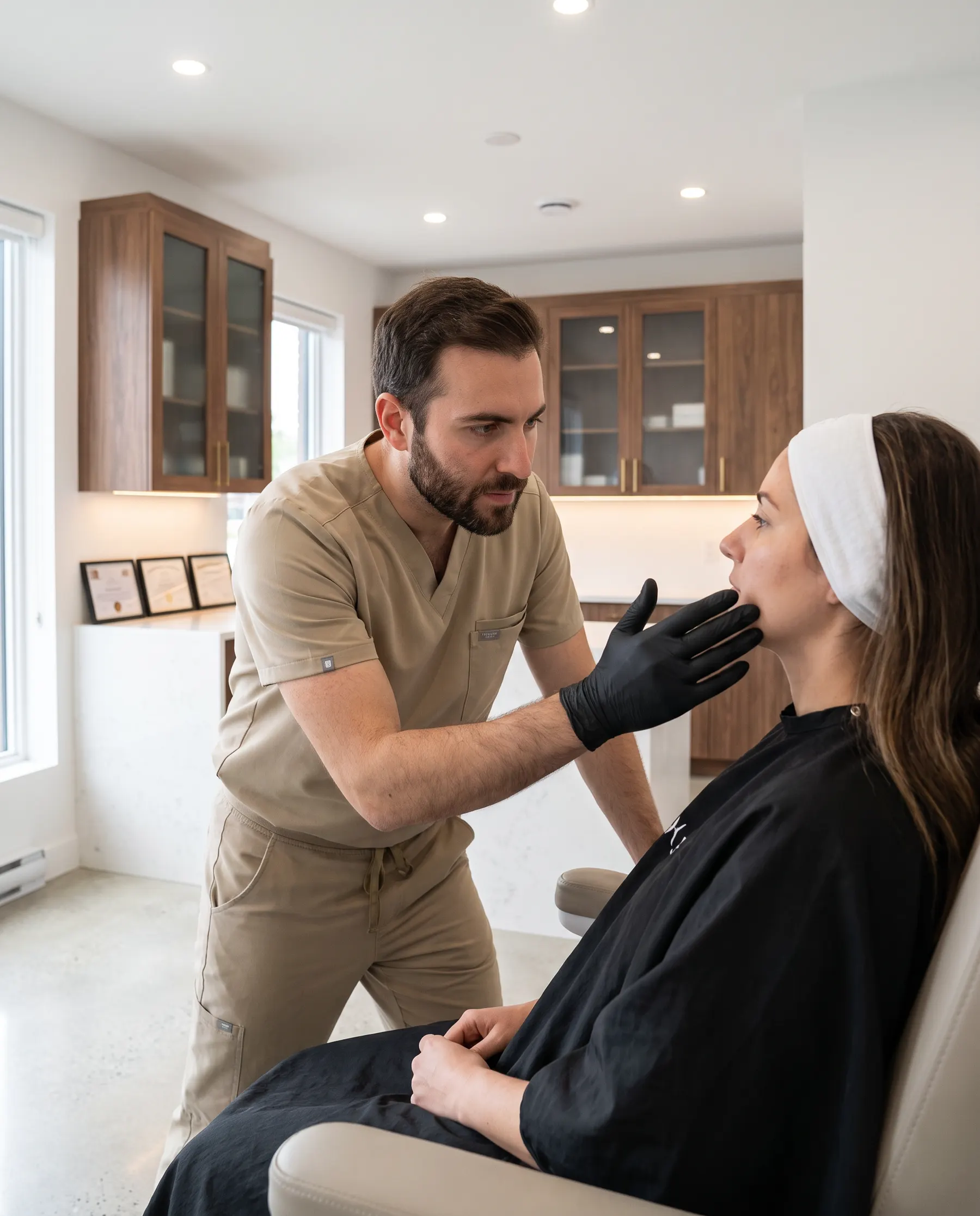
He looks at your face from the front and in profile, and looks for the origin of what bothers you rather than the place where it shows.
2
Information and consent
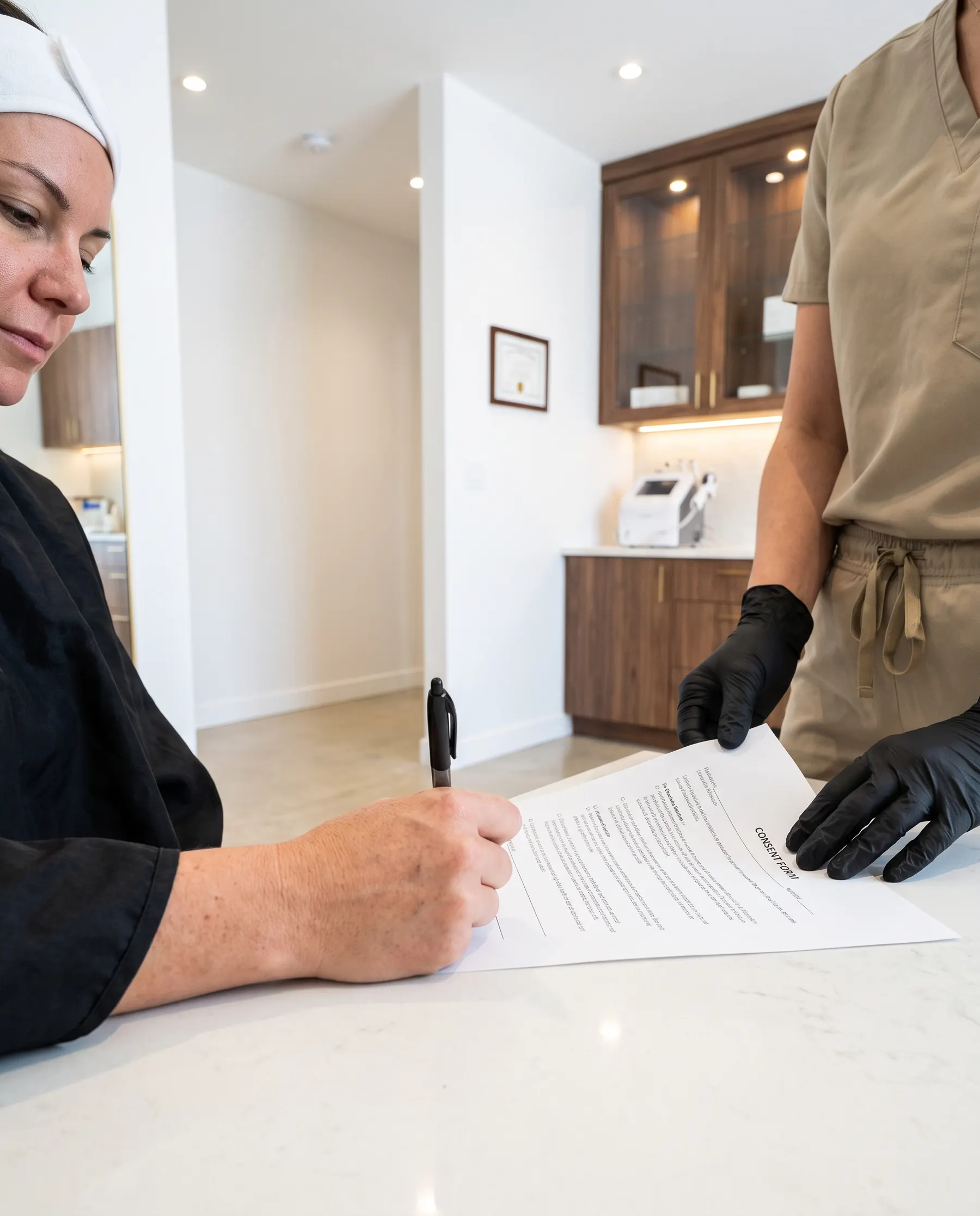
He explains the expected effects, the risks, including those involving blood vessels, and the contraindications. You sign a written consent.
3
Marking and preparation
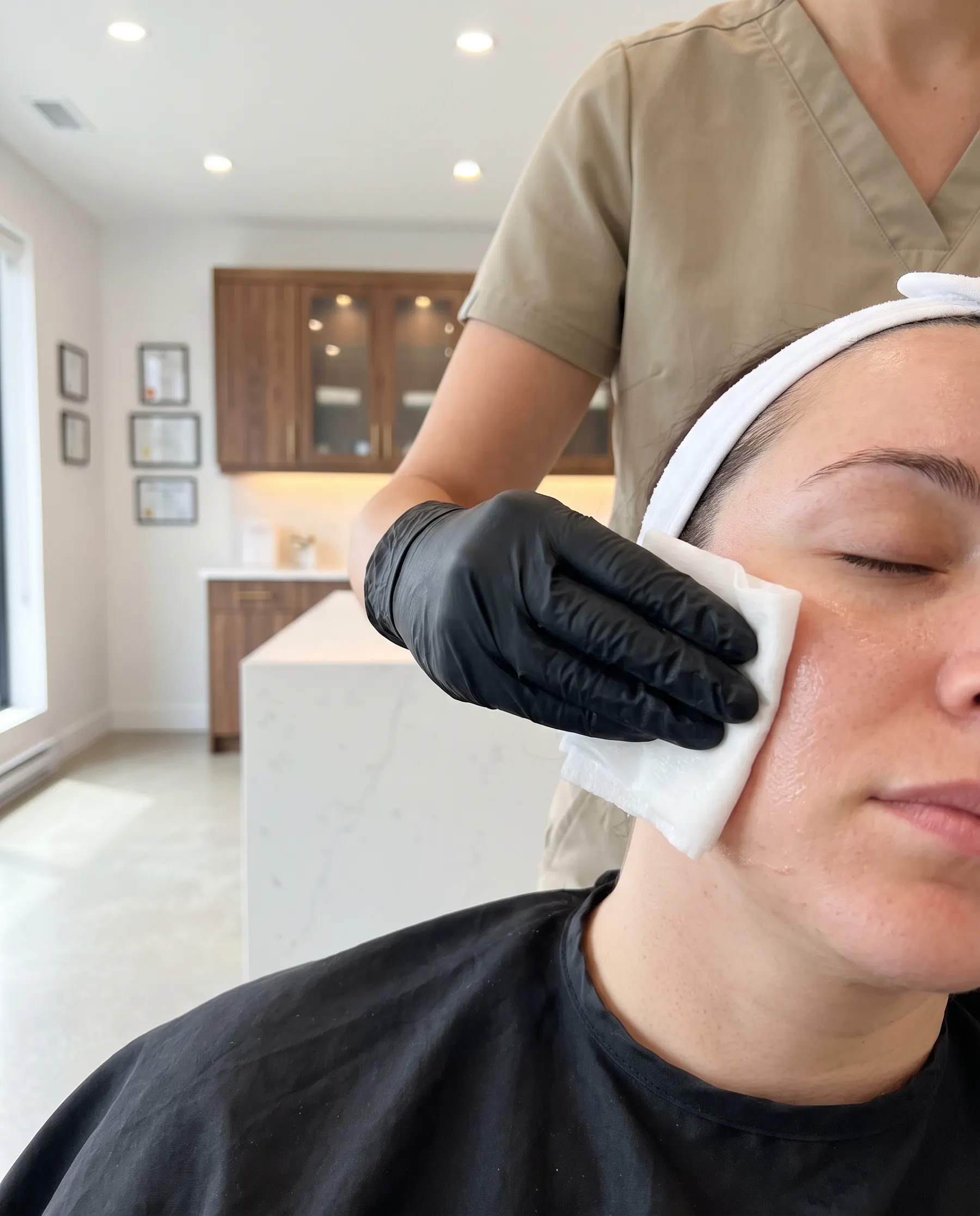
The skin is disinfected and the entry points are marked.
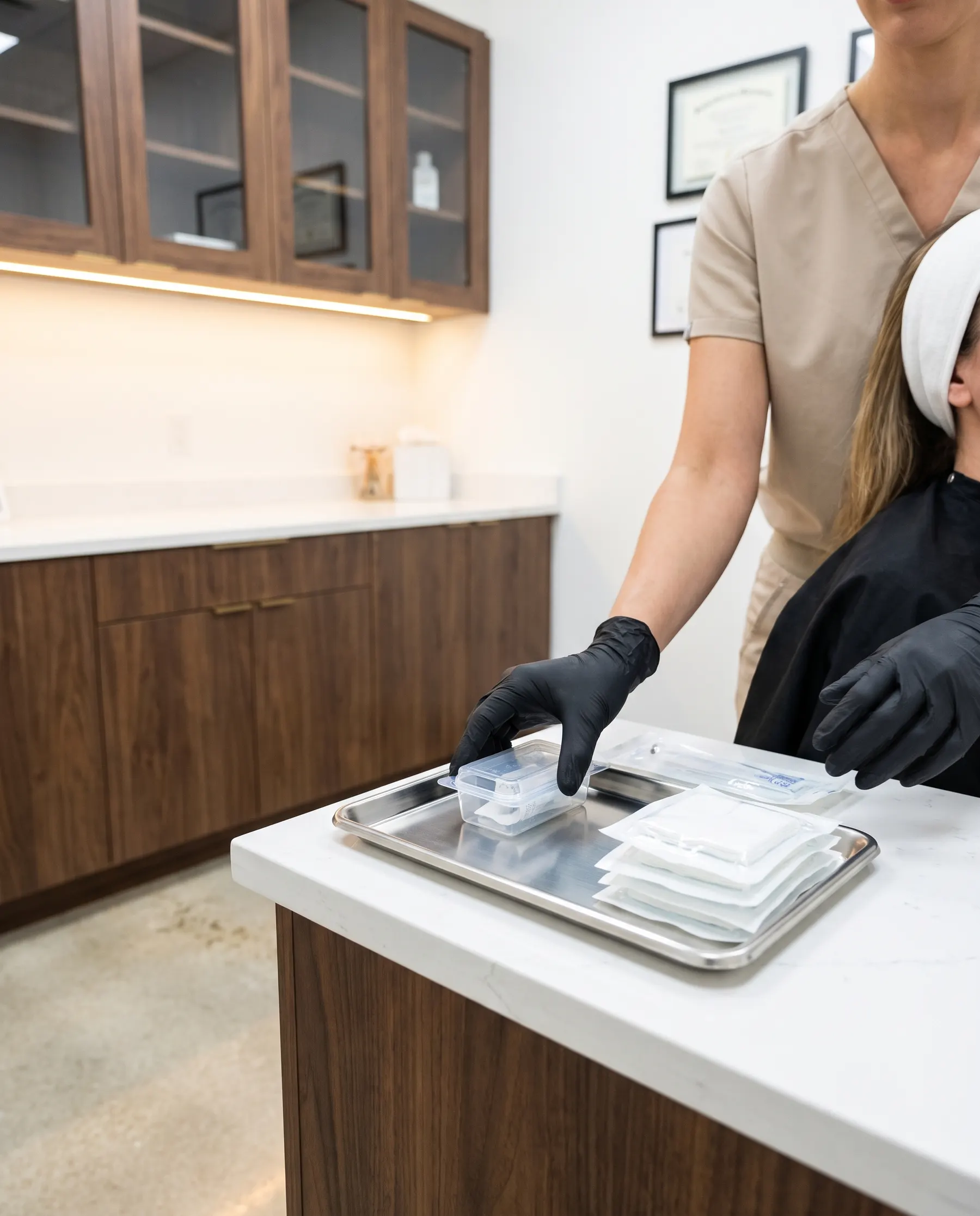
4
The injections
With a needle or a cannula depending on the area, in small quantities, with checks between each.

5
Instructions and follow-up
You are given the 24-hour instructions, and the result is judged once the swelling has gone down.

Who performs this procedure
At L'Institut Béa, Dr Nyan Narine personally performs the hyaluronic acid injections. The institute's estheticians do not perform any injection.
He practises on the institute's premises, he keeps his own records and he bills his own fees. The institute does not sell his procedures, as the Collège des médecins du Québec requires.

Their experienceat Béa
Beautiful Spa that is a one stop shop for all your beauty, body and aesthetic needs. The staff is skilled, warm and inviting and the zen decor makes you want to never leave. I have loved all of my services thus far, and I will continue to come back to discover new services.
Kim B.
Fresha review
Frequently asked questions
Everything people ask us before a first session, answered plainly.
Does it hurt?
There is pressure and a sting at each point, more noticeable on bony areas like the cheekbone or the chin. Many products contain an anaesthetic, and the physician has other comfort options he will discuss with you in consultation. A feeling of tightness in the area then lasts a few days, while the swelling goes down. If the needle is your main worry, say so: depending on the area, a cannula changes the experience a great deal.
How long does the result last?
Several months to more than a year, with real variation depending on the area, the density of the product and your metabolism. Very mobile areas break it down faster than stable ones. The product does not disappear all at once: it fades gradually, which means people often notice it going later than it actually started. The physician will give you the order of magnitude he observes, and no more.
Will I bruise?
It is possible, and it depends as much on you as on the area. Some people bruise easily, and the areas near the mouth or the eyes carry more vessels than the cheekbones. Bruises take a few days to clear. If you take a blood thinner, an anti-inflammatory or even certain supplements, say so in consultation: it changes the risk, and sometimes the timing.
How far ahead of an event can I have it?
Not the day before, and not the week before. The swelling lasts a few days, bruising is possible, and the result can only be judged once all of that has settled. Allow at least two weeks, more if you want the option of an adjustment at the follow-up. It is the most common mistake on this procedure: the calendar is counted backwards from the date, never forwards from the impulse.
Can it be removed?
Yes, unlike some other fillers, and it is an argument that counts. Hyaluronic acid can be dissolved by a substance the physician injects, which allows an excess or an asymmetry to be corrected. That is not a reason to push the dose at the first session, but it is a genuine safeguard, and it is one of the reasons this family of products is preferred.
What are the serious risks?
The main one comes down to anatomy: some areas of the face are crossed by vessels whose accidental blockage is the serious complication of this family of procedures. It is rare, it is documented, and it is why these injections call for precise anatomical knowledge and a physician who knows what to do if it happens. The physician will explain the signs to watch for before you sign the consent. That is why this procedure is not delegated.
Does it give a puffy face?
Not if the product is well chosen and well placed, and that is exactly what the previous section describes. The results we all have in mind usually come from three things: too much product, a density unsuited to the area, or placement that is too superficial. A fourth cause is more insidious, which is accumulation over the years without letting the previous product break down. Tell the physician what you do not want, as clearly as what you do.

Ready to meet the best version of yourself?
Send us your questions and we will guide you toward the treatments that suit you best.