
Hair removal in Laval
Three techniques, and they do not do the same thing. Laser reduces regrowth over time, waxing gives you a result the same day, electrolysis handles the hairs a laser cannot see.


How the three techniques differ
That is the real question on this page, and it settles in three sentences.
Laser targets pigment. It heats the melanin in the hair to reach its root. So it works on dark hair, it does nothing to white or blond hair, and its result builds over a series of sessions.
Waxing removes the hair at the root. Mechanically, whatever its colour. The result is immediate and lasts a few weeks. It is the only one of the three that gives you something the same day.
Electrolysis treats one hair at a time. One probe, one hair. It is slow, so it belongs on small areas, but it is the only technique that reaches a white hair, a blond hair, or a hair on a tattooed area the laser has to work around.
Choosing the wrong technique is the most common way to spend without a result. If you are unsure, write to us before booking.
The device matters, and ours treats every skin. The Elite iQ by Cynosure carries two wavelengths, Alexandrite at 755 nm and Nd:YAG at 1064 nm. That is what lets it treat phototypes 1 through 6. Plenty of older devices cannot safely treat darker skin.
And we will say so if none of them suits. A laser cannot see a white or blond hair, because there is no pigment to target. No number of sessions changes that, and you will hear it before you pay.
Our hair removal techniques
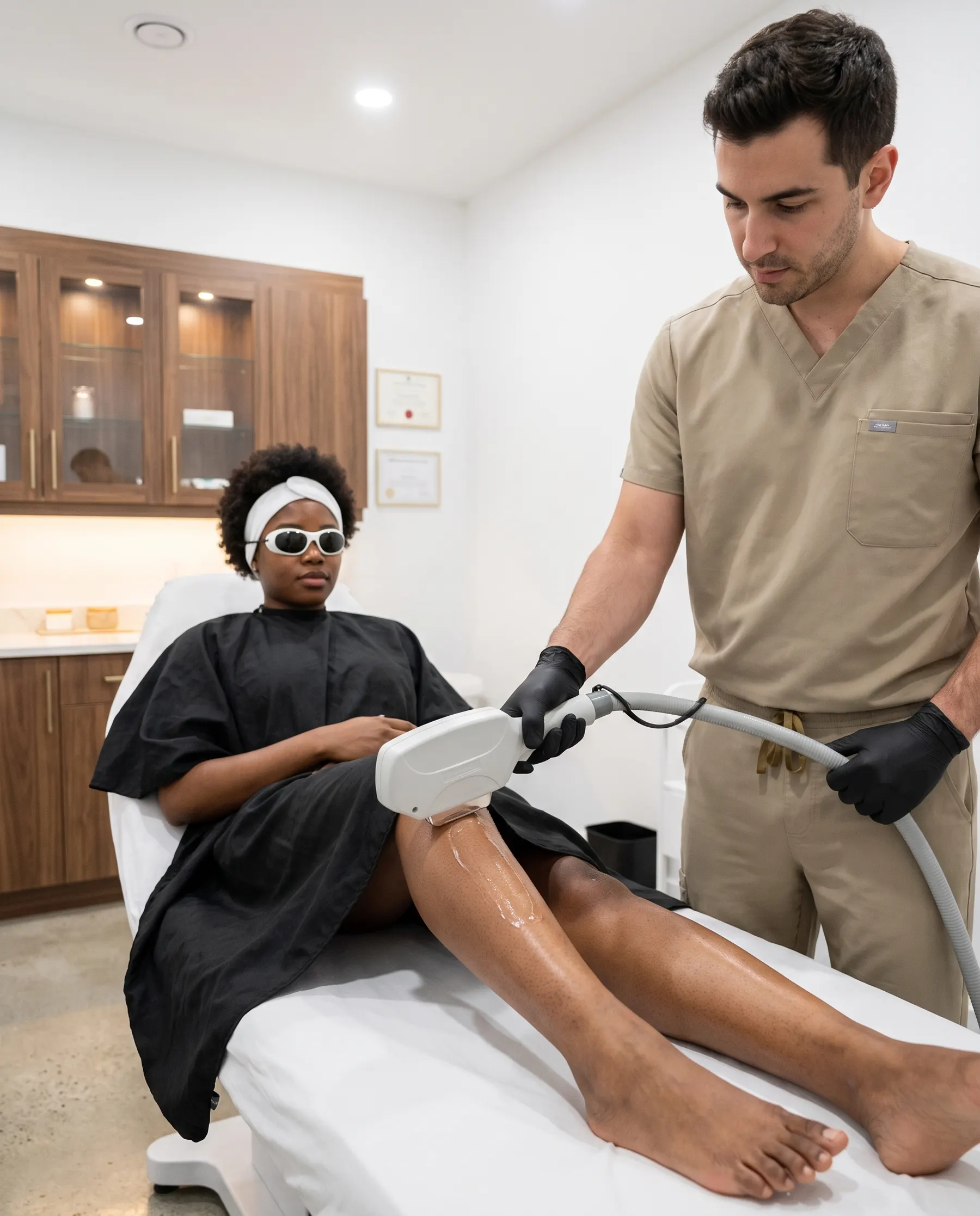
Laser hair removal
The Elite iQ by Cynosure, on every phototype. The most requested of the three, and the one that reduces regrowth over time.
Learn more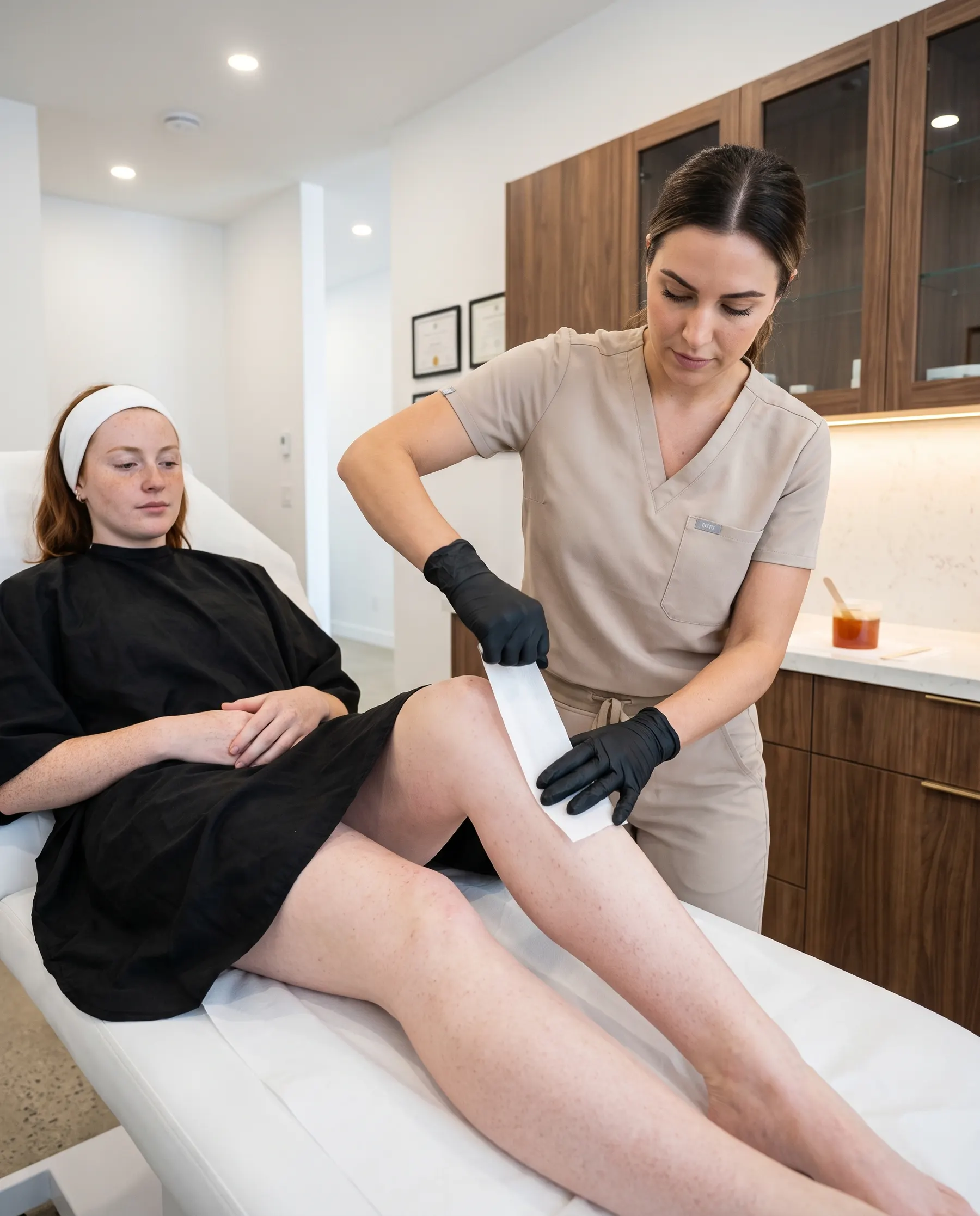
Waxing
The hair taken out at the root, on the face as well as the body, including where a laser can do nothing. Smooth skin as you leave.
Learn more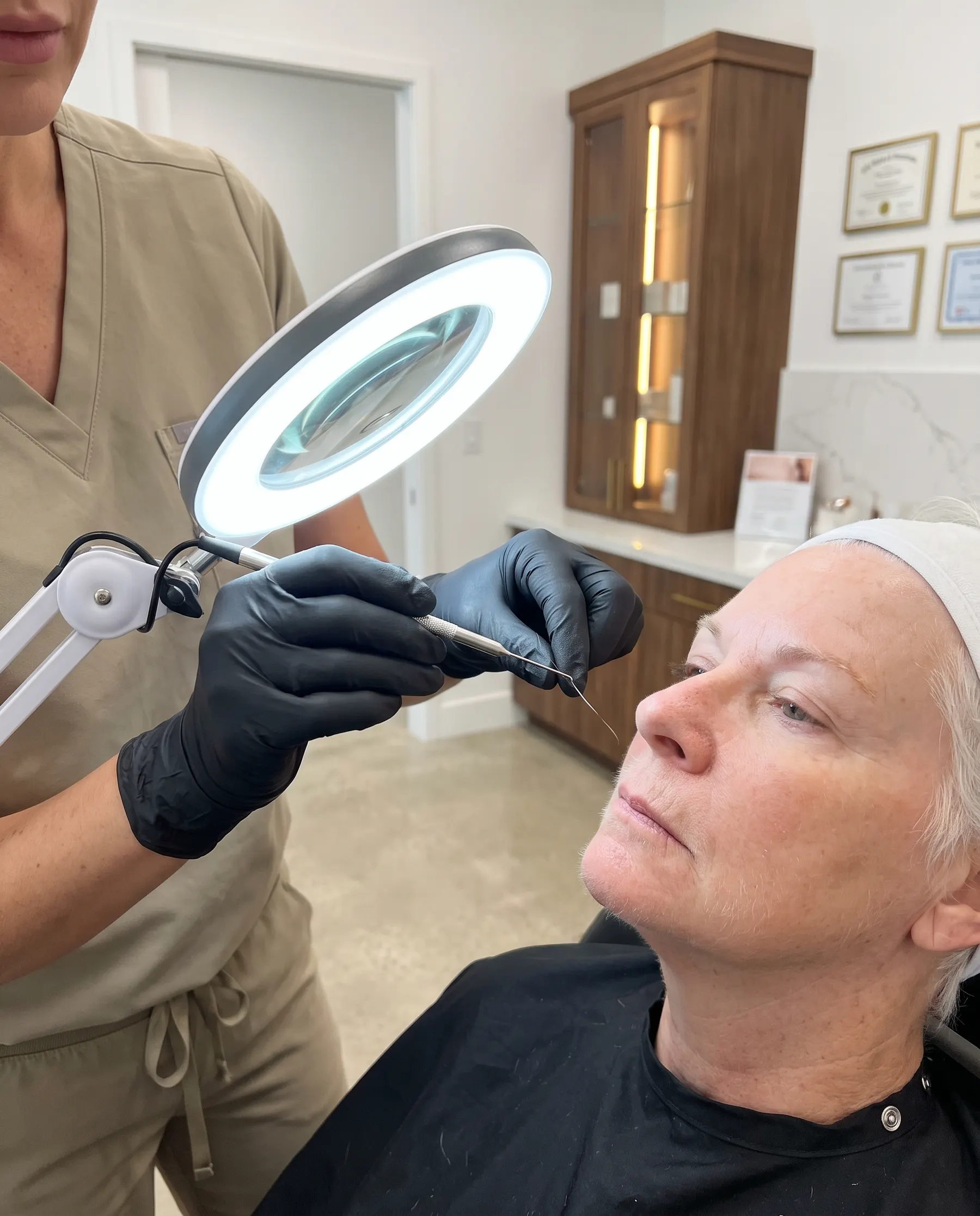
Electrolysis
The Apilus device, hair by hair. For white or blond hairs, tattooed areas, scattered hairs, and whatever the laser leaves behind.
Learn more
Comparing the three techniques
The table places them. What you see in the mirror settles it.
White or blond hair. A laser cannot see it. That is the one case where the choice of technique is not up for discussion.
Tanned skin. Recent sun exposure changes the laser settings, and sometimes postpones the session. Say so when you book rather than when you arrive.
Contraindications are on each of the three pages, and some situations call for a medical opinion before starting.
| Technique | On which hair | Result | Length | From |
|---|---|---|---|---|
| Laser | Pigmented hair, every phototype | Gradual reduction, over a series | 10 min to 1 h 45 | $45 |
| Waxing | Every hair colour | Immediate, a few weeks | 10 min to 1 h 20 | $15 |
| Electrolysis | White, blond, scattered hair, tattooed area | Hair by hair, over time | 15 to 45 min | $30 |
- On which hair
- Pigmented hair, every phototype
- Result
- Gradual reduction, over a series
- Length
- 10 min to 1 h 45
- From
- $45
- On which hair
- Every hair colour
- Result
- Immediate, a few weeks
- Length
- 10 min to 1 h 20
- From
- $15
- On which hair
- White, blond, scattered hair, tattooed area
- Result
- Hair by hair, over time
- Length
- 15 to 45 min
- From
- $30
Frequently asked questions
Everything people ask us before a first session, answered plainly.
Laser or waxing, which one?
It depends what you are after, and both answers are legitimate. Waxing gives you a result the same day, it works on every hair colour, and it needs no planning: you come when it suits you. The downside is that you repeat it every few weeks, indefinitely. Laser is the opposite: nothing immediate, a series to plan, but the aim is to reduce regrowth so you stop thinking about it. If you are flying out on Friday, wax. If the chore every other day is precisely what wears you down, laser.
Does laser work on darker skin?
Yes, and it is one of the reasons the institute chose this device. The Elite iQ carries two wavelengths: Alexandrite at 755 nm, more effective on lighter skin, and Nd:YAG at 1064 nm, which passes through the pigment in the skin to reach the pigment in the hair. That second one is what makes darker phototypes safe to treat. Plenty of older devices have only one wavelength and cannot do it: on darker skin they risk targeting the skin itself. The wavelength and the settings are chosen at each session, based on your skin that day.
Why does laser do nothing to a white hair?
Because it has nothing to aim at. A laser works by heating melanin, the pigment that gives hair its colour, and that heat reaches the root. A white or blond hair does not have enough pigment: the energy has nowhere to land. It is not a matter of power or of session count, it is the principle of the technique. In that case electrolysis is the only one of the three that works, because it looks for no pigment at all: it treats the hair with a probe, one at a time.
How many laser sessions does it take?
We recommend a minimum of 10 sessions for a full series, and a single area on its own takes fewer: 6 to 10 for underarms, legs and bikini, 8 to 10 for the face, 6 to 8 for arms and back. The total then depends on how dense your hair is, your phototype and its colour. What does not change is that hair can only be treated while it is growing, and not all of your hair is growing at once, which is why sessions are spaced out and repeated. We give you a precise estimate at the first session, looking at your area.
Can the three be combined?
Yes, and it is the most common path among people who see it through. Laser does the bulk of the work on the pigmented hairs of an area. Electrolysis then picks up the few white or pale hairs it left, which goes quickly since there are not many. And waxing covers you between two laser sessions on an area you want clear for an occasion. What you must not do is wax or tweeze between two laser sessions on the treated area: the root has to be in place for the laser to have something to reach.
Do I need to shave beforehand?
Before a laser session, yes: the area is shaved the day before or that morning. The hair has to be present under the skin but not above it, otherwise the energy scatters into the visible part and burns at the surface instead of reaching the root. Before waxing it is the opposite: there has to be hair to grip, a few millimetres. Before electrolysis we will tell you at the consultation, because it depends on the area and on what was done before.

Ready to meet the best version of yourself?
Send us your questions and we will guide you toward the treatments that suit you best.
If you are unsure, or if your hair is pale and you do not know what to do with it, write to us first. You can also browse all our services.